How Do Winemakers Know When Grapes Are Ready to Harvest?
There is a moment in every growing season when the atmosphere in a vineyard changes. The long, slow work of pruning, tying, canopy management, disease prevention and weather watching suddenly becomes a question of timing. Pick too early and the wine may lack depth, generosity and flavour. Pick too late and freshness can fade, alcohol can rise, tannins can become heavy, and a well-balanced wine can quickly lose its poise. This is why harvest is one of the most important decisions in winemaking. It is also one of the least formulaic.
There are numbers involved, of course. Winemakers measure sugar, acidity, pH and potential alcohol. They walk rows, taste berries, chew skins, inspect seeds, check weather forecasts, compare vineyard blocks and gather samples for lab analysis. Many now use drones, vineyard mapping, optical sorting and increasingly detailed data to support their decisions. Yet even with all that information, choosing the right picking date still depends on judgement.
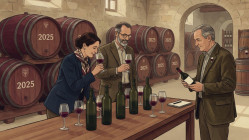
That judgement becomes especially clear during En Primeur, as well as the first tastings from regions without a formal En Primeur system. When critics, merchants and buyers assess young barrel samples or newly released wines, much of the discussion comes back to harvest conditions. Were the grapes picked before the rain? Did Merlot ripen evenly? Did Cabernet Sauvignon have enough time on the vine? Were the tannins ripe, or did the winemaking team have to handle extraction carefully? These questions might sound technical, but they are really questions about balance.
So how do winemakers know when grapes are ready to harvest? The honest answer is that they are looking for several forms of ripeness at once.
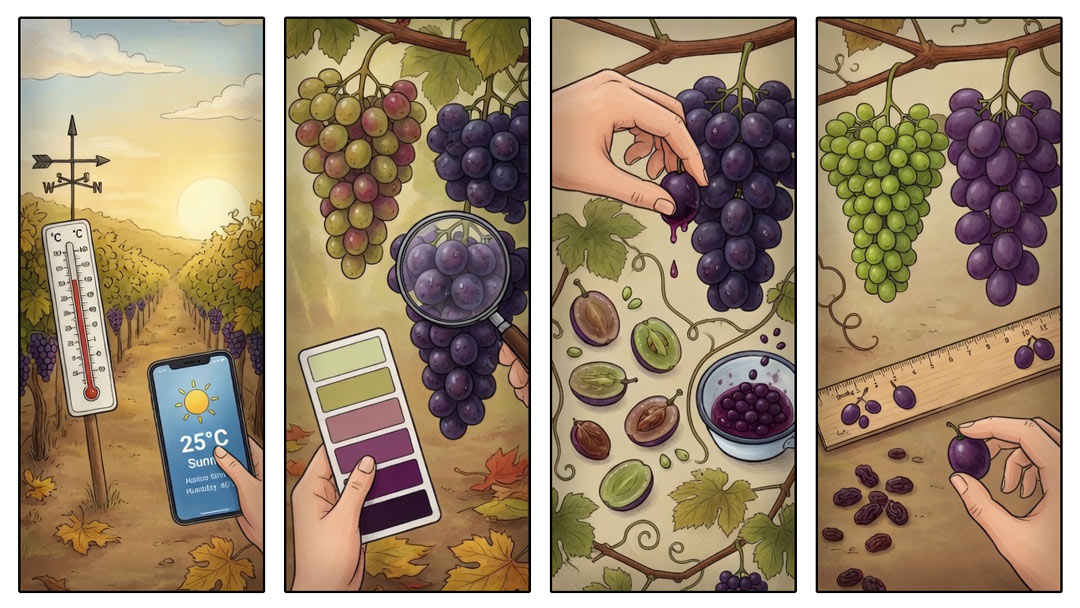
Colour
One of the earliest signs that harvest is approaching is colour change, known as véraison.
Before véraison, grapes are small, hard and green. They are high in acidity, low in sugar and nowhere near ready to become wine. Once véraison begins, the berries soften and start their final ripening phase. Red grapes move from green into shades of red, purple or blue-black, depending on the variety. White grapes become more golden, translucent or slightly amber.
This does not mean the grapes are ready to pick. It simply means they have entered the period when winemakers need to start paying closer attention.
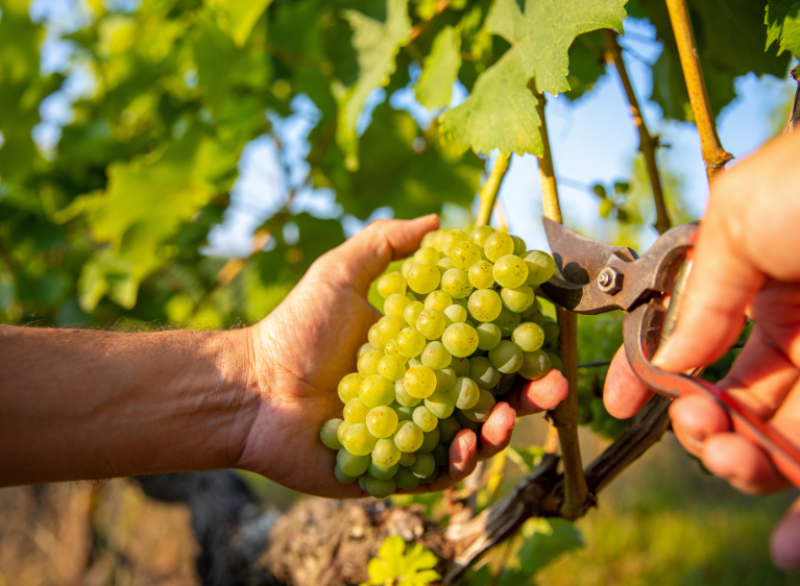
Colour can tell a grower a lot. Uneven colour across bunches may suggest uneven ripening, which can become a problem later. If some berries are fully coloured while others remain green, the vineyard team may need to delay picking, sort more carefully, or accept that the final wine could carry greener flavours if those berries make it into the fermenter.
Red grape skins are particularly important because they contain colour compounds, tannins and many flavour precursors. A Cabernet Sauvignon berry that has turned dark is visually promising, but colour alone is not enough. The skin may look ripe before the tannins are ready. This is why experienced winemakers will not just look at the bunch. They will taste it, chew it and test how the skin behaves in the mouth.
Seeds are another useful clue. In unripe grapes, seeds are green and can taste bitter, sharp or woody. As grapes ripen, seeds usually turn brown and become easier to chew. A brown seed does not guarantee perfect ripeness, but it suggests the fruit is moving in the right direction.
The stems can also tell a story. Green stems may bring a herbal, sappy edge if included in fermentation. Brown, lignified stems can be more suitable for whole-bunch fermentation, a method used by some producers to add fragrance, lift and structure. Again, there is no single rule. In some wines, a touch of green stem character may be part of the house style. In others, it would be unwelcome.
Size
A ripe grape is not simply a bigger grape. In fact, some of the world’s most concentrated wines come from small berries.
As grapes ripen, they soften and swell. Their skins become more elastic, the pulp becomes juicier, and the berries become easier to detach from the bunch. But berry size is shaped by the season. Rain can swell berries. Drought can keep them small. Heat can cause shrivel. Disease can weaken skins. A perfect-looking bunch is not always a perfect winemaking bunch.
Small berries matter because the ratio of skin to juice changes. With red grapes, much of the colour, tannin and flavour sits in the skins. If berries are small, there is often more skin in relation to juice, which can mean deeper colour, more structure and greater concentration. This can be a gift in the right year, but it also demands care in the winery. Extract too much from thick skins and the wine may become firm, dry or hard.
This is one reason harvest decisions cannot be separated from winemaking decisions. A château with small, concentrated berries may pick at an excellent moment, then choose gentler extraction in the cellar. It might reduce pump-overs, lower fermentation temperatures, shorten maceration, or handle each parcel differently. The harvest date sets the material, but cellar work decides how that material is shaped.
This is often part of the En Primeur or early tasting conversations. A warm, dry growing season can produce small berries with impressive concentration, but the best wines usually come from producers who understood what the fruit was giving them. If the grapes already had power, the goal in the cellar may be restraint.
At the other end of the scale, swollen berries after rain can dilute sugar and flavour. If heavy rainfall arrives close to harvest, a grower may decide to pick before the fruit loses concentration or before rot becomes a problem. Waiting for grapes to recover after rain can work if the weather turns dry and the fruit is healthy, but it is a gamble. The longer grapes hang, the more they are exposed to birds, insects, rot, storms and simple bad luck.
Flavour
Flavour is where science meets instinct.
A laboratory can tell a winemaker the sugar level, acidity and pH of the grapes. It cannot fully tell them whether the fruit tastes like the wine they want to make. For that, someone has to walk into the vineyard and taste.
This is not casual nibbling. Skilled winemakers and viticulturists taste grapes methodically. They separate pulp, skins and seeds. They assess sweetness, acidity, flavour, aroma, bitterness, astringency and texture. They might taste berries from the sunny side and the shaded side of the vine, from the top and bottom of the bunch, from young vines and old vines, from gravel, clay, limestone or sand.
The pulp gives the first impression. Is it sweet? Is the acidity sharp, fresh or fading? Does the juice taste neutral, green, citrusy, floral, red-fruited, black-fruited, tropical, jammy or tired? The answer will vary by grape variety and wine style.
A Sauvignon Blanc producer may look for aromatic lift, freshness and citrus or passion fruit character before sugars become too high. A Chardonnay producer making sparkling wine may pick earlier to preserve acidity. A Sauternes producer may wait for noble rot to concentrate sugars and flavours. A Barolo producer working with Nebbiolo may need time for tannins to soften, even when sugar readings already look sufficient. A Bordeaux estate may pick Merlot before Cabernet Sauvignon because Merlot ripens earlier, while Cabernet often needs longer to lose its greener edge.
The skins are even more revealing. When a grape is underripe, the skins can feel tough, bitter and aggressively drying. As ripeness develops, they become more pliable and the tannins can feel finer. For red wines, this is essential. Tannins build structure, ageing potential and mouthfeel, but immature tannins can make a wine taste angular and hard.
Then come the seeds. Winemakers often chew them, which is not always pleasant work. Green seeds can taste harsh and bitter. Riper seeds tend to be browner, nuttier and less aggressive. This does not mean every red wine needs fully brown seeds before harvest, but seed maturity is one more piece of the puzzle.
The key point is that sugar ripeness and flavour ripeness do not always arrive together. In a hot year, sugar may accumulate quickly, pushing potential alcohol upwards before flavours and tannins have fully developed. In a cooler year, flavours may become expressive at lower sugar levels. This is why a number on a refractometer can never make the harvest decision alone.
Vineyard visitors
Nature often notices ripe grapes before people do. Birds, wasps, wild animals and insects are all drawn to sweet fruit. Their presence in the vineyard can be a sign that berries are becoming attractive, aromatic and sugar-rich. For growers, this is both useful and alarming. A few birds may suggest ripeness is near. A flock can become a serious threat.
In many regions, vineyards use nets, scarers or other deterrents to protect crops. The aim is not just to save volume, but to prevent damaged berries from becoming entry points for rot. Once a bird pecks a grape or a wasp splits a skin, the berry is more vulnerable. In damp weather, that damage can spread quickly through a bunch.
Other visitors are microscopic. Yeasts, bacteria and fungal spores are part of vineyard life. Some are harmless. Some are helpful. Some can spoil a crop. Botrytis is the famous example because it can be either friend or enemy. In dry, misty, well-timed conditions, noble rot can concentrate grapes for great sweet wines. In wet, uncontrolled conditions, grey rot can ruin fruit intended for dry wine.
This is another reason harvest decisions become urgent. A vineyard may be close to ideal ripeness, but if rot begins to spread or rain is forecast, the best decision may be to pick immediately. The perfect harvest date on paper is not always available in real life.
Technology
Harvest may look romantic from a distance, but modern winemaking is full of measurement.
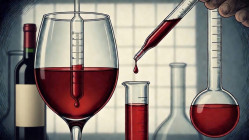
One of the simplest tools is the refractometer. A grower can crush a little grape juice onto the glass, look through the device and estimate sugar concentration, often expressed as degrees Brix. Broadly speaking, higher Brix means more sugar, which usually means higher potential alcohol if fermented to dryness.
This is useful, but it is not enough. Winemakers also measure pH and titratable acidity. These give different views of acidity. pH relates to the strength of acidity and has implications for freshness, colour, microbial stability, sulphur dioxide effectiveness and the way the wine feels. Titratable acidity measures the total acid present. As grapes ripen, sugars generally rise and acidity falls, but the relationship is not perfectly predictable.
A balanced harvest decision usually looks at sugar, acidity and pH together. A wine with high sugar and low acidity may taste broad or heavy. A wine with modest sugar and strong acidity may taste lean if the flavours are not ripe. The ideal numbers depend on grape variety, region and intended style.
Sampling is just as important as testing. A vineyard is not one uniform object. Ripeness can vary from row to row, vine to vine and bunch to bunch. Grapes on the morning-sun side of a canopy may taste different from grapes shaded in the afternoon. Old vines may behave differently from young vines. A low-lying block may ripen more slowly than a warm, well-drained slope.
To deal with this, vineyard teams collect representative samples. They may take berries from different parts of the bunch, different sides of the row and different parts of the block. Samples are tested regularly, sometimes daily as harvest nears. The aim is not to find the ripest berry in the vineyard. It is to understand the real average of the fruit that will be picked.
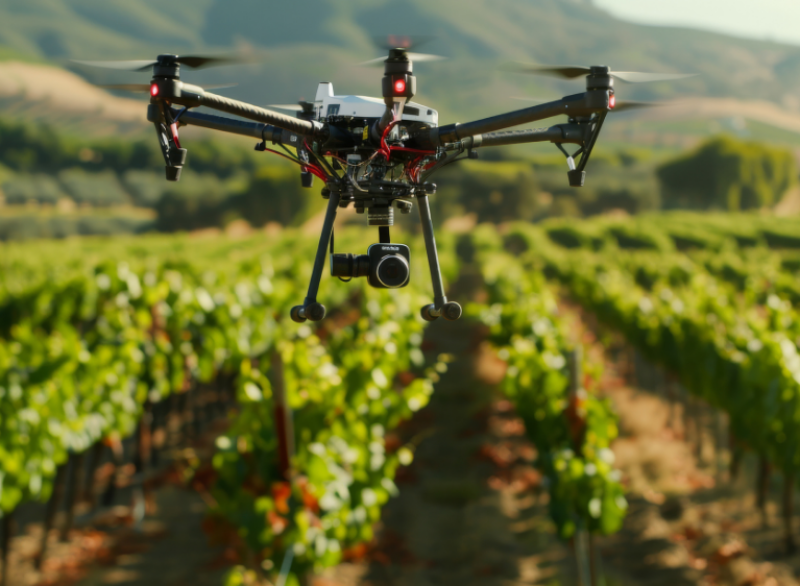
Technology has made this more detailed. Some estates use weather stations, soil moisture sensors, satellite imagery, drone mapping and vineyard management software. These tools can reveal variation in vine vigour, water stress and ripening patterns. A producer might discover that one corner of a vineyard is ready several days before another, even within the same named parcel.
In the winery, sorting has also improved. Hand sorting remains important, but optical sorters can scan berries and remove material that does not meet the required standard. This might include leaves, stems, underripe berries, raisins, damaged fruit or foreign material. The best estates are not simply deciding when to harvest. They are deciding exactly which berries deserve to become part of the wine.
Still, technology does not replace human judgement. It sharpens it. A refractometer can show that sugar has risen. A pH meter can show that acidity is falling. A drone can show variation in the vineyard. But someone still has to decide what matters most for that wine, in that year, from that piece of land.
Weather
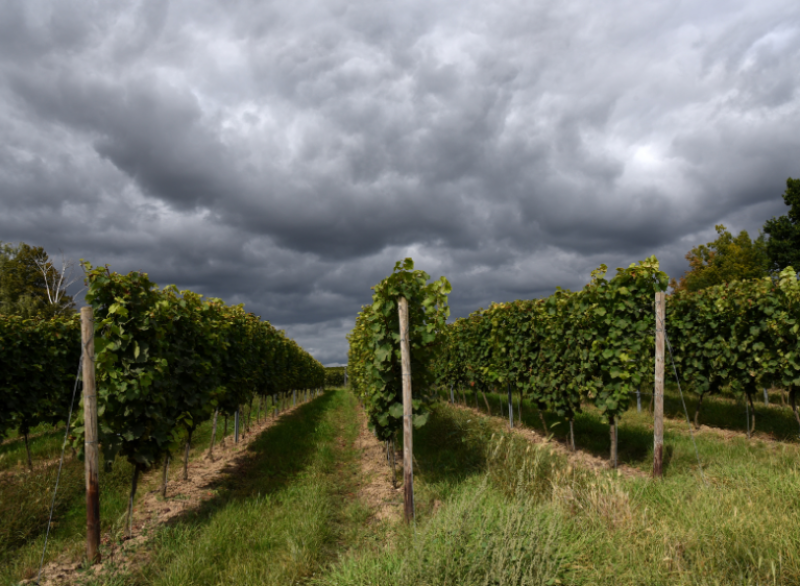
No subject makes winemakers check their phones more often than harvest weather.
The final weeks before picking can change everything. Sunshine can finish ripening. Cool nights can preserve acidity and aromatics. Rain can refresh drought-stressed vines, but it can also dilute berries or encourage rot. Heatwaves can push sugar up too quickly, dry berries on the vine or cause sunburn. Hail can undo a year’s work in minutes.
This is why the best harvest decision is often the least bad decision. A grower may know that another five days on the vine would improve tannin ripeness, but if a storm is due tomorrow, waiting could be reckless. Another producer may see rain in the forecast and decide to hold firm, trusting that healthy grapes and free-draining soils can cope. Both decisions may be right in different vineyards.
Bordeaux gives a useful example because the region depends on blends and varied terroirs. Merlot, Cabernet Sauvignon, Cabernet Franc, Petit Verdot and the white varieties do not ripen at the same pace. Gravel, clay and limestone handle water differently. A château may pick one parcel before rain, leave another to benefit from it, then return later for Cabernet once tannins have softened.
Recent Bordeaux vintages have made harvest timing even more closely watched. Warm, dry years can bring early ripening, small berries and high concentration, but also the risk of hydric stress, rapid sugar accumulation and firm tannins. Cooler nights can help preserve acidity and aromatics, which is one reason commentators pay such close attention to diurnal range. In a region where balance and age-worthiness matter, the difference between fresh ripeness and heavy ripeness can be slim.
Weather also affects logistics. Harvest is not just a philosophical choice. People, crates, tractors, sorting tables, tanks and cellar space all need to be ready. Hand-picking requires teams. Machine harvesting requires equipment and suitable vineyard conditions. If several blocks ripen at once, the estate has to prioritise. The romantic image of harvest hides a serious operational challenge.
Other factors
Even after colour, size, flavour, vineyard visitors, technology and weather have been considered, the decision is still not finished.
The intended wine style matters. Grapes for sparkling wine are often picked earlier to retain acidity. Grapes for rosé may be picked before red-wine levels of phenolic ripeness are reached, depending on the desired style. Grapes for sweet wine may hang much longer, especially if the producer wants late-harvest concentration or noble rot. Grapes for long-lived red wines may need not just sugar, but ripe skins, ripe seeds and tannins that can support decades of ageing.
Variety matters too. Pinot Noir is thin-skinned and sensitive. Cabernet Sauvignon is later-ripening and can hold onto green characters if picked too soon. Merlot can become plush and generous, but in hot conditions it can lose freshness quickly. Riesling can retain acidity at high ripeness levels. Grenache can reach high sugars while acidity falls. Nebbiolo may show pale colour but fierce tannin. Each variety has its own flow.
Terroir matters. A clay-rich soil may hold water during a dry summer. Gravel may drain quickly and warm early. Limestone may help with freshness and water regulation. Altitude, slope, aspect, vine age, root depth and canopy shape all influence ripening. Even within a famous estate, one parcel can be ready while another needs patience.
Market and regulation can also play a role. Appellation rules may set permitted yields, grape varieties, alcohol levels or harvest requirements. A producer making wine under a strict regional system does not have unlimited freedom. In some areas, official harvest dates may be announced, although quality-focused growers still make fine judgements within those windows.
Then there is risk appetite. Some winemakers are patient by nature. Others prefer earlier picking and brighter acidity. Some chase maximum phenolic maturity. Others value delicacy, moderate alcohol and aromatic freshness. These choices shape the identity of a wine. Two neighbouring producers can harvest the same variety several days apart and make vastly different wines, both valid, both true to their own philosophy.
This is what makes harvest so fascinating. It is not just the end of the growing season. It is the point where a year of climate, soil, labour, instinct and intention becomes irreversible.
Once grapes are picked, they cannot become fresher, riper or more balanced in the vineyard. The winemaker can guide fermentation, extraction and ageing, but the raw material has been fixed. That is why the decision carries such weight.
So, how do winemakers know when grapes are ready to harvest?
They look. They measure. They taste. They chew skins and seeds. They walk the vineyard again and again. They compare blocks. They watch the sky. They listen to experience, but they do not follow it blindly. They use technology, but they do not let numbers make the wine for them.
In the end, harvest is not about finding perfect ripeness in a textbook sense. It is about finding the right ripeness for a particular wine, in a particular place, in a particular year. That is why no two harvests are ever the same, and why the finest wines carry not just the flavour of grapes, but the judgement of the people who knew when to pick them.