Uncorked: Episode 18 - The Business of Going Viral
Episode 18 of Uncorked, a Cult Wines podcast, takes a rather different look at the wine trade, through the eyes of someone who entered the industry with little experience and a determination to do things his own way.
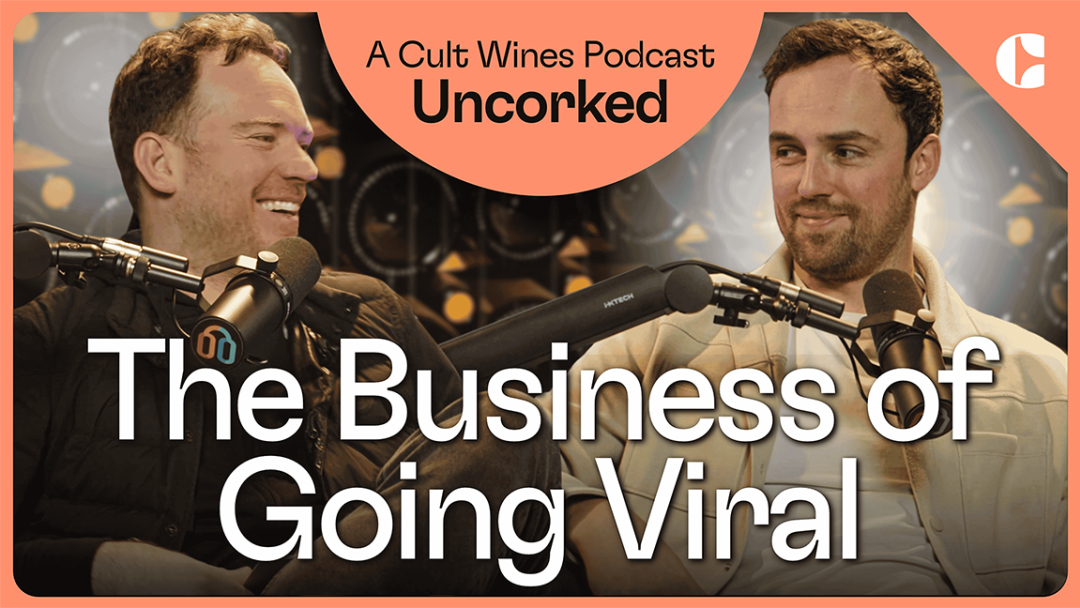
Hosted by Tom Gearing, Co-founder and CEO of Cult Wines, alongside Jonathan Stevenson, EVP of Cult Wines North America, this episode welcomes Tom Noble, founder of Château Noble.
From viral marketing and the realities of wine importing to supermarket pricing, Hungarian wines and the future of selling wine, the conversation explores what happens when an outsider approaches an established industry without its usual assumptions.
Watch/Listen Now
What is covered in this episode?
Meet Tom Noble
Tom is the founder of Château Noble, a UK-based wine brand launched in April 2026. Operating in the style of a négociant, he buys finished wines from independent producers in France, England, and Hungary, puts them under his own label, and sells them predominantly through LinkedIn.
A trained accountant with two sustainability degrees, Tom came to wine through an unconventional route. His previous venture, Flat White or F*ck Off, attracted enormous attention online, giving him a taste for building businesses publicly and turning their development into entertainment.
Seven months into Château Noble, he has generated around £10,000 in sales without paid advertising or traditional marketing. The business is still small, but his approach is attracting considerable attention, not least because he is unusually willing to discuss what works, what doesn't and how little he knew about the wine industry when he started.
Uncorked listener offer: Tom is offering Uncorked listeners 50% off one bottle, use code CULT50 at checkout, valid on French wines only until 11.59 pm on 10 December 2026.
Website: Chateau Noble | LinkedIn: Tom Noble
From a viral coffee stunt to Château Noble
Tom's entrepreneurial journey began with a simple observation: building an audience could be more valuable than building another business nobody had heard of.
His coffee venture generated hundreds of thousands of social media views, but the financial results were less impressive. One pop-up cost approximately £27,000 and brought in £8,000.
Château Noble began with an equally unlikely experiment. While visiting a vineyard in Provence, Tom tasted a rosé he loved, crossed out the producer's name on the bottle, wrote his own underneath and posted the idea on LinkedIn.
He initially failed to sell the 20 bottles he'd set himself as a target. Posting about that failure helped generate enough interest to keep going.
It's a story that sets up one of the episode's central discussions: is attracting attention the hard part of building a brand, or is turning that attention into a sustainable business the real challenge?
The business of being different
Some of Tom's experiments are designed as much for their entertainment value as their immediate commercial return.
His £250 personal delivery service, which includes travelling to the customer and bringing an extra bottle to share, has attracted millions of views and several paying customers.
He is also exploring giving 5% of Château Noble to early customers, turning his audience into shareholders and, he hopes, more committed supporters.
Tom Gearing, Jonathan and Tom Noble discuss how these ideas create loyalty, customer involvement and a recognisable identity, while acknowledging that publicity alone will not build a profitable wine business.
Is wine losing drinkers, or losing their attention?
One of the more interesting exchanges concerns the industry's persistent worries about declining consumption and younger generations losing interest in wine.
Tom Noble challenges the gloomier interpretation. From his perspective, plenty of people are still enjoying wine. The bigger problem may be how the industry communicates with them.
He questions why so many merchants talk about telling producers' stories when relatively few seem to use social media to bring those stories directly to customers.
The conversation also explores the restrictions surrounding alcohol marketing online. Despite building most of his business through LinkedIn, Tom cannot market wine there as freely as he would like, and other platforms bring their own complications.
For an industry that needs to attract new consumers, reaching them through the channels they actually use is not always straightforward.
What does a bottle of wine really cost?
Starting a wine business from scratch has introduced Tom to the less romantic realities of the supply chain.
He describes discovering wholesale prices, navigating minimum orders, completing post-Brexit customs paperwork and trying to preserve enough margin to make the business viable.
The discussion broadens into supermarket pricing and the pressure it creates for producers and smaller merchants. A good bottle at a low price can attract consumers, but competing at that level is considerably harder for independent businesses.
Jonathan also challenges Tom's pricing strategy. With some Château Noble wines moving beyond £20 and towards £30 a bottle, how much will customers pay for a relatively unknown label?
The underlying question is one every wine merchant faces: how do you balance quality, price, margin and the customer's willingness to take a chance on something unfamiliar?
The value of expertise
There is plenty of wine in the studio. Tom brings a selection from Château Noble, including a dry white from Tokaj, Hungarian reds and English sparkling wine from Huxbear.
The Hungarian wines prove particularly interesting. Tom Gearing and Jonathan find an aromatic, refreshing white and reds with an unexpectedly light, elegant character. They discuss the quality emerging from lesser-known regions and the difficulty of getting consumers to explore unfamiliar grape varieties.
The tasting also prompts a debate about expertise. Tom Noble has no formal wine qualifications and has deliberately resisted presenting himself as a traditional wine expert. His approach is to visit producers, taste their wines and select what he enjoys.
For Tom Gearing and Jonathan, that can be a strength when communicating with consumers who find the language of professional wine tasting intimidating.
But there is a commercial test attached: customers may buy their first bottle because they like the story. They will only keep buying if the wine delivers.
What could the next generation of wine retail look like?
Towards the end of the episode, the conversation turns to Château Noble's future and the broader opportunities for wine retail. Tom wants to expand his range, potentially open a wine bar and eventually turn his producer visits into longer-form video content, with bottles linking directly to the stories behind them.
Tom Gearing suggests a wine club could provide the recurring revenue that a social-media-led business currently lacks. Jonathan explores referrals, rewards and other ways of turning an enthusiastic audience into an active customer community.
There's also a discussion about the rise of AI-powered, one-person businesses. Technology can make running a company cheaper and easier, but Tom Noble is unconvinced that doing everything alone should be the ultimate ambition.
Together, the ideas point towards a model where the fundamentals of selling wine remain familiar, but the way customers discover, engage with and become loyal to a brand could look quite different.
Stunt or Skip
As always, there is a game. This time it's Stunt or Skip, with Jonathan challenging Tom Noble to decide which increasingly questionable marketing ideas deserve to see the light of day.
From livestreamed wine-drinking marathons and confronting critics to auctioning naming rights and putting customers' faces on labels, Tom manages to find a potential marketing opportunity in almost everything.
Even the rejected ideas tend to come back with an alternative that sounds suspiciously like something he might actually attempt.
Final thoughts
Episode 18 offers an entertaining outsider's perspective on a wine industry that can sometimes be reluctant to challenge its established ways of working.
The conversation goes well beyond Château Noble. It touches on the economics facing small producers, the difficulties of marketing wine to younger audiences, the value of lesser-known regions and whether consumers need another expert telling them what to drink.
Tom's approach will not suit every business, and he freely admits there is still a long way to go commercially. But his willingness to experiment, share mistakes and bring customers into the story offers established wine businesses something worth considering.
For all the clever marketing, the fundamentals remain the same. The wine needs to be good, the price needs to make sense, and customers need a reason to come back. Getting people interested is only the beginning.
👉 Subscribe for more Uncorked episodes and fine wine insights every month.