The Rise of High-Altitude Winemaking in Mexico

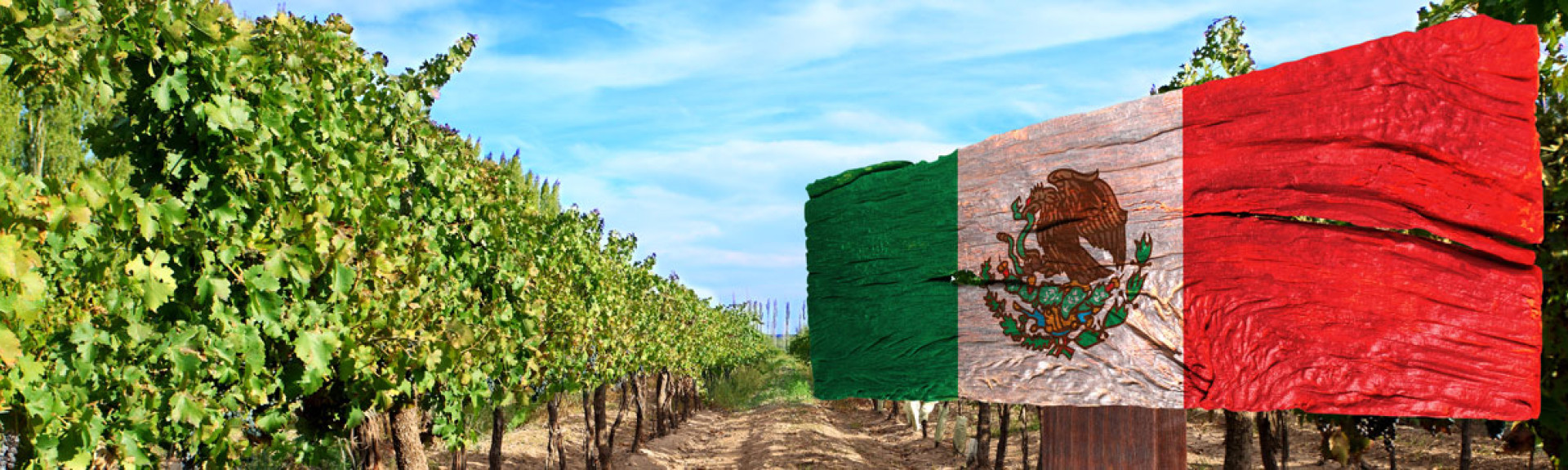
For casual drinkers, Mexican wine still begins and ends with Baja. That is understandable, because Baja California remains the country’s dominant wine-producing area. But the more interesting story now stretches inland and uphill. In places such as Coahuila, Guanajuato and Querétaro, growers are working at elevations that would be considered unthinkable in most wine countries, and they are turning heat, altitude and dramatic day-to-night temperature swings into something that feels distinctly their own. This is not a copy of Spain, France or California with a Mexican backdrop. It is a branch of the wine world that is increasingly confident in its own voice.
That confidence sits on incredibly old foundations. Mexico is widely recognised as the oldest wine-growing country in the Americas, with European Vitis vinifera established there during the colonial period. Casa Madero in Parras, Coahuila, traces its history to 1597 and is still operating today, which makes it central to any serious conversation about wine in the New World. Yet the modern picture is far from purely historical. New producers, new styles and new destinations are pushing Mexican wine beyond heritage talking points and into a more dynamic phase, one where altitude is becoming one of its clearest advantages.
Why altitude matters so much in Mexico
Altitude is a natural moderating force in wine almost everywhere, but in Mexico it can be the difference between struggle and possibility. In warmer climates, higher sites bring a useful drop in temperature. Temperature can fall by roughly 0.6°C for every 100 metres of elevation gained, which helps keep vineyards from becoming too hot. That matters in a country where many promising wine areas sit at relatively low latitudes and would otherwise face serious ripening pressure. Cooler conditions at elevation can slow the rush towards over-ripeness and help grapes hold onto acidity, freshness and aromatic detail.
Altitude also changes the flow of the day. Warm sunshine allows grapes to ripen, but cooler nights slow the process down. Wine scientists and educators alike point to those strong diurnal swings as a major reason high-altitude wines often taste fresher and more balanced. Research on high-altitude viticulture also shows that these environments bring greater thermal amplitude and stronger UV exposure. In practical terms, this can mean grapes with thicker skins, more colour and firmer structure, without losing vitality. For Mexican producers working in hot, dry or semi-desert conditions, that is not a minor detail. It is often the key to making wines that feel lively rather than heavy.

Casa Madero Vineyards
Coahuila, where history meets altitude
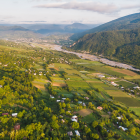
If one region captures the long arc of Mexican wine, it is Coahuila. Parras sits in an oasis-like valley at about 1,500 metres above sea level, with a dry semi-warm microclimate and the thermal amplitude that Casa Madero itself highlights as ideal for grape ripening. The image is almost cinematic: vineyards in a semi-arid landscape, nourished by springs and groundwater, with one of the hemisphere’s deepest wine histories rooted in the place. That contrast, desert austerity meeting pockets of agricultural abundance, helps explain why Coahuila still feels so compelling.
But Coahuila is not simply living off Casa Madero’s reputation. Recent attention has shifted to the wider region, especially around Parras and the Sierra de Arteaga. Wine Enthusiast notes that Parras, already around a mile above sea level, is considered the lower part of this broader high-altitude story. Further east, vineyards in the Sierra de Arteaga climb beyond 7,000 feet, and wineries such as Bodegas del Viento and Bodega Los Cedros have been described among the highest in the world. That elevation changes the style picture. Hotter, lower sites can produce riper reds, while cooler sites bring longer hang time and the chance to harvest later with freshness intact. It is one reason Coahuila now looks more versatile than outsiders often assume.
That versatility is visible in the grapes too. Cabernet Sauvignon, Merlot, Syrah and Tempranillo remain major players, but the region is not locked into a narrow template. Cabernet Franc, Malbec, Pinot Noir and Petit Verdot are gaining ground, while whites such as Albariño, Verdejo, Torrontés and Chenin Blanc are also starting to stand out. In other words, Coahuila is not only a land of sturdy reds. It is increasingly a place where winemakers are testing how far freshness, aromatic lift and site expression can go in a northern Mexican context. That makes it more interesting than the old cliché of “desert wine” suggests.
Guanajuato, restless and experimental
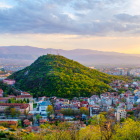
South of Coahuila, the highland basin of El Bajío opens a different chapter. Guanajuato’s wine identity is newer, looser and less bound by inherited expectations. Around San Miguel de Allende and Dolores Hidalgo, vineyards sit high enough to benefit from cooler conditions, but the atmosphere is not reverential. It is exploratory. This is one of the reasons the region has built a reputation for natural wine and more experimental approaches, with producers such as Garambullo and Octágono helping shape its reputation for doing things a little differently.
There is history here too, though of a different kind. Dolores Hidalgo is famous as the place where the Mexican War of Independence began in 1810, and today it also sits on Guanajuato’s wine route, complete with a dedicated wine museum. That overlap between national history and contemporary wine culture gives the region a special texture. You are not just driving between tasting rooms. You are moving through a landscape where wine, politics, regional pride and tourism are all folded together.
Guanajuato also has serious physical credentials. Vineyards of Tres Raíces sit around 6,500 feet, with strong diurnal variation and sandy-loam soils helping produce deeply coloured, structured reds without tipping into heaviness. That is part of the attraction of central Mexican altitude. It allows producers to chase ripeness and freshness at the same time. In a region with no rigid old-school rulebook and no single “correct” grape, that freedom has encouraged a style of winemaking that feels particularly alive.
“Mexico’s high-altitude regions are a clear example of how climate challenges can become a defining strength. What we’re seeing is a confident expression of place, where altitude and day-to-night temperature swings bring both freshness and structure. This is something clearly seen in producers like Casa Madero, where balance and precision are central to the wines.”
- Alexa Atkinson, Senior Marketing Manager
Querétaro, sparkling wine and a fast-growing identity
Querétaro may be the clearest example of how high-altitude Mexican wine has moved from curiosity to category. The region sits at roughly 2,000 metres above sea level in a semi-desert climate, and it has become Mexico’s best-known sparkling wine stronghold. The varieties tell part of the story: Xarel·lo, Macabeu and Chardonnay feature prominently, alongside Pinot Noir and a broader cast of grapes for still wines. Wine Origins describes Querétaro as Mexico’s primary sparkling wine region, and its terroir, climate and altitude explain why.
Freixenet’s arrival in 1979 was a turning point. As the first production site the company established outside Spain, its Querétaro operation helped anchor the state’s modern wine industry and reinforced the Catalan influence on what was planted there. The tourism element is now inseparable from the wine story. Official Querétaro tourism material places Sala Vivé de Freixenet as a key stop on the Art, Cheese and Wine Route, and notes that visitors can tour a cellar 25 metres underground. That combination of accessibility, wine culture and polished visitor infrastructure has helped make Querétaro one of the country’s most visible inland wine destinations.
The region has also taken an important regulatory step. In March 2025, Querétaro was officially granted Mexico’s first Protected Geographical Indication for wine. That is more than a bureaucratic badge. It signals that Mexican wine is beginning to formalise and protect the identity of its best-defined regions, which is exactly the kind of development that helps a wine country mature in the eyes of both consumers and trade. For a region already associated with sparkling wine, wine tourism and so-called extreme viticulture, it feels like a natural next move.
The challenge behind the romance
Of course, none of this means high-altitude Mexican viticulture is easy. Quite the opposite. Producers in central Mexico deal with risks that can sound almost theatrical: hail, drought, sharp night-time temperature drops and an unpredictability that makes neat European comparisons feel a bit pointless. In Querétaro, growers describe conditions that can swing from hail to long dry periods in the same season. In broader viticultural research, climate volatility across Mexican wine regions is already being treated as a serious issue rather than a distant one.
That is why altitude should not be romanticised as a miracle fix. It is an advantage, but also a challenge. Higher sites can bring frost risk, stronger UV exposure and more demanding viticulture. What they offer is a fighting chance, especially in a warming world. Scientific reviews of high-altitude viticulture increasingly frame elevation as one adaptation strategy for preserving grape quality under climate pressure. In Mexico, where growers are balancing heat, water issues and rapid regional development, that idea feels especially relevant. The best wines from these places do not taste impressive because the conditions are easy. They taste impressive because the growers have learned how to work with difficult ones.
A story that matters now more than ever
What makes these regions so exciting is not just that they are high, old or increasingly fashionable. It is that they are helping redefine what Mexican wine can be. Coahuila offers heritage and seriousness without feeling stuck in the past. Guanajuato brings experimentation and a certain rebellious energy. Querétaro gives the country a polished sparkling identity and now, a protected geographical name. Together they make a persuasive case that Mexican wine is no longer a side note for travellers looking for something novel on holiday. It is becoming a deeper, more varied wine culture with its own logic and its own places worth following closely.
And perhaps that is the real point. The most interesting thing about Mexico’s high-altitude wine regions is not that they “surprise” people. That language is starting to feel dated. The better response is to take them seriously on their own terms. These are regions shaped by heat, height, improvisation, history and a strong sense of local identity. They are not trying to imitate somewhere else. They are working out what excellence looks like in Mexico, several thousand feet above sea level, one vintage at a time.

Related Articles