Day 1 - Bordeaux EP 2025: Pauillac & Saint-Estèphe

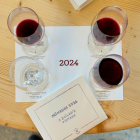
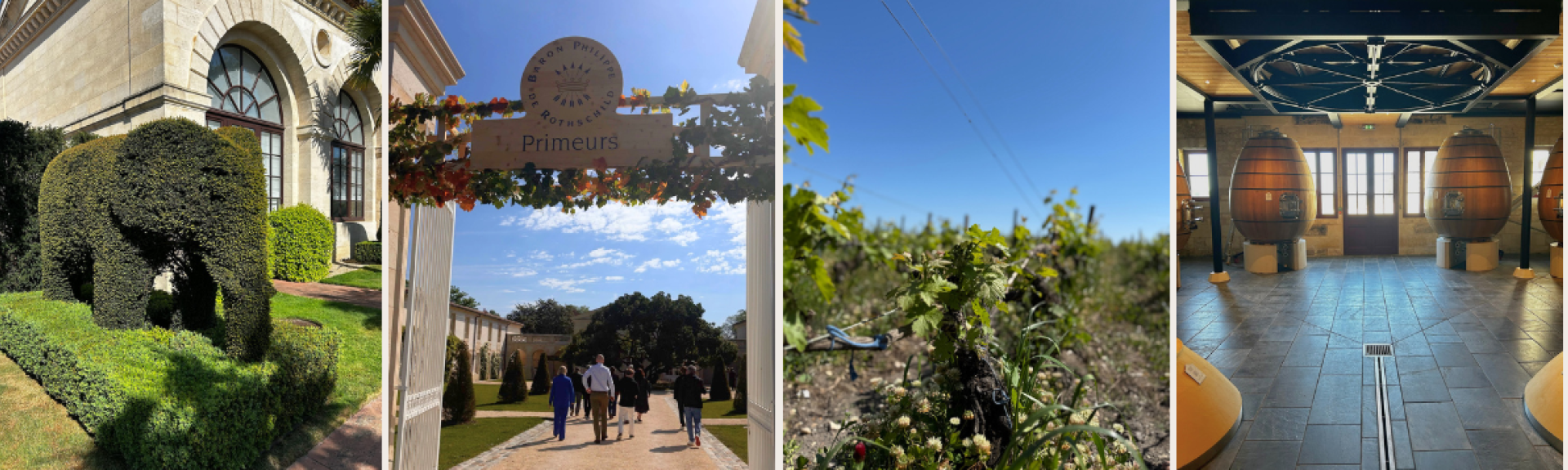
Our first day tasting the 2025 vintage took us through the northern Médoc, starting at Lafite Rothschild, working south through Saint-Estèphe and Pauillac, and finishing at Pichon Comtesse as the sun went down. A long day, a lot of wine, and by the end of it, a fairly clear picture of what the Left Bank has produced this year.
A Dry, Hot Vintage Shaped by Rain at the Right Moment
The story of 2025 on the Left Bank is really about what happened at the end of August. Almost every producer we visited told a version of the same thing: a warm, dry summer that looked like it was heading towards another extreme, concentrated and potentially high-alcohol vintage, rescued by significant rainfall just before harvest. At Montrose, they recorded close to 70mm over a few days in late August, which restored balance to berries that had been shrinking and allowed picking to happen when phenolic ripeness aligned with sugar levels rather than chasing one or the other.
Several estates told us this was the earliest harvest they had ever recorded. Cos d'Estournel began picking on the 3rd of September, the earliest in their history. Pichon Comtesse started on the 28th of August with their youngest Merlot plots. What was striking was that this was not early picking forced by panic, but early picking because the grapes were genuinely ready, with ripe tannins and complete and fully developed aromatics.
Alcohols across the day landed consistently between 13.2% and 13.6%, noticeably lower than we have seen in recent warm vintages. Pichon Baron came in at 13.3%, Cos at 13.2%. Every estate referenced this lower alcohol profile with obvious satisfaction.
A Remarkable Consistency of Intent
Perhaps the most striking observation of the day was not about the weather but about winemaking choices. Conversation after conversation, we heard the same approach described: pump-overs as the primary technique, very little, if any, punching down, lower fermentation temperatures, careful and gentle extraction.
The goal, repeated by teams across both appellations and consistent with the broader rhetoric of recent years, was to produce wines that are more approachable at a younger age.
This was certainly emphasised at Pichon Baron, with the same philosophy evident at Montrose, where the team talked openly about wanting to break the classic idea that Bordeaux needs ten or fifteen years before it becomes enjoyable. They described targeting the younger generation as a goal for the entire industry, and their use of new oak has dropped to under 50%, with more large-format Stockinger foudres coming in to preserve fruit expression rather than overt oak flavours.
Whether this shift is a response to shrinking home cellar storage among younger drinkers, a desire to reduce speculative long-term storage, or simply a reading of what today's buyers want, it is clearly a coordinated rethinking of what Bordeaux should taste like from barrel. Another change we noticed: producers were far less inclined than in previous years to compare 2025 to past vintages. When pressed, the most common reference seems to be 2016 for balance and depth, but most estates preferred to let the wines speak for themselves.
The Highlights
At the top end, the vintage is producing wines of real quality.
Lafite Rothschild had the silkiest tannins of anything we tasted, unusually approachable for a young Lafite, more elegant than powerful. The oak integration was beautiful, and it felt like a wine that would drink well relatively young by first-growth standards.
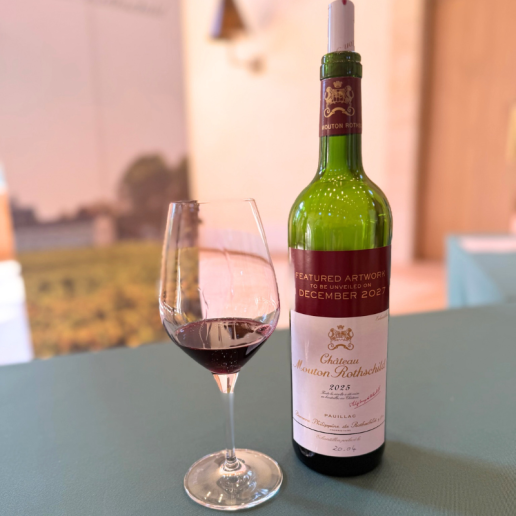
Mouton Rothschild showed dense dark fruit, chocolatey oak, refreshing acidity and a very refined, clean texture. A charming, polished wine with real depth.
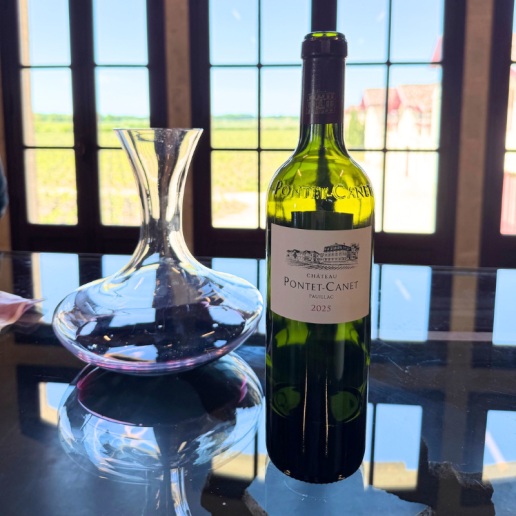
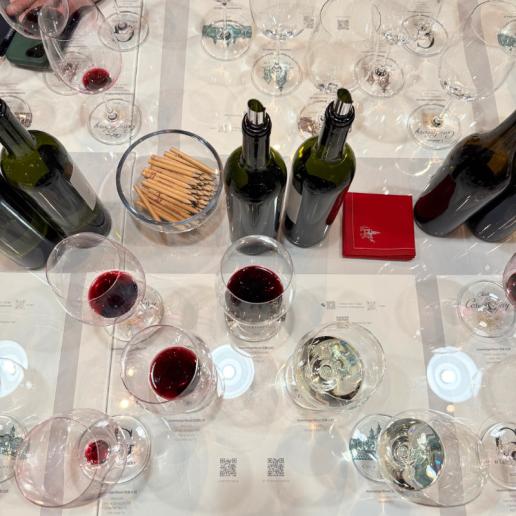
Pichon Baron was a standout of the day. Deep colour, serious concentration, coffee and cedar richness, an enormous tannin structure, yet all held together with precision. Yields were down by close to a third versus their norm, at 24hl/ha, and the concentration showed. Pontet-Canet was similarly impressive, arguably their best showing in several vintages, with a pure blue- and black-fruit profile, zippy acidity, and layers of tannin that unfold slowly.
Cos d'Estournel was a genuine blockbuster, one of the biggest wines of the day, with extraordinary floral character, creamy richness and a saline zing of acidity. The team described this as one of the lowest alcohol vintages they have ever made, alongside the best balance of acidity and tannin, and the wine reflects that combination of power and poise.
Pichon Comtesse, our final visit of the day, was worth saving to last. Restrained on the nose, it punched through on the palate with floral delicacy, blackberry fruit, eucalyptus and tannins that were simultaneously enormous and silky. An outstanding wine.
Montrose gave us purity and intensity with what the team described as an iron fist in a velvet glove. Lynch Bages went against the day's grain by producing a bolder, more structured and chewy wine that is clearly built to be cellared rather than drunk young, a reminder that not every estate is rushing toward early approachability.
Why the Second & Third Wines Matter this Year
A theme that became clearer as the day progressed: the second wines are genuinely excellent across the board. Last year's 2024 seconds were in places disappointing. This year is a different story. Pagodes de Cos, Réserve de la Comtesse, Forts de Latour, Petit Mouton and Dame de Montrose all delivered real quality, fruit-forward, balanced, with integrated tannins and proper depth.
Even more interesting is what is happening at the third wine and entry-level tier. Pauillac de Latour, Château de Pez, Haut Batailley and similar wines were quietly excellent. If these are priced sensibly, they represent exactly the kind of approachable, high-quality drinking Bordeaux that has been missing at the lower end for some time. We expect this is where many of the best value opportunities will be found in the 2025 campaign, especially at the £20 to £30 bottle level.
A Note on the New Whites
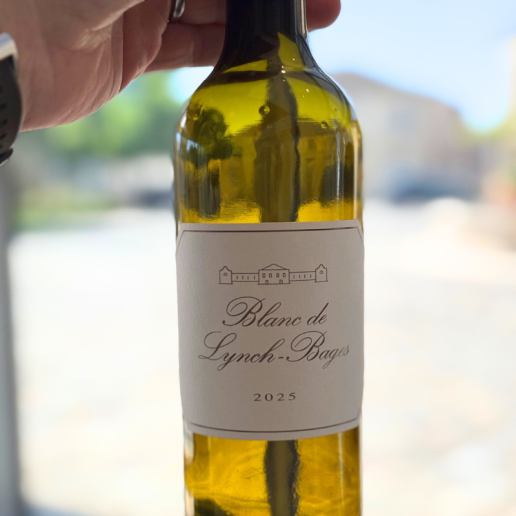
We tasted several new white wines on the day, including those from estates releasing a blanc for the first time. When we asked what had been replanted to produce the fruit, the answer was overwhelmingly Merlot. The Left Bank is clearly reducing its reliance on Merlot in the red blends while simultaneously responding to demand for white Bordeaux. The Cos Blanc was the standout for us, layered, saline, phenolic and refreshing, while the Blanc de Lynch Bages showed lovely depth and texture.
Our Early Take
Quality-wise, 2025 on the Left Bank looks even more exciting than we expected going in. In Pauillac and Saint-Estèphe, the combination of late-August rain, earlier picking, and a collective shift towards gentler extraction has produced wines that are genuinely balanced, fruit-expressive, and ready to drink at a younger age than is typical. With yields down meaningfully at several estates, volumes are expected to be tight, but if price increases are observed with suitable restraint, we expect real interest from the market.
Day 2 takes us to Pessac-Léognan, Margaux and Saint-Julien. Stay tuned for more Cult Wine's coverage of Bordeaux En Primeur 2025 vintage and follow us on social media for daily video recaps.
Instagram: @cultwines
Fine Wine Investment Guide
Download your guide to fine wine investing and discover how this unique, tangible, and tax-efficient asset can enhance portfolio diversification. Gain valuable knowledge and insights with this indispensable document for investors.
Related 2025 En Primeur Content
Day 4 - Bordeaux EP 2025: Pomerol & Pessac-Léognan
By Hermione Egerton-Smith
Day 3 - Bordeaux EP 2025: Saint-Émilion
By Sean Wright
Day 2 - Bordeaux EP 2025: Pessac-Léognan, Margaux & Saint-Julien
By Hermione Egerton-Smith
Bordeaux 2025: Quality Returns. The Price Has Yet to Follow.
By Aarash Ghatineh
Related Articles
Day 4 - Bordeaux EP 2025: Pomerol & Pessac-Léognan
By Hermione Egerton-Smith
Day 3 - Bordeaux EP 2025: Saint-Émilion
By Sean Wright
Day 2 - Bordeaux EP 2025: Pessac-Léognan, Margaux & Saint-Julien
By Hermione Egerton-Smith
Bordeaux 2025: Quality Returns. The Price Has Yet to Follow.
By Aarash Ghatineh
Bordeaux 2024 En Primeur Roundup: A Vintage with Something to Prove
By Aarash Ghatineh