Wine of Kings, Reinvented: The Dry Furmint Revival of Tokaj

For three hundred years, the word Tokaj meant one thing: sweetness. The golden, honeyed Aszú that filled the glasses of Louis XIV and Catherine the Great, the wine Voltaire wrote about, and the Russian tsars kept under armed guard. It was, quite literally, the wine of kings.
So here is the surprise waiting in the volcanic hills of north-eastern Hungary. Today, roughly seven in every ten bottles produced in Tokaj are not sweet at all. They are bone-dry, taut and mineral, built on the same noble Furmint grape but turned to an entirely different purpose. Racy, savoury white wines that the best sommeliers now set beside Chablis and the finest dry Chenin.
The script has been quietly flipped. And the collectors paying attention are already ahead of the curve.
From the Cold War to the Cult List
To understand why dry Furmint matters, it helps to understand how unlikely it is.
Tokaj spent the twentieth century in the cold. Phylloxera devastated the vineyards in the nineteenth century, two world wars followed, and then four decades of Soviet-era control prioritised volume over quality until the region's extraordinary reputation faded to a memory. When Hungary emerged from communism in the early 1990s, Western money and a new generation of growers poured in, and almost all that early energy naturally went into reviving the legendary sweet wines.
Dry Furmint was an afterthought. A respected Master of Wine, surveying the region at the turn of the millennium, judged its dry wines merely acceptable.
What happened next is one of modern wine's quiet revolutions. A warming climate, a collapsing global appetite for dessert wines and a restless cohort of winemakers pushed Furmint in a new direction. They began vinifying it dry, chasing precision and tension rather than sugar, and the wines grew up fast. The grape was always capable of it: Furmint carries high natural acidity, thick skins and an uncanny sensitivity to soil, the very traits that made it perfect for sweet wine and make it, dry, a thrilling transmitter of place.
The 300-Year-Old Map Burgundy Wishes It Had
Here is the detail that gives Tokaj its quiet authority, and the one collectors should hold onto.
In 1737, royal decree classified the vineyards of Tokaj by quality, one of the very first vineyard classifications anywhere in the world, predating the famous 1855 ranking of Bordeaux by well over a century. What is remarkable is that the map still holds. Most of the sites named as superior nearly three hundred years ago are still considered the finest today, a pedigree that matters more and more as the market's attention shifts toward site-specific, single-vineyard bottlings.
That history has handed the modern dry-wine movement a ready-made grammar of great terroir. As producers moved toward single-vineyard wines, they simply reached for the crus their ancestors had already identified. Names such as Szent Tamás, Úrágya, Betsek and Nyúlászó function as the Tokaj equivalent of a Burgundy lieu-dit, each volcanic slope giving Furmint a different accent of smoke, citrus, orchard fruit and stone. The soils are the secret: Tokaj sits on the eroded remains of more than four hundred extinct volcanoes, a patchwork of volcanic tuff, clay and loess that lends the wines their signature salinity and cut.
Mád: The Most Important Wine Village You've Never Heard Of
If dry Furmint has a capital, it is Mád. Around four-fifths of the vines here are Furmint, the highest concentration anywhere on earth, and many of the region's benchmark single-vineyard wines come from the slopes that ring the village. It has become the natural centre of gravity for anyone serious about the new Tokaj.
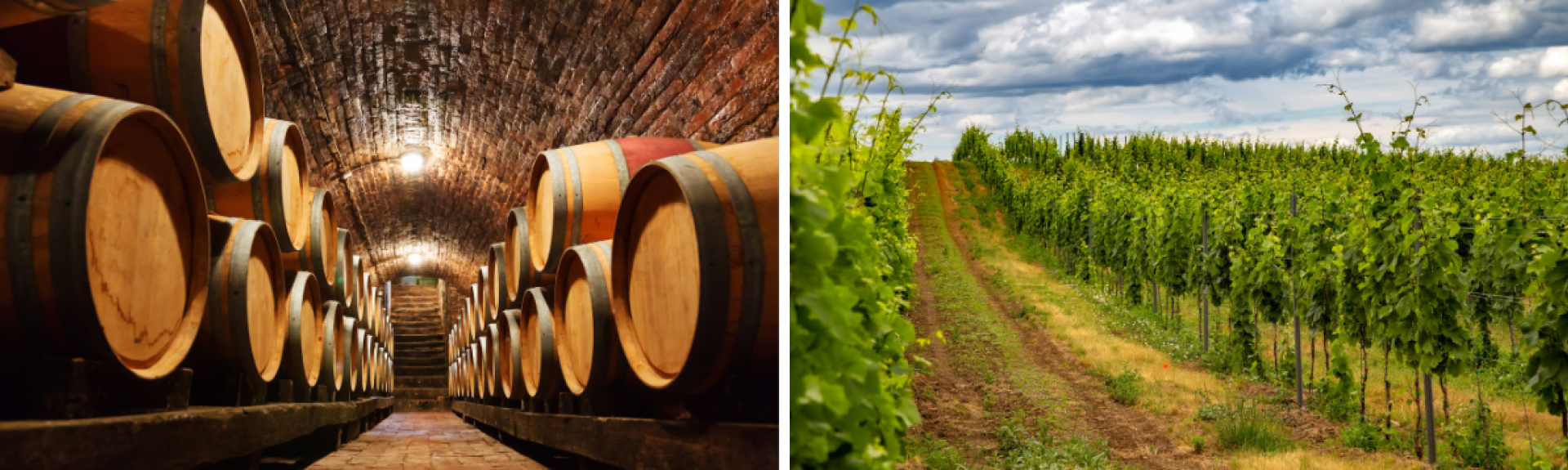
It is an unhurried, atmospheric place. Cellars are cut directly into the volcanic rock, their tunnels lined with the thick black mould that thrives in the constant cool, a living ecosystem that holds at ten to twelve degrees year-round whatever the season outside. You walk from bright summer heat into the dark, damp quiet of a working cellar, and the temperature drop alone tells you something about why these wines taste the way they do.
Summer is the moment to visit. The festival season runs from the Tokaj Wine Festival in early June through to the Furmint celebration held in Mád itself in July, when producers throw open their doors and the whole village turns into a walking tasting. Long evenings, vineyards at their greenest, and the chance to meet winemakers at home rather than across a counter. It is access no polished visitor centre can match. One insider tip: book accommodation for festival weekends well in advance, because the village is small and word has spread.
The Names to Know
The pleasure of Tokaj today is the sheer range of what a single grape can do, and a handful of producers define the conversation.
István Szepsy is the father of modern Tokaj. An eighteenth-generation winemaker widely regarded as Hungary's greatest. He made the first experimental dry Furmint from the Úrágya vineyard in 2000 and effectively invented the category. His single-vineyard bottlings, above all Szent Tamás, are the region's benchmark, ageworthy wines of real intensity that have a genuine claim to sit alongside fine White Burgundy. In a blind tasting Szepsy himself ran, expert palates found his Furmints more expressive of their individual vineyards than a comparable line-up of Côte d'Or Chardonnays.
Royal Tokaji, founded in 1990 with the encouragement of wine writer Hugh Johnson, was central to the region's revival and remains its most internationally recognised name. It made its first dry Furmint in 2009 and today bridges the gap between world-class Aszú and serious dry wines.
Barta farms the steep, terraced Öreg Király vineyard, one of the most dramatic single sites in Tokaj and increasingly sought out by collectors who want a named cru in the cellar.
Holdvölgy has built a reputation for precision-driven, modern dry wines, while Disznókő and Oremus remain leading houses for the classic sweet styles. And for the truly curious, there is Samuel Tinon, the great modern champion of dry Szamorodni, an oxidative, flor-aged style not unlike a fino sherry and one of the very few dry botrytised wines on earth. Pour a glass and you are drinking something perhaps a few thousand people worldwide will taste this year. It is the definition of an insider's wine.
Producers to Know
| Producer | Why Follow |
|---|---|
| Szepsy | Father of modern Tokaj; benchmark single-vineyard Furmint |
| Royal Tokaji | Historic revival estate; world-renowned Aszú and dry wines |
| Barta | Famed Öreg Király vineyard; collector appeal |
| Holdvölgy | Modern, precision-driven dry wines |
| Disznókő | Leading Aszú producer |
| Samuel Tinon | Rare dry Szamorodni; pure insider currency |
Why Burgundy Drinkers Are Discovering Tokaj
For a Cult collector, the appeal of Tokaj is not exotic novelty. It is that the region behaves like the great terroirs already in your cellar.
Dry Furmint is built on exactly the values Burgundy buyer’s prize. A single noble grape, a mosaic of named single vineyards, distinctive volcanic soils, small production from quality-obsessed growers, and wines that genuinely age. The difference is price. As Burgundy has climbed to the point where village wines from sought-after producers comfortably clear three figures and Premier and Grand Crus run into the hundreds or thousands, dry Furmint still offers comparable complexity for a fraction of the outlay.
The numbers make the case. Szepsy's benchmark single-vineyard Furmints, Szent Tamás and Úrágya, have retailed in the UK at around £55–£60 a bottle, with his estate Furmint nearer £25–£35. Compare that with White Burgundy. A village Puligny-Montrachet from a respected name now starts around £80–£100, and Premier Cru bottlings climb well beyond, before you reach the rarefied air of the Grands Crus. For collectors watching Burgundy's relentless appreciation price them out of sites they once bought freely, Furmint offers something increasingly rare, a serious, ageworthy, terroir-driven white still trading on quality rather than scarcity.
The sweet wines, meanwhile, never left the collector's table. Older vintages of Aszú still change hands for thousands at auction, and the legendary Eszencia, made in tiny quantities from free-run juice that can take years to ferment, is among the rarest and longest-lived wines on earth. That pedigree is the foundation; the dry wines are the opportunity built on top of it.
The Tasting that Made it Click
Before writing this piece, my experience of Tokaj was limited to its famous sweet wines. While researching the region, I wasn't able to get my hands on benchmark dry Furmints such as Szepsy or Barta, the bottlings that define its new reputation.
What my local wine merchant did have was arguably more useful: a dry Furmint and a traditional Aszú I could taste side by side. What struck me most was how different the dry Furmint felt from the sweet Tokajis I already knew. It had a freshness and structure that immediately explained why so many sommeliers are excited about the category, and set against the honeyed Aszú beside it, the contrast made the whole region click.
Neither bottle sits among Tokaj's most sought-after names, and that is precisely the point, because this is how most of us will first meet the region, not by opening a cellar-worthy single-vineyard wine but by picking up whatever good example is on the shelf.
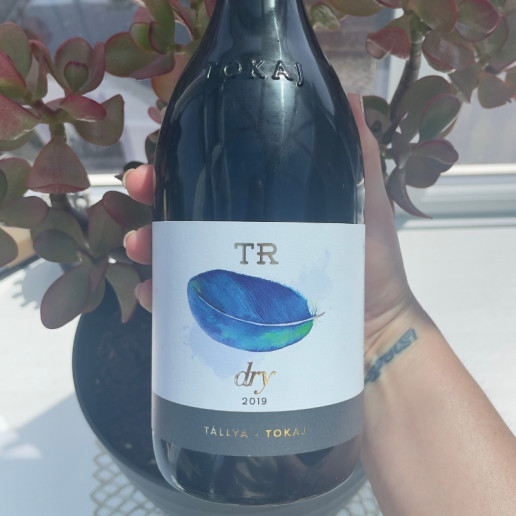
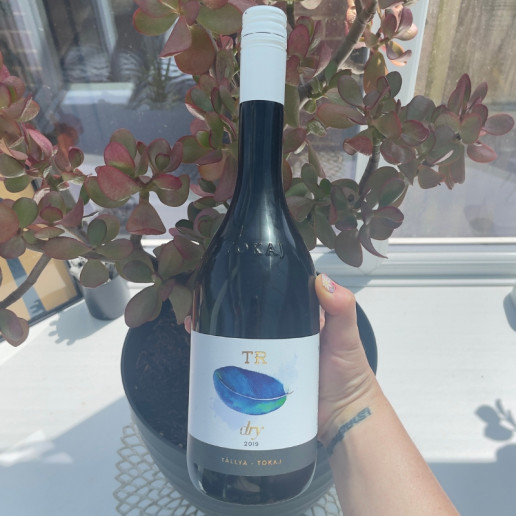
The Dry: TR Tokaj 'Radicals' Dry 2019
Furmint 80%, Hárslevelű 20% · 1,500 bottles · certified organic
A natural-wine insider's bottle from the organic vineyards of Tállya: spontaneously fermented, aged mostly in steel with a quarter in large Hungarian oak. Serve well-chilled, around 8–10°C. Look for apple blossom, then pear, cinnamon and a twist of almond over a clean, acid-driven palate. With only 1,500 bottles made, it is a pour you won't find twice. Try it with grilled fish, fresh goat's cheese, or simply as an aperitif.
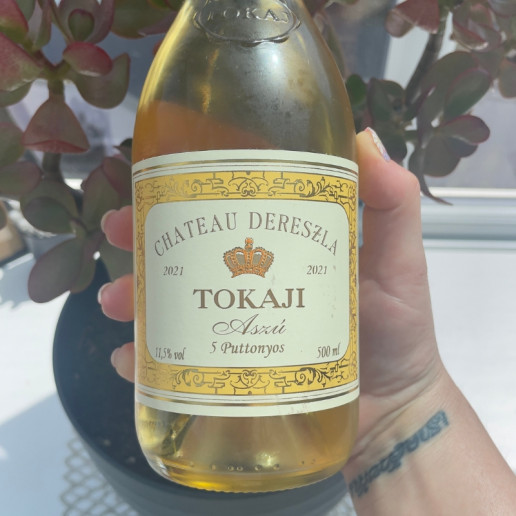
The Sweet: Chateau Dereszla Tokaji Aszú 5 Puttonyos 2021
Furmint and Hárslevelű · noble-rot dessert wine
The Tokaj the kings knew. Five puttonyos means a high proportion of botrytis-shrivelled “noble rot” grapes, giving a rich golden wine. Serve cold, around 10°C, in small pours. Look for dried apricot, honeycomb, dried flowers and marmalade, all held in balance by Tokaj's signature streak of fresh acidity, the thing that stops a great Aszú ever feeling cloying. Beautiful with blue cheese, or with anything almond or apricot, though it is a complete dessert in itself.
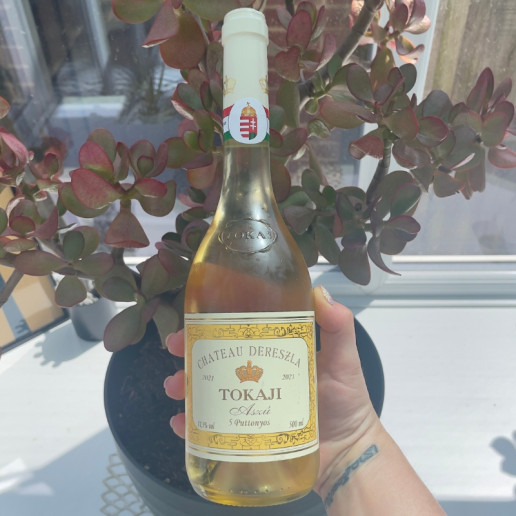
The takeaway: two modest, shelf-found bottles, the same two grapes grown on the same volcanic soil, and yet two completely different wines, one taut and dry, the other opulent and golden, with the same bright acidity humming underneath both.
If a pair of everyday examples can tell that story so clearly, it is easy to see why collectors are chasing what the benchmark producers do with the very same raw materials. That is the secret of Tokaj in two glasses.
At the Table
Like all great wine cultures, Tokaj makes more sense with a plate in front of you. Dry Furmint, with its acidity and salinity, is a remarkably versatile partner: it cuts through paprika-laced stews, stands up to the cured meats and sheep's milk cheeses of the region, handles roast goose and game, and has the structure for spice, which is why sommeliers reach for it alongside everything from sushi to Sichuan. The sweet wines have their own theatre, a glass of Aszú with blue cheese, or alone as the light fades over the hills, the kind of moment that reminds you why kings once fought over this stuff.
The Collector's Window
Every so often, a fine wine category arrives at a moment where heritage and momentum meet before the market fully catches up. Tokaj is in exactly that window. Three centuries of reputation, one of the world's oldest vineyard classifications, volcanic terroir, and an indigenous grape grown almost nowhere else have given the region remarkable foundations. As more sommeliers pour dry Furmint and more collectors discover the crus mapped out in 1737, the secret becomes harder to keep.
Three centuries after Tokaj became Europe's most celebrated sweet wine region, its future may be written by dry wines instead. The vineyards have not changed. The grape has not changed. What has changed is how the world is learning to taste them.

Related Articles
70 Years of Unico: What Tasting Vega Sicilia Across 7 Decades Tells You
By Aarash Ghatineh