A Quick History of Italian Wine
Italian wine has a habit of feeling both familiar and endlessly surprising. You can pour a glass of everyday Montepulciano with dinner, then fall down a rabbit hole of ancient amphorae, Renaissance edicts, Alpine viticultural oddities, and grape varieties that seem to exist only in one valley, tended by somebody’s stubborn uncle.
Italy is also, by most modern measures, still the juggernaut. The International Organisation of Vine and Wine has repeatedly put Italy at, or very near, the top for global production by volume. And while the old stereotypes about oceans of cheap plonk do not describe the country’s best bottles, they do hint at something real: Italy’s wine story has always been a story of scale as well as craft, of commerce as well as culture.
Even Italy’s landscapes can make headlines. The Prosecco hills of Conegliano and Valdobbiadene were inscribed on the UNESCO World Heritage List in 2019, formally recognising a viticultural landscape shaped by steep slopes, ‘hogback’ hills, and a long tradition of hands-on farming.
What follows is a ‘short’ long view, packed with the kind of details that make Italian wine feel less like a category and more like a living archive.
Greeks, Colonies & the Name ‘Oenotria’
Etruscans & the Early Italian Art of Wine as Trade
After Rome: Monasteries, Survival, Definition
Phylloxera & the Long Hangover of ‘Quantity First’
Super Tuscans: The Rebellion that Reshaped Italian Fine Wine
Italy’s Grape Variety Advantage
Before the Greeks
Italy’s wine story starts earlier than you think.
The easy shorthand is ‘the Greeks brought vines to Italy’, and Greek colonists certainly helped spread organised viticulture through southern Italy and Sicily. But Italy’s relationship with grapes is older and messier, because people were exploiting wild vines long before anyone drew tidy lines between ‘wild’ and ‘cultivated’.
Modern archaeology keeps pushing the timeline back. Research has found evidence consistent with early grape domestication in southern Italy during the Bronze Age, using grape pips recovered from archaeological contexts. Sardinia, too, has produced evidence for very early cultivated or semi-cultivated grape varieties in the Bronze Age.
In other words, by the time Greek settlers arrived in force, parts of Italy already knew vines, and in some places likely knew wine. The Greeks did not so much ‘invent’ Italian wine as accelerate it, formalise it, and connect it to wider Mediterranean trading networks.
Greeks, Colonies & the Name ‘Oenotria’
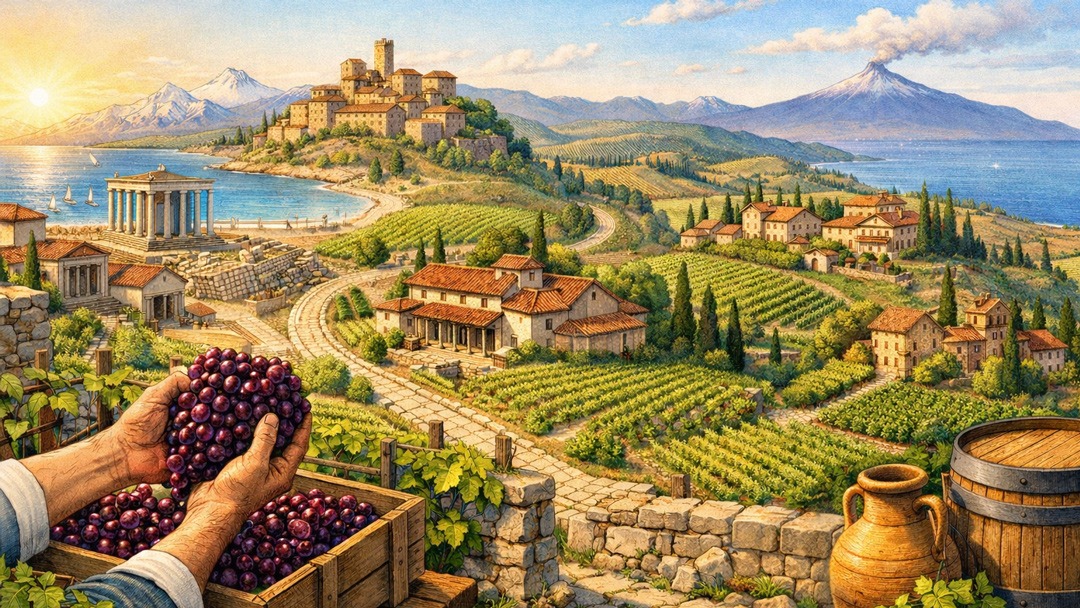
Greek colonisation in southern Italy and Sicily (often grouped under the term Magna Graecia) mattered because it brought agricultural know-how: vineyard layout, pruning and training methods, and a more systematic approach to turning grapes into a stable, tradable product. Academic work on Sicilian wine history notes that Greek colonists brought cultivated knowledge of vine training and winemaking to southern Italy and Sicily from their earliest settlements.
You will often see the term Oenotria used in connection with ancient Italy. In popular retellings, this becomes ‘the Greeks called Italy the land of wine’, which is broadly the idea, though the history is more layered. The term is associated with southern Italy and is commonly linked to vines and wine, with explanations often focusing on how vines are trained and the region’s suitability for viticulture.
A useful way to think about it is this: even in antiquity, parts of Italy were already being branded, and wine was part of the brand.
Etruscans & the Early Italian Art of Wine as Trade
Well before Rome became an empire, the Etruria region (home to the Etruscans) was a serious engine of agriculture and commerce. Their influence sits behind an important theme in Italian wine history: wine as something made to move.
Italy’s geography all but demands it. Coastal routes, islands, mountain passes, and navigable rivers meant wine could be exchanged not just locally, but across the Mediterranean. That habit of trade is one reason Italian wine ends up, much later, with such a dense patchwork of regional identities and named places on labels. The ‘where’ has always mattered.
Rome: Wine Goes Mass Market
Why Roman Wine Tasted Strange to Modern Palates
Roman wine culture is famous, but it is often described through a modern lens that misses how different the product could be. Wine might be oxidised by today’s standards, sometimes sweetened, sometimes seasoned, and frequently handled in ways that would horrify a contemporary sommelier.
It was also common for Romans to dilute wine, and not only because some wines were strong. Dilution was cultural, tied up with ideas of civilisation and self-control. Undiluted drinking could be framed as barbaric behaviour. (If that sounds like a dinner party you have attended, history truly does repeat itself.)
The Domitian Edict
History states that Emperor Domitian ordered vineyards destroyed in AD 92 to free land for food production. Although this was more of an early example of state intervention in a booming wine economy, rather than the simple ‘Italy destroyed vineyards to grow food’ storyline.
Domitian’s vine edict is commonly described as banning the planting of new vineyards and ordering the removal of a portion of vines in the provinces, linked to concerns that viticulture was crowding out grain production and destabilising supply. It is also widely noted that enforcement was uneven and that the edict became part of the broader push-and-pull between wine economics and food security in the empire.
Later accounts credit Emperor Probus with overturning the earlier restrictions around 280 AD, encouraging vine planting again.
Roman Innovations
Rome’s real legacy is not just volume, but process. Roman writers obsessed over agricultural technique, and the Romans standardised and spread practices across an enormous territory.
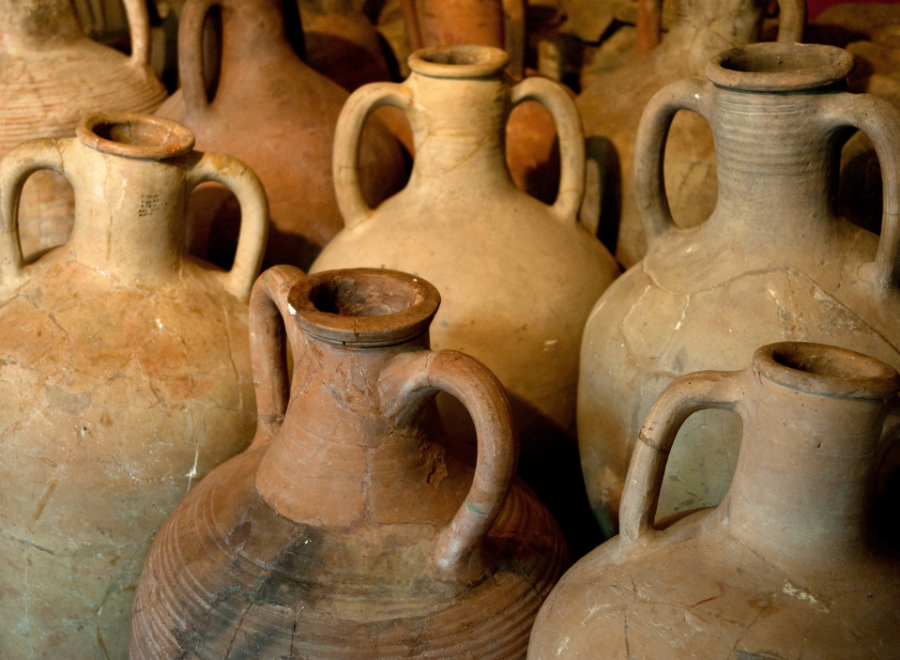
It is often said Romans were the first to store wine in wooden barrels. The Romans absolutely used barrels, but the technology is generally credited to Celtic and Gallic cultures, with the Romans adopting barrels because they were practical for transport, especially overland. Romans still relied heavily on amphorae, particularly for sea trade, but barrels became part of the toolkit through cultural exchange within the empire.
That mix of borrowing and refinement is very Roman and very relevant to Italy’s later wine history, too.
After Rome: Monasteries, Survival, Definition
With the decline of the Western Roman Empire, wine did not vanish. It became less central to a unified commercial system, but it remained culturally embedded, and Christianity ensured it retained liturgical importance. In many parts of Europe, monastic communities preserved vineyard knowledge and the continuity of wine production, even when political structures fractured.
In Italy, that continuity is one reason why certain areas retain a deep-rooted viticultural identity. Regions did not need to ‘rediscover’ wine in the way some places later did. They simply kept going, sometimes quietly, sometimes brilliantly.
Renaissance to Enlightenment
1716: Tuscany Draws an Early Map of Origin
A genuinely wonderful piece of trivia, because it sounds too modern to be true: on 24 September 1716, Tuscany’s Grand Duke Cosimo III de' Medici issued a proclamation defining boundaries for the production of Chianti wine, a forerunner to today’s Chianti Classico concept, and often cited as one of the earliest formal ‘designations of origin’.
This matters because it shows an early understanding of what modern wine drinkers now treat as obvious: place is value.
Fortified Wines & the British Footprint
Italy’s wine history is not only Italian. Trade shapes taste.
Marsala is a prime example. The traditional modern story begins in 1773 with the arrival of the Liverpool merchant John Woodhouse, who helped turn a local Sicilian wine into a fortified product built for long journeys and international markets.
If you have ever wondered why fortified wines sit at the crossroads of local tradition and global commerce, Marsala is your case study in a bottle.
Vermouth, Turin & Italy’s Gift to the Aperitivo Hour
Another Italian invention that hides in plain sight: modern vermouth’s commercial origin is generally traced to 1786 Turin, credited to Antonio Benedetto Carpano.
Vermouth is wine’s clever cousin: aromatised, fortified, and designed for drinking occasions beyond the table. It helped shape the aperitivo culture that is now practically an export industry in itself.
Phylloxera & the Long Hangover of ‘Quantity First’
In the nineteenth century, Italy, like much of Europe, was hit by phylloxera, an aphid-like pest native to North America that devastated European vines. The wider European timeline is well established, including its first identification in Europe in the 1860s and the eventual solution of grafting European vines onto resistant American rootstocks.
The impact in Italy was uneven. Some places suffered terribly. Others, due to soils or isolation, escaped more lightly, which is why you still hear about pockets of very old vines in particular environments.
The bigger legacy was cultural and economic: replanting often prioritised productivity, and for much of the early to mid twentieth century, Italy became strongly associated with inexpensive table wine in international markets. That reputation took decades to dismantle.
The Quality Revolution
Italy’s modern quality framework started in 1963 with the introduction of DOC, established by presidential decree and intended to protect origin and encourage standards.
DOCG followed later, introduced in 1980 for top-tier denominations with tighter rules and formal tasting and analysis requirements.
DOP, IGP, DOC, DOCG and IGT
A key update to the older story is Europe-wide harmonisation. EU reforms aligned national systems under two broader concepts:
- PDO (Protected Designation of Origin), often shown in Italy as DOP, under which DOC and DOCG sit.
- PGI (Protected Geographical Indication), often shown as IGP, broadly aligning with IGT.
In practice, Italian labels still often foreground DOC, DOCG, and IGT because consumers recognise them, but the EU layer helps standardise protection across borders.
‘Lower’ categories are not automatically lower quality. The classification tells you about the regulatory framework and typicality, not a universal ranking of deliciousness.
Sometimes a producer chooses freedom over compliance. Sometimes a wine is experimental. Sometimes the rules lag behind what the best growers are already doing.
Super Tuscans: The Rebellion that Reshaped Italian Fine Wine
Super Tuscans are not a single legal category, but a cultural phenomenon: top Tuscan wines made outside traditional DOC rules, often using international varieties, different ageing regimes, or blends that did not fit the historic mould.
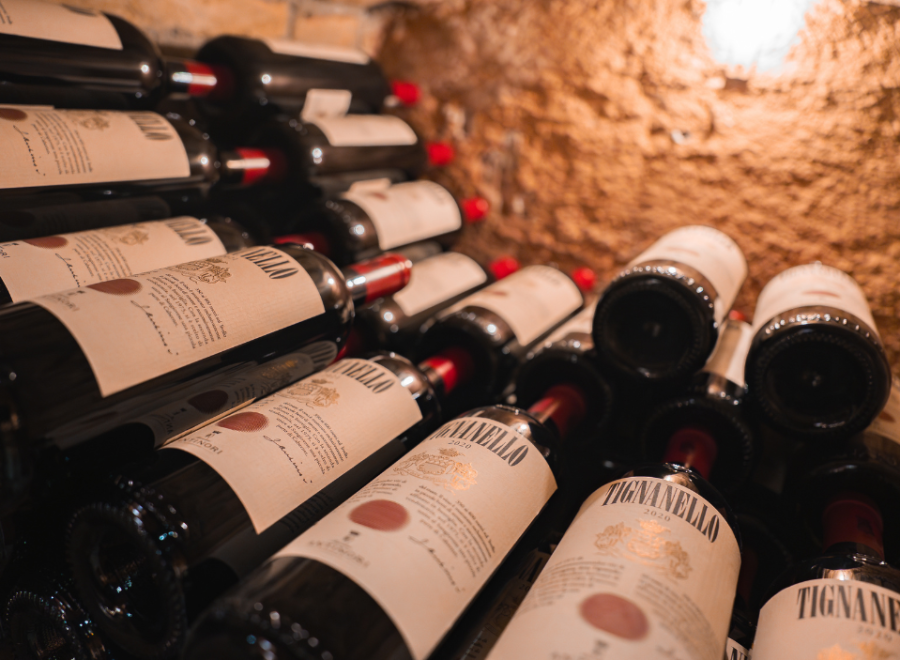
One of the clearest origin points is Tignanello, which Marchesi Antinori describes as shifting in 1971 from being framed as Chianti Classico to a Tuscan red table wine, precisely because it broke the then rules.
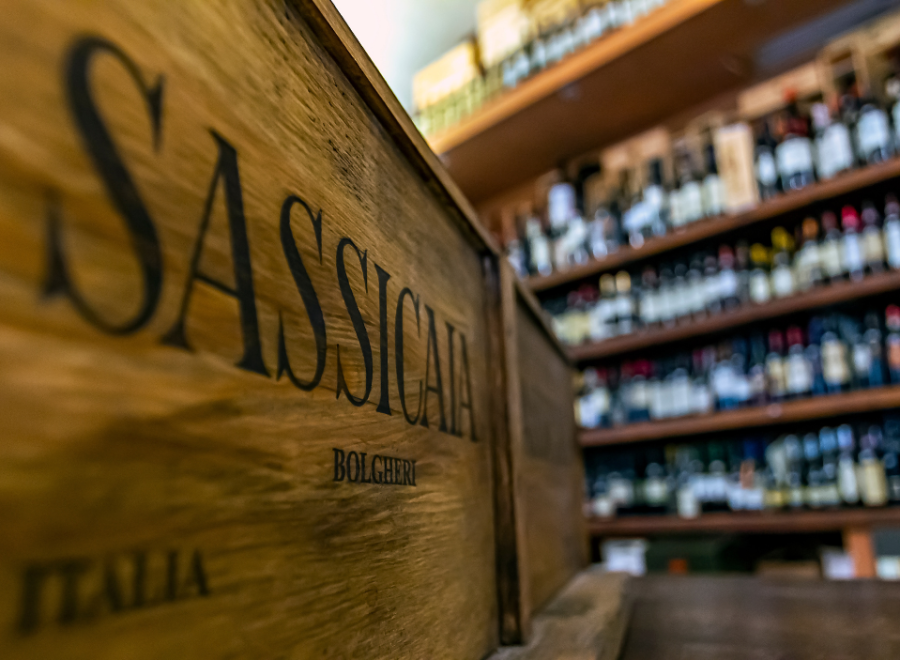
Then there is Sassicaia, a wine so influential that it led to an extraordinary regulatory outcome. Its production zone was recognised in connection with the establishment of DOC Bolgheri in 1994, and later became a denomination in its own right, with the estate describing Bolgheri Sassicaia DOC as uniquely reserved for a single wine produced by a single estate.
The bigger point is this: the Super Tuscan era helped shift Italy’s fine-wine reputation globally. It showed that Italy could compete at the highest level not only through tradition, but through innovation, ambition, and an occasional willingness to be told off by the rulebook.
Italy’s Grape Variety Advantage
Italy has extraordinary grape biodiversity, with roughly 400 varieties in commercial production, and far more identified overall across 20 winemaking regions.
That biodiversity is not trivia; it explains the Italian wine experience:
- Why two towns 20 miles apart can produce reds that taste as if they come from different planets.
- Why Italy has such a deep bench of distinctive whites, from mountain-grown, high-acid styles to coastal, aromatic varieties.
- Why wine travel in Italy feels like learning dialects, not accents.
Sparkling Italy: Not Just Prosecco
Italy’s sparkling identity is broader than most people assume.
Prosecco’s UNESCO-listed hills are about a specific cultural landscape, but the wider Prosecco story also reflects modern winemaking scalability and international demand.
Franciacorta is Italy’s great traditional-method counterpoint, with modern commercial origins often traced to early 1960s releases and later formal recognition through DOC and DOCG progression.
Asti has its own legacy tied to aromatic grapes and a style that helped define Italian sparkling wine abroad.
Put simply, Italy did not choose one sparkling identity. It built several, each with its own logic.
Where Italian Wine is Now
Modern Italy sits at a fascinating intersection: an ancient wine culture that still leads the world in volume in many vintages, while also producing some of the most compelling, site-specific wines anywhere.
The old clichés still hover, because they are hard to kill. But if you follow the history, you see why they are incomplete. Italy has always been both: peasant wine and palace wine, local drinking and global trade, strict rules and glorious rule-breaking.
Italian wine rarely stands still. Even when it looks like tradition, it is usually tradition plus adaptation, which is exactly how a wine culture manages to stay alive for as long as Italy’s has.