Liquid Landscapes: How Realm Cellars Turns Terroir into Art

At Realm Cellars, the story of wine extends far beyond vineyard rows and cellar walls. Each bottle becomes a visual and philosophical expression of place. Where terroir is not only tasted, but also seen, interpreted and reimagined through contemporary art. From myth-inspired abstraction to data-driven imagery and cultural symbolism, Realm’s labels form a dialogue between landscape, history and human creativity.
Heavenly Questions: Balance on Pritchard Hill
The Houyi Estate Vineyard on Pritchard Hill represents a new chapter for Realm, and a site where Cabernet Franc reveals striking purity and focus.
Elevated and surrounded by prestigious neighbours known for the varietal, the vineyard’s character is shaped by its mountain environment, where precision farming and natural resilience define the resulting wine.
The label artwork translates this terroir into myth.
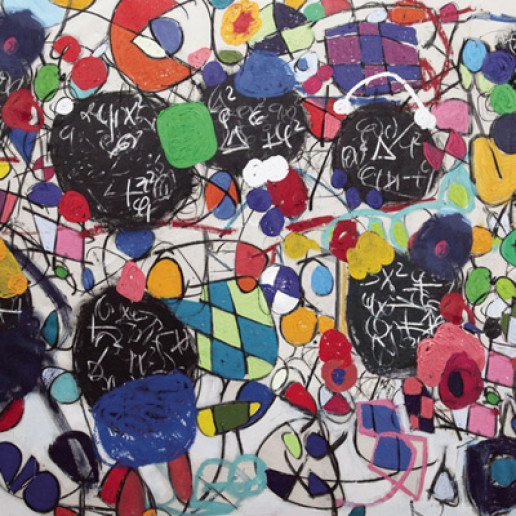
Inspired by the ancient Chinese legend of Houyi shooting down nine suns to restore harmony, artist Taher Jaoui created Nine Suns, an abstract composition punctuated by nine black circles scattered across vibrant colour fields. His use of mathematical symbols and gestural marks mirrors the winemaker’s balancing act between science and intuition.
In this sense, the art does not merely illustrate a story. It reflects the vineyard’s own equilibrium between power and elegance. The mountain’s intensity becomes visualised as tension, while the wine’s finesse is expressed through order and balance.
Moonracer: Terroir as Data & Memory
At the Stags Leap District estate on Wappo Hill, Moonracer captures the complexity of a vineyard defined by varied elevations, exposures and soils. The wine itself is described as “intellectual,” combining structural depth with refined tannins, which is a stylistic bridge between different expressions of Napa Valley.
Spanish artist Sergio Albiac approached the label as an act of translation. Using climatic data from the vineyard, temperature, wind and solar radiation, he developed an algorithm capable of generating a unique abstract image for each bottle.
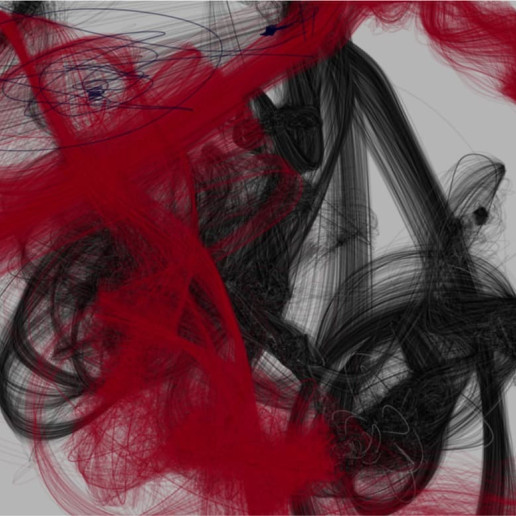
Here, terroir is rendered not as scenery but as information. Each label becomes a visual fingerprint of the growing season, reinforcing the idea that a wine's identity is shaped by countless micro-events: weather shifts, sunlight patterns, and subtle natural variations.
To Kalon: The Ideal of Beauty
Few vineyard names carry as much resonance as Beckstoffer To Kalon, long considered one of Napa Valley’s defining sites. Its vast alluvial soils and historic plantings produce Cabernet Sauvignon wines marked by density, opulence and unmistakable presence.
To express this legendary terroir, Realm commissioned artist Alea Pinar Du Pre to reinterpret Botticelli’s Birth of Venus. Using her distinctive “pipe-painting” technique, she created a holographic, futuristic rendering of the goddess: a visual meditation on beauty itself.
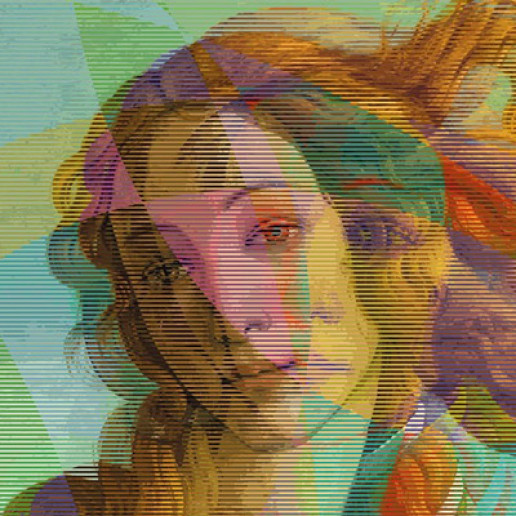
The connection is deliberate. Just as To Kalon has been celebrated for generations as an ideal expression of Napa Valley, Venus symbolises timeless perfection. The vineyard’s physical grandeur and the philosophical pursuit of beauty converge on the label, reminding drinkers that terroir can inspire both sensory and aesthetic admiration.
Farella: Complexity in Motion
In the cooler Coombsville AVA, Farella Vineyard’s layered volcanic soils, varied slopes and shifting microclimates create wines of structure and aromatic nuance. The site’s diversity, from rocky high points bathed in sunlight to sheltered lower blocks, lends the wine both concentration and mineral tension.
The label artwork Heart of Dance by Wosene Worke Kosrof channels this dynamic landscape. His elongated Amharic script forms move rhythmically across the canvas, evoking improvisation and movement.
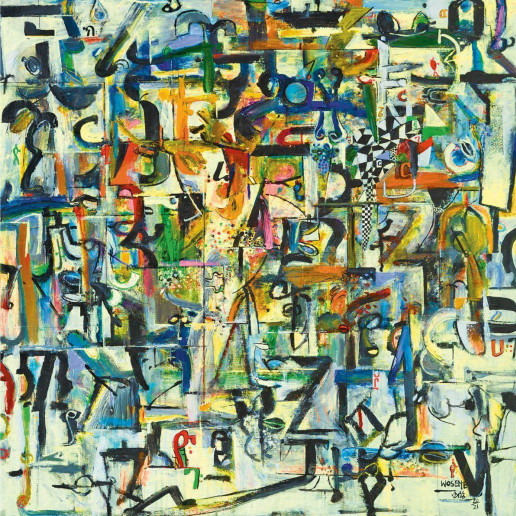
The piece also pays tribute to vineyard founder Frank Farella, whose love of music and dance shaped the estate’s identity. Terroir here is interpreted as rhythm. It is an ever-changing interplay of geology, climate and human stewardship.
Dr. Crane: History & Longevity
Located on Napa’s valley floor in St. Helena, Beckstoffer Dr. Crane Vineyard is defined by rocky, well-drained soils and a warm microclimate ideal for Bordeaux varieties. Its wines show minerality, layered fruit and structural completeness: qualities that reflect both geological heritage and viticultural precision.
Chinese artist Yang Jiechang’s 17 White Clouds label honours this legacy. Cranes, symbols of longevity and wisdom, hover alongside the scholar’s rock, which is a traditional emblem of energy and contemplation.
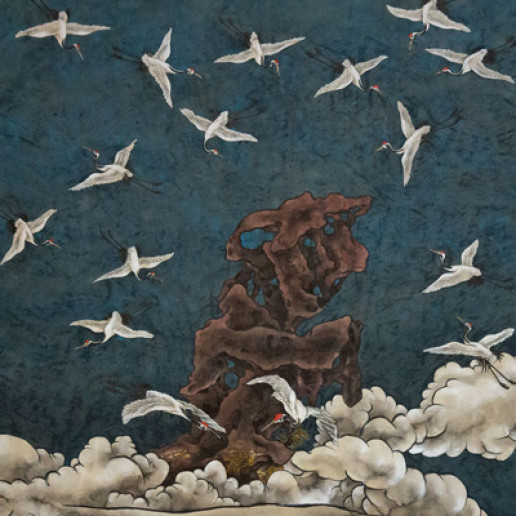
The monochromatic ink style merges Eastern tradition with contemporary interpretation, echoing Realm’s philosophy of innovation rooted in respect for the past.
Wines Without Rules: Visualising Risk, Instinct & Creative Freedom
For wines that challenge convention, Realm’s label artworks deliberately move beyond traditional vineyard narratives and into more conceptual territory, where the philosophy of winemaking itself becomes the subject.
For The Tempest, U.K.-based artist Richard Twose’s painting Reach II plays a central role in shaping the wine’s identity. Working in the non-finito tradition, where a piece is intentionally left incomplete, Twose invites the viewer into the creative process.
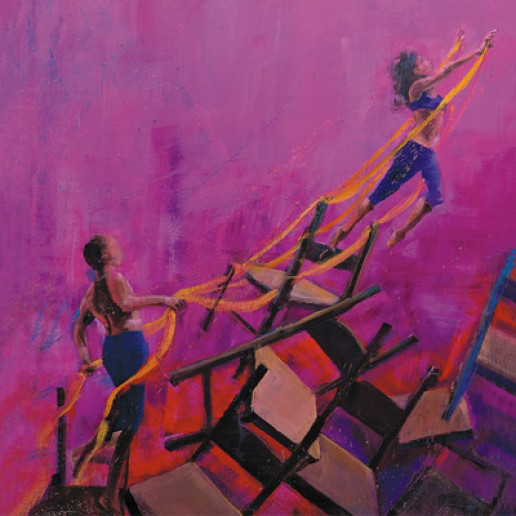
The figures perched precariously on stacked chairs appear frozen in a moment of uncertainty, their balance never fully assured. This sense of tension is central to the artwork’s emotional charge.
The vivid colour palette, layered brushwork and unresolved composition echo the challenges of crafting a proprietary blend from varied vineyard sources. Just as the winemaker must decide when to stop blending, when the wine has reached equilibrium, Twose halts the painting before it resolves. The result is a visual metaphor for risk, ambition and trust in instinct. Wine, like art, becomes a collaborative act between creator and observer, with meaning evolving over time.
If The Tempest explores balance, The Absurd embraces disruption. Its label, assembled by artist and designer Richard Von Saal, is a deliberately chaotic collage of surreal imagery sourced from vintage magazines. Monkeys representing sensory denial, chess pieces symbolising strategy, butterflies suggesting transformation, and even playful pop-culture references coexist within a single visual field.
Rather than presenting a cohesive narrative, the artwork invites interpretation. This aligns with the philosophy behind the wine itself: each vintage is created without rigid rules, guided only by palate and the pursuit of excellence. The collage aesthetic reflects this freedom. Fragmented, provocative and humorous, it challenges the viewer to find personal meaning. This is much like the wine challenges drinkers to define its identity through experience rather than description.
Fidelio & The Bard: Art as Storytelling & Cultural Reference
Both Fidelio and The Bard draw inspiration from enduring cultural works. One rooted in Beethoven’s operatic drama, the other in Shakespearean literature. Through these references, Realm positions its wines within a broader artistic and historical dialogue, where storytelling becomes an extension of terroir.
For Fidelio, artist Sylvia Ji created Leonore, a richly layered painting inspired by Beethoven’s only opera. The composition radiates with warm reds and oranges that visually echo the wine’s citrus- and tropical-tinged aromatic profile.
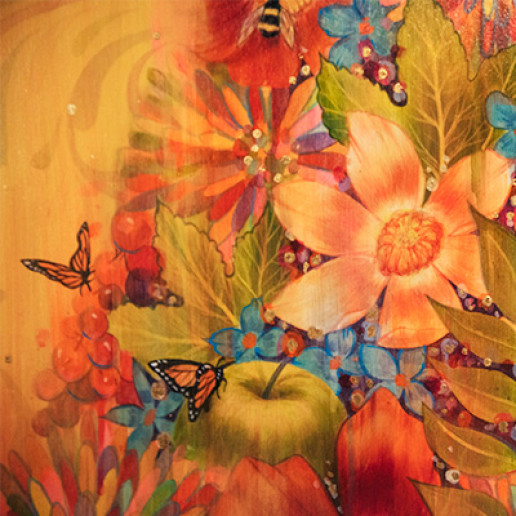
Ji’s technique, which involved overpainting her earlier work, introduces a sense of evolution and transformation. Residual motifs such as flowers and butterflies emerge through the surface, suggesting continuity and renewal.
This visual layering parallels the winemaking process itself. Multiple fermentation vessels, pick dates, and vineyard sources contribute to the wine’s complexity, just as successive artistic gestures build depth within the canvas. Ji’s exploration of themes such as femininity, beauty and emotional resilience reinforces Fidelio’s identity as a wine defined by precision yet animated by expressive energy.
Meanwhile, The Bard takes a more literary approach to visual storytelling. Its label draws directly from a pocket-sized 1901 edition of Shakespeare’s King Richard II, focusing on the passage containing the phrase “this blessed plot, this earth, this realm.” Rather than commissioning contemporary abstraction, Realm chose to foreground typography, historical texture and textual heritage.
The worn page becomes an artwork in its own right: a tactile reminder of time, authorship and enduring cultural influence. Just as Shakespeare’s writing shaped English literature, Cabernet Sauvignon shapes Napa Valley’s identity. The visual simplicity of the label underscores the wine’s ambition to synthesise multiple vineyard sources into a singular, authoritative expression.
Where Wine Becomes Meaning
Across Realm’s portfolio, art is not an afterthought, but a continuation of the vineyard’s voice. Soil, climate, history and human intuition are translated into colour, form and symbol, allowing each bottle to communicate beyond flavour alone. These labels act as visual reflections of terroir’s deeper dimensions: balance and tension, memory and transformation, instinct and intellect. In doing so, they remind us that great wine is never purely agricultural nor purely technical. It is cultural, emotional and profoundly expressive.
Ultimately, Realm invites us to reconsider how we experience wine. To look as well as taste. To question as well as admire. Each artwork becomes a point of entry into a wider story: one that connects landscape to imagination, tradition to innovation, and the fleeting moment in the glass to something far more enduring. In this space between nature and interpretation, wine becomes not just something we drink, but something we contemplate.

Related Articles
Bill Koch’s Grand Wine Auction: Region Performance Report
By Jonathan Stevenson
Bill Koch’s Grand Wine Auction: A Collector’s Legacy
By Jonathan Stevenson