China in the Glass: An Evening with The Author from ‘The Chinese Wine Renaissance’

I had the pleasure of attending a dinner hosted by the London Women and Wine Club, which welcomed Janet Wang, author of 'The Chinese Wine Renaissance', as the evening’s guest speaker. Janet guided us through the long yet fragmented history of Chinese winemaking.
While archaeological evidence shows that wine production in China dates back thousands of years, its development was repeatedly disrupted by the rise and fall of dynasties.
At the heart of this discontinuity lies a core Chinese value: pragmatism and restraint.
Wine, often perceived as indulgent or wasteful, sat uneasily alongside virtues that prioritised frugality and utility. As a result, grain-based alcohols such as huangjiu and baijiu were historically favoured because of their lower production costs and easier access to ingredients.
The economic boom of the early 2000s, however, marked a decisive turning point. As French wines flooded the Chinese market and demand surged, a new question emerged among domestic producers: could China elevate its own winemaking and compete on a global stage? It is this moment of self-reflection and renewed ambition that gives rise to the book’s title.
The 'Chinese Wine Renaissance' looks back at China’s long, interrupted wine history not out of nostalgia, but to rediscover inspiration, and to chart a more confident path forward.
Line-up of the Night
1. Château Sun God, Blanc de Blancs (Sparkling Wine) 2006
Upon arrival, we were served the Château Sun God, Blanc de Blancs (Sparkling Wine) 2006, produced by Great Wall. Made from 100% Chardonnay, the wine shows an impressive balance of acidity and maturity, with layered notes of citrus fruit, apricot and pineapple, alongside hints of honey, yoghurt, and brioche.
The Great Wall is located in Hebei, northern China. Benefiting from its proximity to Beijing, the winery is state-backed and became one of China’s first producers to operate at an industrial scale.
This particular cuvée was created specifically for VIP guests at the 2008 Beijing Olympics, offering an early glimpse into China’s ambitions on the international wine stage.
2. Xige Estate, Jade Dove, Single Vineyard Chardonnay 2019
The second wine transported us to another of China’s most renowned wine regions: Ningxia. Made from 100% Chardonnay, it offers delicate aromas of ripe apple, balanced by subtle notes of butter and freshly baked bread.
Xige Estate was founded by Zhang Yanzhi, the first Chinese member of the Académie du Vin de Bordeaux. The Jade Dove range is produced specifically for export, with all grapes sourced from a single vineyard on the eastern foothills of the Helan Mountains.
The wine is a clear expression of Ningxia’s terroir, combining precision, restraint, and a growing confidence in regional identity.
3. Gogo Pandart, Reserve Marselan 2017
Also produced in Ningxia, this wine is made from 100% Marselan. On the nose, it opens with a generous bouquet of red and dark berries, while the palate is notably approachable, with supple, low-to-medium tannins and a sense of ease that makes it immediately drinkable. Marselan represents one of China’s most compelling success stories in the international wine landscape.
A French crossing of Grenache and Cabernet Sauvignon, the variety has found a natural home in China, much like Malbec did in Cahors before flourishing in Argentina.
As highlighted in 'The Chinese Wine Renaissance', Marselan thrives in Ningxia’s continental climate, adapting well to drought, wide temperature swings, and disease pressure. Free from the weight of Old World expectations, it has allowed Chinese producers to express confidence, originality, and a distinct regional identity.
4. Greatwall, Terroir Cabernet Sauvignon 2015
The final wine of the evening kept us in Ningxia, while bringing us full circle back to Great Wall, whose sparkling wine had opened the night. Made from 100% Cabernet Sauvignon, this wine is an unapologetically ambitious expression, clearly positioned to stand alongside its Bordeaux counterparts.
The grapes are grown on the southern slopes of the Helan Mountains, an area also home to Xige Estate’s Jade Dove Chardonnay, where altitude, strong sunlight, and pronounced diurnal temperature shifts help preserve freshness and structure. In the glass, the wine shows depth and confidence, with notes of dark fruits layered with coffee, liquorice, and tobacco. As discussed in 'The Chinese Wine Renaissance', Cabernet Sauvignon has long been both a challenge and a benchmark for Ningxia.
The region’s continental climate demands careful site selection and vineyard management, from winter vine burial to precise harvesting, but when handled well, Cabernet Sauvignon can deliver power without excess and structure without greenness.
This bottling reflects that progress, earning a Bronze medal at the Decanter World Wine Awards in 2018 and highlighting Ningxia’s growing technical command of one of the world’s most demanding grape varieties.
The Fine Wine Districts in China
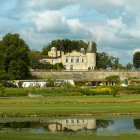
In 'The Chinese Wine Renaissance', Domaine de Long Dai and Ao Yun are positioned as two flagship estates that signal China’s arrival in the global fine-wine conversation, each shaped by the influence of an international luxury group. Domaine de Long Dai, backed by Château Lafite Rothschild, is located in Shandong’s Qiu Shan Valley, where a maritime influence brings humidity, disease pressure, and vintage variability.
The book highlights Lafite’s decision to work patiently within these constraints, applying Bordeaux precision to vineyard management, yields, and blending rather than forcing a stylistic replica. The result is a wine that speaks to structure, restraint, and technical finesse, reflecting Lafite’s philosophy of long-term terroir development over immediate impact.
Ao Yun, by contrast, represents a more radical vision. Supported by the LVMH Group, the estate is situated in the remote foothills of the Himalayas in Yunnan, at altitudes exceeding 2,000 metres. Janet Wang describes Ao Yun as an exercise in extremity, dramatic diurnal shifts, fragmented vineyards, and heroic viticulture across multiple villages.
Here, the challenge is not excess humidity but isolation, altitude, and logistical complexity. Ao Yun’s style is shaped less by classical reference points and more by its environment, producing wines of power, freshness, and aromatic lift.
Together, these two estates illustrate the dual pathways of China’s fine-wine ambitions: one grounded in refinement and inherited expertise, the other driven by exploration and scale-defying ambition, both underscoring how international backing has accelerated China’s confidence at the highest level of winemaking.
Looking ahead, it’s quite possible that the interest in Chinese wine will be defined less by speculation and more by selectivity and credibility. Flagship estates such as Domaine de Long Dai and Ao Yun are likely to remain focal points, not simply because of their backers, but because they combine scarcity, technical consistency, and a clear narrative of place. As international critics, collectors, and institutions become more familiar with these wines, pricing is expected to stabilise before any meaningful appreciation occurs.
In investment terms, Chinese fine wine remains at an early, exploratory stage, one where long-term conviction, rather than short-term returns, will determine success. For investors willing to look beyond traditional regions, the category offers potential as a diversification play, anchored by a small number of producers capable of sustaining quality, demand, and global relevance over time.
Finding China’s Wine Voice
The dinner was less about proving that Chinese wine has arrived and more about understanding how and why it is evolving. Through Janet Wang’s lens, Chinese wine emerges not as a latecomer chasing established regions, but as a category shaped by history, pragmatism, and a growing sense of self-belief.
The wines poured throughout the evening reinforced that narrative, from early industrial ambition to confident regional expression and, finally, to fine-wine projects capable of holding their own on a global stage.
What 'The Chinese Wine Renaissance' ultimately offers is perspective. As the category continues to mature, its most compelling moments may lie not in comparison with Europe’s great estates, but in the distinct identity it is now beginning to articulate, one grounded in place, experience, and a clearer understanding of its own voice.
Related Articles
Bill Koch’s Grand Wine Auction: Region Performance Report
By Jonathan Stevenson
Bill Koch’s Grand Wine Auction: A Collector’s Legacy
By Jonathan Stevenson