Ancient Vines: The Evolution of Australian Fine Wine
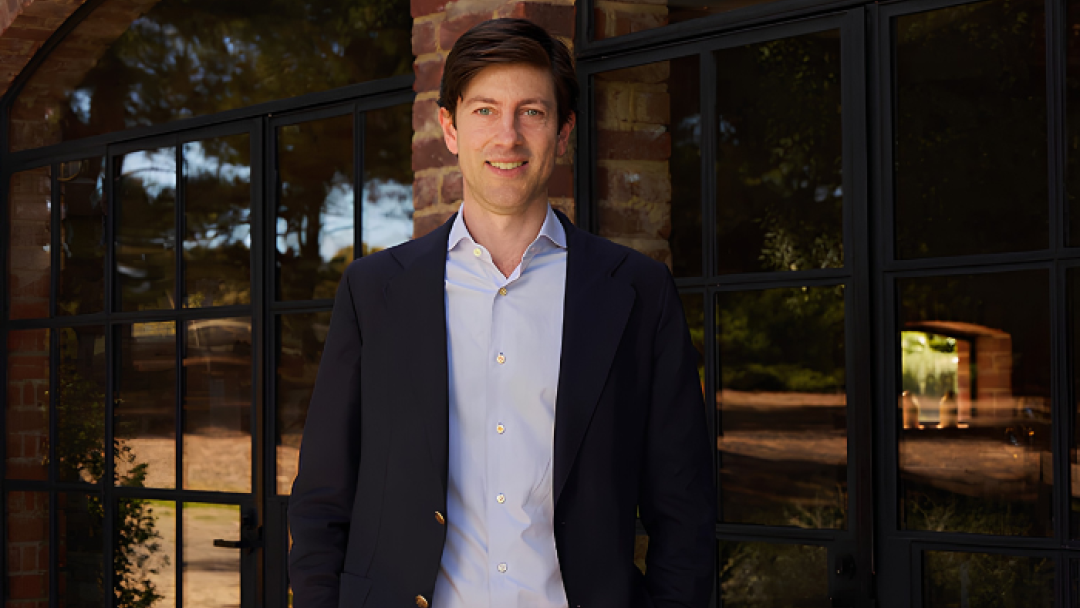
Johann Henschke reflects on old vines, scientific rigour and why Australia’s future may look different from its past. An interview by Hermione Egerton-Smith, Senior Fine Wine Buyer, Cult Wines.
For decades, Australian wine has been viewed through a relatively narrow lens. Powerful Shiraz, ripe fruit and supermarket shelves have shaped much of the global perception over the past few decades. Yet beneath that image lies a far deeper, more nuanced story, one rooted in some of the world's oldest surviving vines. Few producers embody that evolution more clearly than Henschke.
Speaking with Johann Henschke, sixth-generation winemaker at Henschke, it becomes clear very quickly that Australian fine wine is entering a different chapter, one increasingly centred around site, restraint and longevity rather than sheer scale or power.
Johann speaks with a calmness when he talks about wine, which feels increasingly rare, less focused on scores or trends and more on heritage, responsibility and understanding the land itself.
“I think there is still very little awareness that we have old vines,” he explains. “People assume Australian viticulture really began in the 1970s, 80s and 90s, because that was when Australian wine arrived commercially in markets like the UK.”
It is an understandable misconception. Australia is still viewed by many as a relatively young wine-producing country, particularly when compared to Europe. Yet Henschke have vines dating back more than 160 years, pre-phylloxera plantings that preserve a rare snapshot of what viticulture once looked like.
“There are vines that have been somehow housed and kept on ice in Australia that were exactly what Europe would have possessed before phylloxera,” Johann says. “That has allowed us to make wines that are not simply replicas of Europe planted in a different climate, but something very distinct.”
For many years, Australia was viewed through a relatively commercial lens. Large brands and supermarket shelves shaped perception more than fine wine producers themselves. Yet beneath that image, producers across regions such as the Barossa Valley had already begun exploring a more site-driven, age-worthy expression of Australian wine.
Johann describes it as a gradual process of confidence within the Barossa itself, a growing belief in both the quality and consistency of what these vineyards could produce.
“It really took close to a century before winemakers in the Barossa suddenly had the confidence to start making this quality of wine,” he explains.
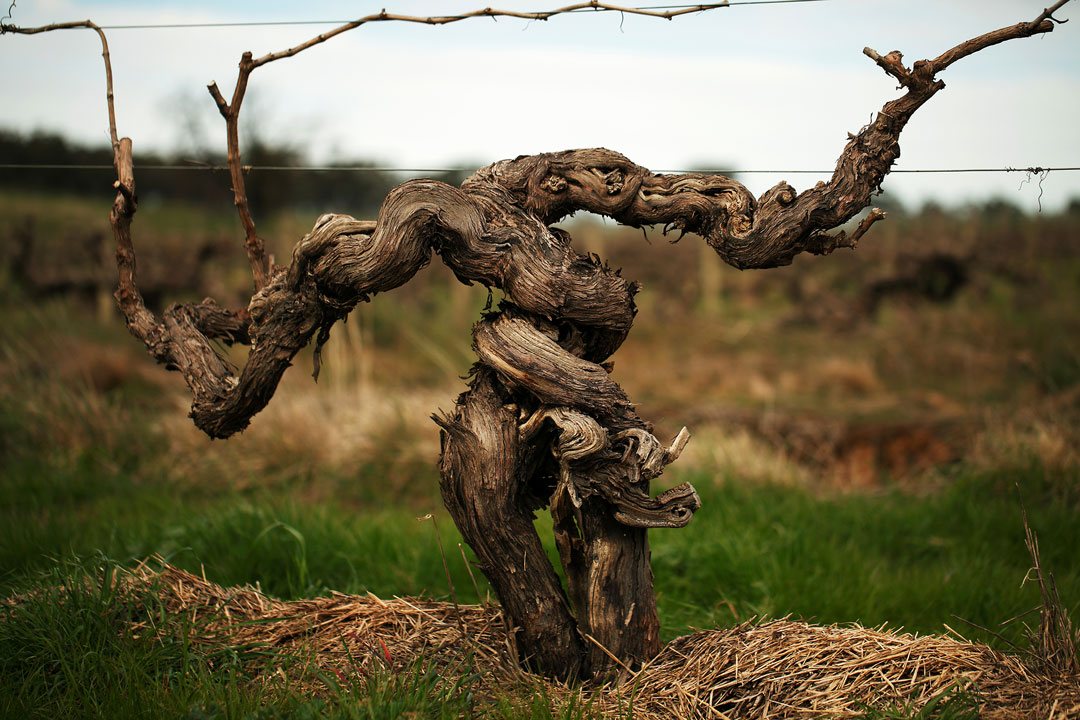
Henschke Hill of Grace Grandfather Vine 1860s. Photo credit: Dragan Radocaj
Climate naturally played a significant role in shaping that confidence. South Australia’s Mediterranean conditions produce lower-yielding vineyards, smaller berries and naturally concentrated wines with structure and longevity. Shiraz became the most reliable variety within that landscape, capable of producing wines with both richness and ageing potential.
Today, however, the conversation surrounding Australian fine wine has shifted considerably. There is increasing interest in wines that speak more clearly of vineyard and season rather than simply power.
“What people see in supermarkets and advertisements, they assume that’s what everything is like,” Johann says. “I do not think it is strange that people are confused.”
Across the wines, there is a clear sense of precision. Concentration is certainly present, but so too are freshness, detail and clarity. The wines are increasingly defined by balance rather than excess.
That precision becomes especially clear when Johann discusses the newly released 2022 vintage alongside the highly acclaimed 2021s. While the 2021 vintage has often been described as close to ideal, generous yet beautifully balanced, the 2022s tell a subtly different story.
“There were not as many extreme heat days during the summer and autumn,” Johann explains. “The wines probably have a little bit more tension in 2022 compared to 2021.”
The growing season itself was later and cooler than usual, with harvest stretching well into May. Conditions remained dry through autumn, helping preserve freshness, although yields were significantly reduced following a severe hailstorm in spring.
“We had a devastating hailstorm, especially in the northern part of the valley, which reduced yields somewhere between 30 to 50%,” he says. “That definitely caused the wines to have that more concentrated feel.”
What is particularly interesting is the way Johann speaks about the wines themselves. The focus is not on sheer size or extraction, but on development over time. The wines are built around balance and longevity rather than immediate impact.
He compares the relationship between the 2021 and 2022 vintages to the much-debated 1990 and 1991 South Australian vintages, two exceptional years with very different personalities.
“The 2021s are soft, delicious and richer in flavour,” he explains. “The 2022s still show great purity, but there is development to go.”
That idea of individuality has become increasingly central to modern Australian fine wine. Greatness does not need to look the same every year. Instead, seasonal variation becomes part of the wine’s identity.
For Johann, climate change represents one of the defining challenges facing his generation.
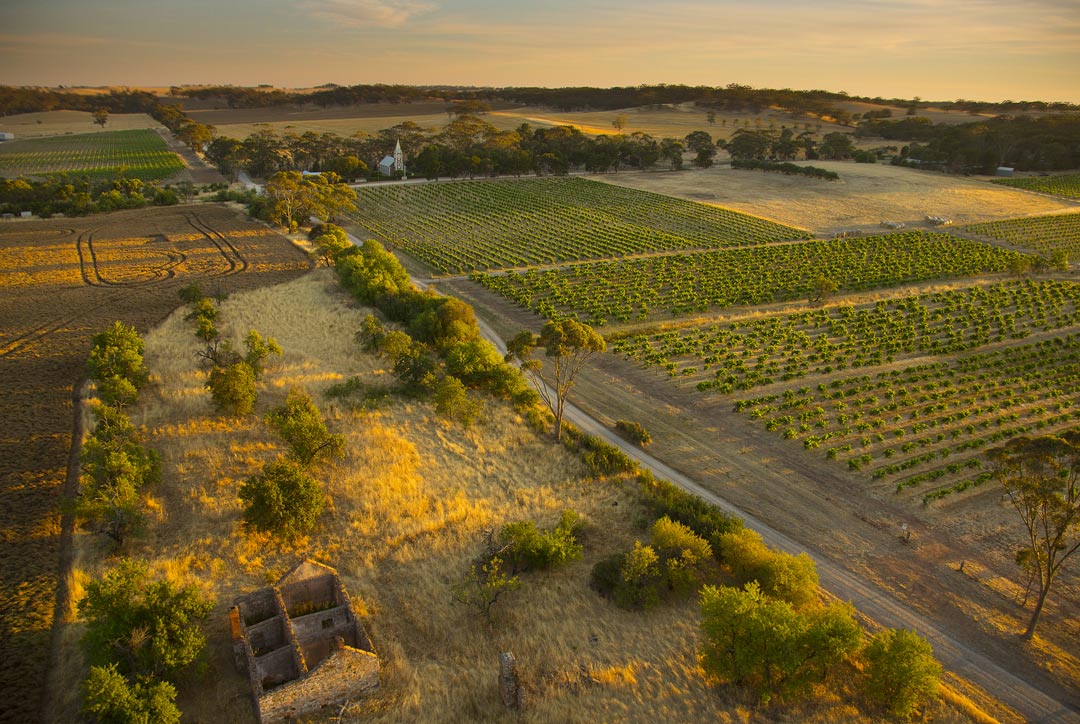
Henschke Hill of Grace Vineyard. Photo credit: Dragan Radocaj
“There is always the idea of those who came before and what is to come in the future,” he says. “Being a custodian and leaving the place in better shape than you found it.”
That sense of custodianship runs quietly throughout every aspect of Henschke, from the preservation of ancient vines to the long-term thinking behind the viticulture.
It is also reflected in the way Johann speaks about tradition itself. There is clear respect for heritage within Henschke, but little desire to preserve practices purely for romantic reasons.
“What I grew up with was scientific rigour,” Johann explains. “Tradition is wonderful, but sometimes the traditional way was no longer the best way.”
That perspective has been shaped significantly by Johann’s parents, Stephen and Prue Henschke, both of whom approached viticulture and winemaking with a strong scientific foundation. Rather than rejecting tradition outright, they looked carefully at where improvements could be made and where existing methods continued to perform exceptionally well.
Johann describes examples ranging from fermentation vessels to vineyard management. Certain traditional methods remain because they continue to produce outstanding results. Others have evolved as understanding and technology have improved.
Perhaps most interestingly, Henschke’s use of organic and biodynamic principles is approached quietly, without the need for strong marketing statements or rigid categorisation.
“We are not in any camp,” he says.
It is perhaps one of the most revealing comments in the entire conversation. The focus is not on labels, but on healthier vineyards and wines that more clearly express site and variety.
Much of that work has been shaped by Johann’s mother, Prue Henschke, a trained botanist and viticulturist whose work has involved reintroducing native flora into the vineyards and focusing heavily on biodiversity and soil health.
Johann explains that these practices are not about ideology, but observation. Healthier ecosystems create healthier vines and ultimately clearer expressions of the site.
“What we observe is clearer fruit definition, more varietal definition and complexity from the special sites,” he explains.
At the same time, there is realism in the way he approaches viticulture. Nature still dictates much of the outcome, particularly as climate conditions continue to shift.
“We still have really challenging vintages,” Johann says. “But the vines are coping very, very well and giving us a great expression.”
This growing focus on individuality and site expression is becoming increasingly evident in UK markets, where collectors and consumers are more willing to explore regions and producers outside the traditional European framework.
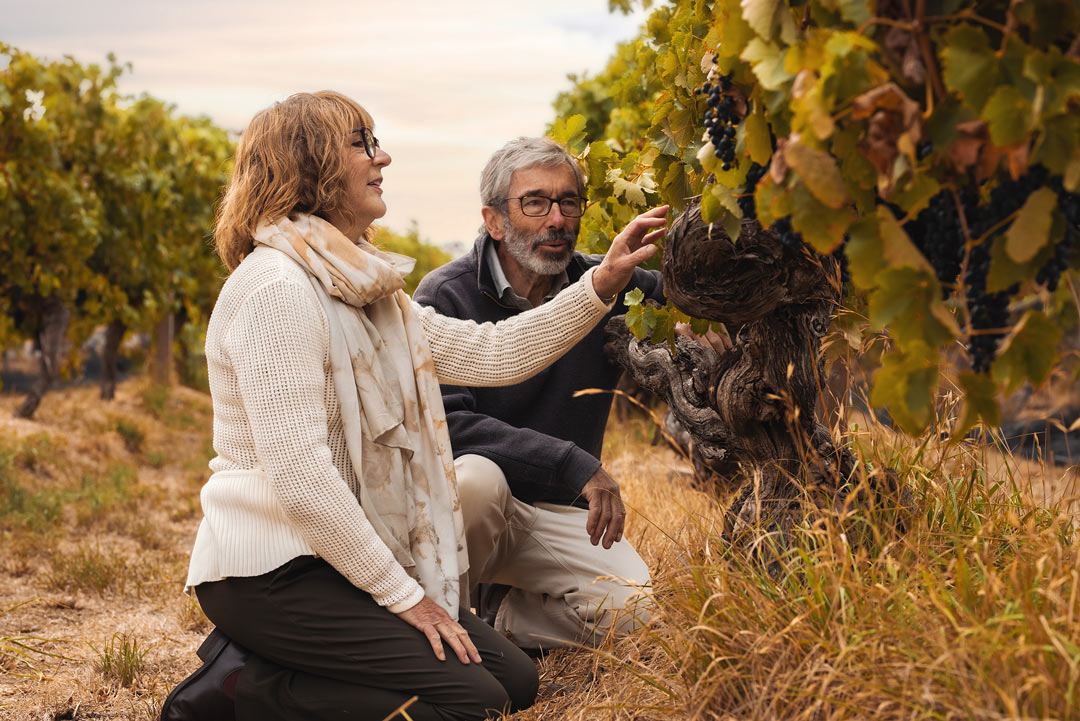
Prue & Stephen Henschke at Hill of Grace Vineyard. Photo credit: Duy Dash
Towards the end of our conversation, I asked Johann one final question. If his wines were a landscape, what would they look like?
After a pause, he answered carefully.
“Hopefully, there would be a unique landscape that looked like nowhere else on earth,” he said. “Different colours, different shades, something very unique.”
It feels like an appropriate description not only of Henschke itself, but of Australian fine wine more broadly. For decades, Australian wine was often defined by others before producers had the opportunity to define themselves. What emerges through conversations like this is a far more layered picture, one where heritage and innovation exist comfortably alongside one another.
Perhaps that is ultimately what makes Henschke so compelling. Ancient vines remain at the heart of the story, but they are accompanied by scientific rigour, environmental awareness and an openness to continual change.
Ancient vines may provide the roots, but modern identity is shaping what Australian fine wine becomes next.