The Southeast Asian Inflection: A New Cycle of Conviction

The fine wine market in Southeast Asia has long been defined by a specific kind of gravity: the heavy, prestigious pull of Bordeaux First Growths and the ethereal, high-priced scarcity of Burgundy Grand Crus.
For decades, the region’s trading hubs acted as the primary gateways for European labels entering the cellars of a burgeoning elite. But as we move through 2026, a more understated and profound transformation is taking place. Fine wine, once the preserve of expatriate circles and luxury hotels, is steadily embedding itself within the region’s own culture of wealth and taste.
From Singapore to Bangkok and Ho Chi Minh City, a new generation of collectors is emerging, laying waste to the theory that younger generations are drinking less when they are simply drinking better.
This shift is beginning to influence the global fine wine landscape. As Southeast Asia’s appetite for top-tier labels and diversified regions grows, its influence is increasingly felt in pricing dynamics, allocation strategies, and the broader conversation about what constitutes “fine wine.”
Still relatively small but rapidly maturing, the market reflects a broader redefinition, in which collecting, investing, and drinking converge in a region finding its voice in the world of wine.
Singapore: The Institutional Engine
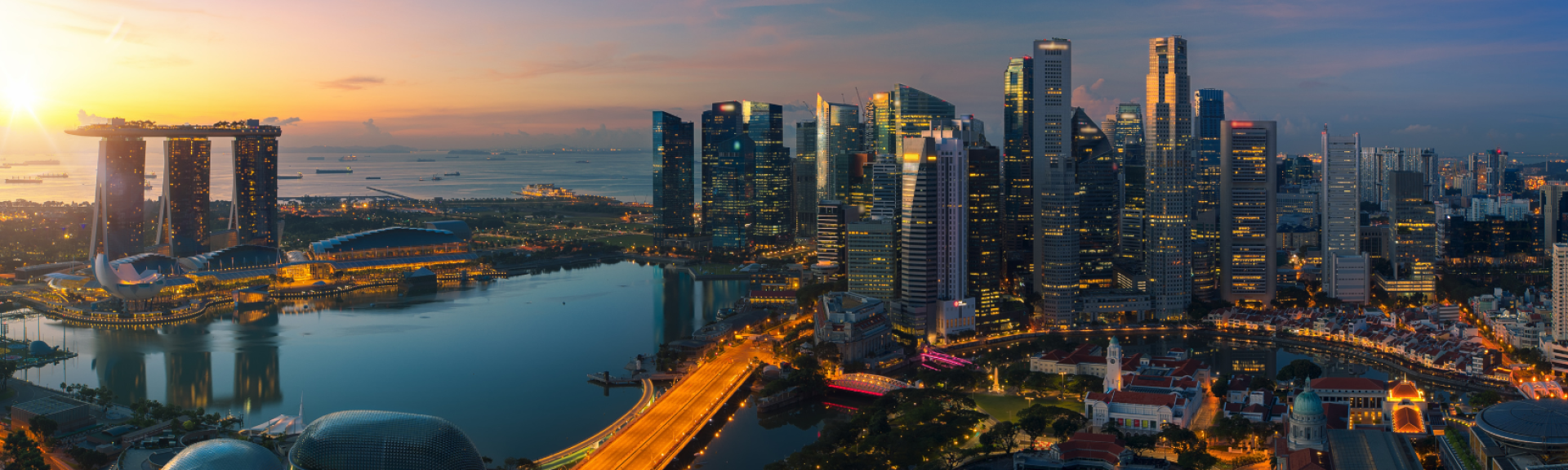
At the centre of this evolution sits Singapore, whose role as a trading hub and safe haven for storage has positioned it as the gateway to Southeast Asia’s fine wine economy. Over the past decade, the city-state has transitioned into a primary global anchor, a transformation driven by a unique intersection of institutional capital and an enjoyment of the finer things.
A more analytical approach has led to a notable shift in regional taste. While the love for Bordeaux remains the bedrock, there is a growing institutional appetite for Grand Marque Champagne and Cult Napa Wines look to have found a permanent home in Singaporean cellars, valued for their rarity, of course.
The Emerging Corridors: Thailand, Vietnam, and Indonesia
Beyond Singapore, momentum is building in emerging cities where rising affluence and a deepening dining culture are expanding both access and curiosity. In Bangkok and Ho Chi Minh City, a younger generation of entrepreneurs is bypassing the traditional "Bordeaux-only" apprenticeship of their predecessors. This new wave of collectors is comfortable with modern, data-led approaches, seeking out grower Champagnes and cult producers that reflect a more modern marker of identity and discernment.
In Vietnam, the middle class is expanding at one of the fastest rates in Asia. Fuelled by sustained GDP growth and industrialisation, millions of households are moving beyond subsistence into discretionary spending. This shift is particularly visible in cities like Ho Chi Minh City and Hanoi, where younger professionals are embracing modern retail, international travel, and lifestyle-driven consumption. What distinguishes Vietnam’s middle class is its youthfulness - digitally native, brand-aware, and open to new categories, from premium food and beverage to education and wellness.
In Indonesia, scale is the defining factor. As the region’s largest economy, Indonesia’s middle class already numbers in the tens of millions, with projections pointing to substantial further growth. Concentrated in urban centres such as Jakarta and Surabaya, this cohort is increasingly driving domestic consumption, particularly in sectors like retail, e-commerce, and financial services. Yet the Indonesian middle class is also uneven, spanning a spectrum from lower-middle-income households with fragile purchasing power to affluent consumers with global tastes. This diversity makes it both a powerful engine of growth and a complex market to navigate.
Thailand presents a more mature, but still evolving, middle-class story. Decades of development have created a relatively established consumer base, particularly in Bangkok, where spending on lifestyle, dining, and travel is well entrenched. However, growth is now more incremental, shaped by an ageing population and periodic economic and political uncertainty. Even so, Thailand’s middle class remains highly influential, with strong purchasing power and a deep integration into global consumer culture.
The 2026 Outlook: Leading the Recovery
As we look toward the remainder of 2026, Southeast Asia is positioned to play a major role in the global recovery. The region’s investors have already cleared much of the "distressed" inventory from the correction phase, and the focus has shifted to the future.
- The Blue-Chip Reset: Investors are exploiting the over-correction of legendary labels. With prices for certain First Growths having retracted to 2016 levels, the opportunity to acquire blue-chip assets at a discount is the primary driver of current activity.
- The India Corridor: Singapore’s role as a gateway to India has been supercharged by the EU-India trade deal, which slashed import duties from 150% to 20%. It remains to be seen what effect this will have on demand in SEA, and, of course, specifically in India.
- The Supply Squeeze: With the 2024 European harvest confirmed as the smallest in modern times, keen buyers are looking to secure back-vintages of Burgundy and Bordeaux from 2016, 2019, and 2020, anticipating a structural shortage by 2027.
A Market of Precision & Prestige
For the global fine wine market, this region is no longer just a participant; it is increasingly the benchmark. In a world of economic uncertainty, the Southeast Asian collector has found that there is extreme value to be found across all wine regions.

Related Articles
70 Years of Unico: What Tasting Vega Sicilia Across 7 Decades Tells You
By Aarash Ghatineh