Top 10 Autumn Wine Travel Destinations
Autumn is the best time of year to be in a vineyard. The tourists have gone, the light has turned low and gold, and for a few weeks the whole business of wine stops being a visitor experience and becomes work: stained hands, tractors on the lanes at midnight, everybody far too busy to give you the rehearsed version. If you have only ever visited a wine region in summer, you have seen it with its make-up on.
Harvests keep creeping earlier, so in some places you will catch the picking, and in others you will arrive to bare vines and a warm cellar smelling of bread and crushed fruit. Both are worth the trip. Here are ten places to spend September, October or November.
-
- For the harvest in full swing: Piedmont, Rioja, Mosel
- For grand autumn occasions: Burgundy, Champagne
- For something further off the map: Tokaj, Kakheti
- For long weekends and big landscapes: Willamette Valley
- For spring on the other side of the world: Barossa Valley, Central Otago
- For the harvest in full swing: Piedmont, Rioja, Mosel
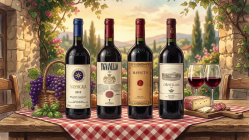
Piedmont and the Langhe, Italy
Nebbiolo is picked last, long after everything else is in, so Piedmont is one of the few places in Europe where an autumn visitor reliably still catches the harvest. It happens under the fog that gave the grape its name, filling the valleys at dawn and burning off by ten.
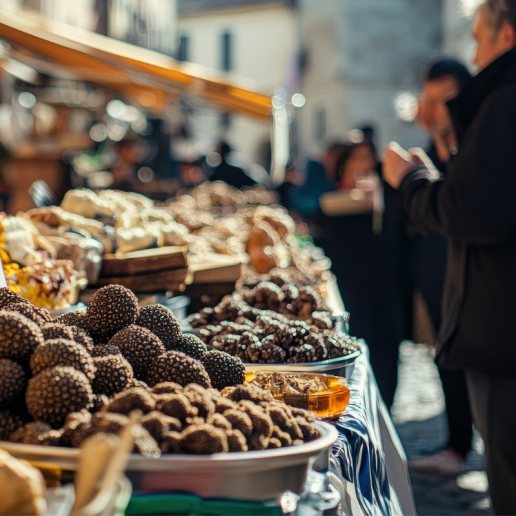
Then there is the other harvest. The white truffle fair at Alba runs from early October to early December, with a market every weekend in a courtyard off the main square. Growers unwrap tubers from squares of cloth and hold them up for you to smell. The whole room smells of garlic, wet earth and something you will fail to describe on the way home.
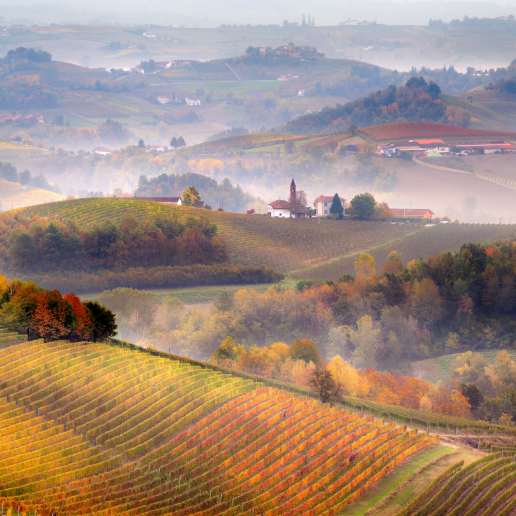
Barolo and Barbaresco are the same grape from either side of town: tar, dried roses, sour cherry, and built for the local cooking. Order tajarin under a snowfall of shaved truffle. Stay at Casa di Langa, or Il Boscareto in Serralunga, which holds one of the region's two three-star restaurants. The other is twenty minutes away. Turin is ninety minutes by train.
For collectors: Barolo ages for decades and is priced accordingly. Barbaresco from the same year is usually the smarter buy.
Beaune and the Côte d'Or, France
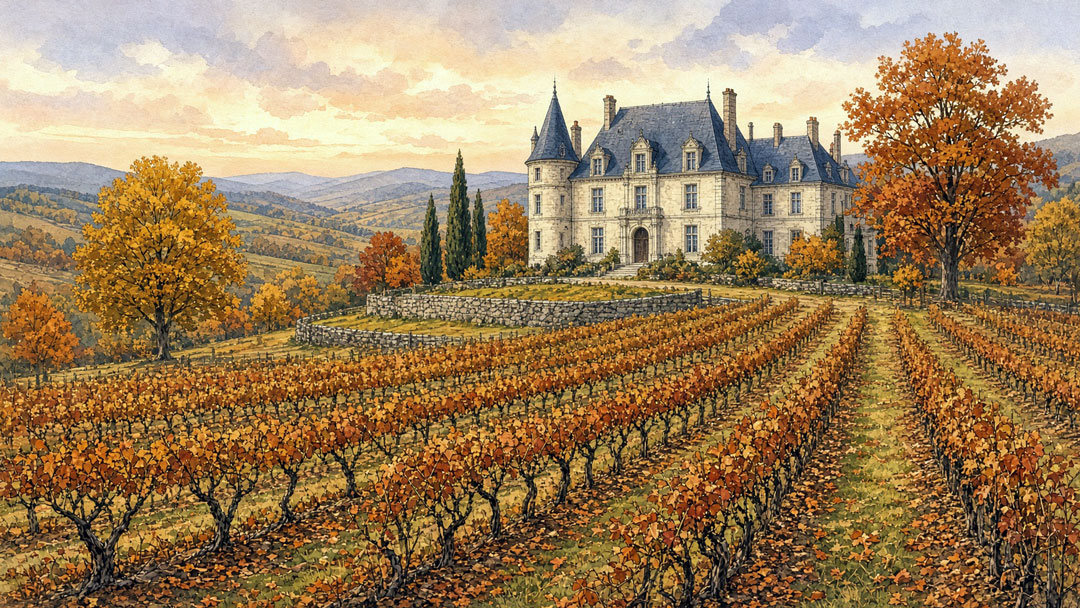
Burgundy tends to pick in August now, so come in November instead, when the region puts on the best show in wine. Les Trois Glorieuses takes the third weekend: a black-tie dinner in a medieval château on Saturday, the Hospices de Beaune auction on Sunday, and a very long and increasingly cheerful lunch on Monday.
The auction is the oldest in the wine industry. Barrels are sold under Beaune's roof of glazed tiles, all green and gold zigzags, to fund a hospital founded in 1443 that still treats patients. You need no invitation to enjoy the week.
The town is open, every tasting room included, and Beaune in mid-November is as good as small French towns get: cold mornings, wood smoke, everyone slightly overexcited.
The local obsession is which side of which stone wall the grapes grew on. Two vineyards a hundred metres apart taste completely different and cost wildly different amounts, and nobody here finds that odd. Stay at Les Sources de Vougeot, a former monastery with a spa in a fourteenth-century cellar. Beaujolais Nouveau Day falls in the same week if you want to finish frivolously.
For collectors: whites have held their value better than reds through the recent correction, and the growers just below the famous names offer far more wine for the money.
Champagne, France
Champagne picks in August now, which is good news for visitors. September and October are the quietest months in the cellars, and the one stretch of the year when the person who actually makes the wine will sit down with you rather than wave from across a courtyard.
Go underground. Beneath Reims, the big houses keep their bottles in chalk pits the Romans dug two thousand years ago, vast chimney-shaped caverns cold enough that you will want a coat.
Beneath Épernay, one street has about a hundred kilometres of tunnels under it and several billion pounds of wine lying quietly in the dark.
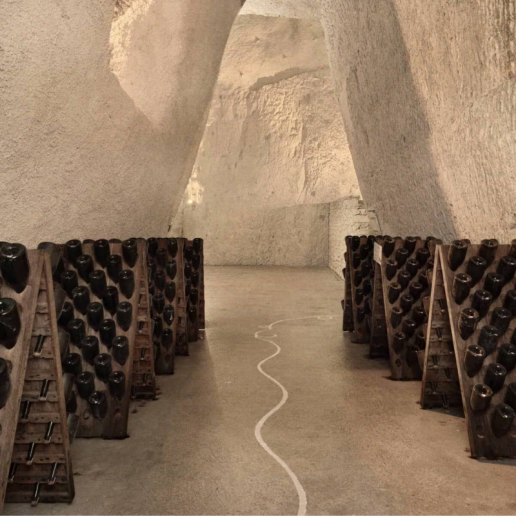
Above ground, the vineyards around Hautvillers are gold and low-lit in October, and Dom Pérignon is buried in the village church. Stay at Les Crayères in Reims or at the Royal Champagne above Épernay. Paris is 45 minutes by train. Better still, leave the car: the little local line stops at Rilly-la-Montagne, and you can walk twenty minutes through the vines to the next village and pick up a later train.
For collectors: vintage Champagne with real bottle age is the thing worth buying, and the thing most people drink far too young.
Rioja, Spain
Rioja picks late and slowly, so the trucks are still rolling into Haro well after other regions have finished. Time it for San Mateo, mid-September, when Logroño hands itself over to the harvest.
It opens with a rocket fired over the river and two men in traditional dress treading the first grapes in a wooden trough, which is exactly as good as it sounds.
The rest of the week happens on Calle Laurel, a narrow street where every bar serves one thing and one thing only. Grilled mushrooms stacked three high with a prawn on top. A skewer of lamb. A slab of bacon on bread.
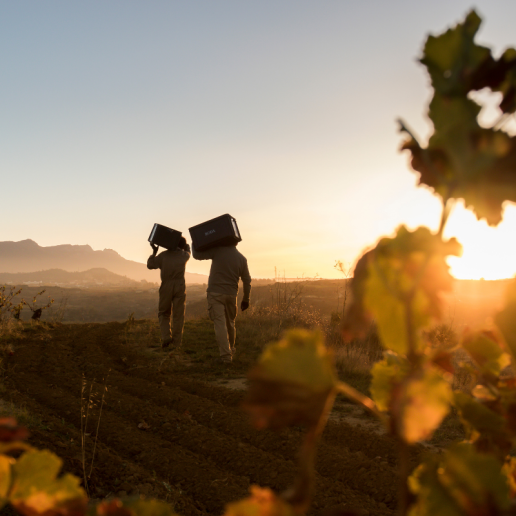
Order, eat standing up, drink a small glass of red, move next door. It costs almost nothing, and it is one of the great eating experiences in Europe.
What Rioja does better than anyone is patient, mature red: soft leather, dried strawberry, vanilla, released only when the winery thinks it is ready. Six of the founding houses stand within a few hundred metres of each other around Haro's old railway station, built to load barrels for Bordeaux, and you can walk between all of them in a morning. Stay at the Marqués de Riscal in Elciego, under Gehry's ribbon of pink titanium. Bilbao is an hour away.
For collectors: a Gran Reserva with twenty years behind it costs less than a middling Bordeaux half its age. That is the whole argument.
The Mosel, Germany
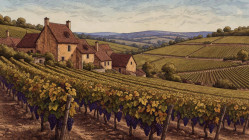
The Mosel keeps picking long after everyone else has stopped, which makes it a wonderful autumn drive. The river loops back on itself through gorges so steep that growers work some rows on winches, and pickers on the steepest slope of all wear harnesses.
The reward is October, when the whole valley turns gold at once.
This is Riesling country almost to the exclusion of everything else, so the slopes change colour together rather than in patches, and from the water it looks as though the hills have been gilded.
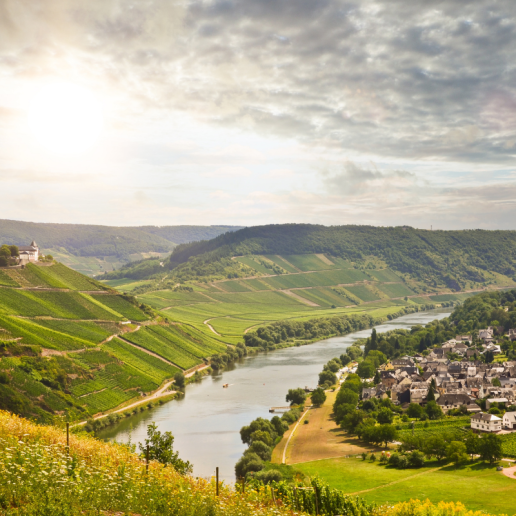
Slate holds the day's warmth and gives it back overnight, and the wines are the most transparent in Germany: lime, wet stone, a bracing streak of acidity, and often so light in alcohol that a long lunch carries no consequences at all.
Skip the big festival in Bernkastel-Kues and go to the village ones through September in Lieser, Wintrich, and Erden, where the wine is poured by the family that made it. Stay at Schloss Lieser, a turreted castle on the riverbank. Trier, the oldest city in Germany, sits at the top of the valley with a Roman gate and an amphitheatre, and deserves a day.
For collectors: German Riesling ages superbly and almost nobody collects it, so the great names are still within reach.
Tokaj, Hungary
Tokaj is the one place here where autumn is not just the best season but a requirement. The great sweet wine needs a very particular run of weather: warmth to ripen, damp mornings off the river to start the noble rot, then a dry, breezy spell to shrivel the berries on the vine. Miss any part of it, and there is no Aszú that year at all.
Which explains the picking, and it is worth seeing. The shrivelled berries are collected one at a time, by hand, over and over through the same vineyard across the whole of autumn, because only some berries in a bunch turn and the rest must be left for the next pass. A good picker might gather ten kilos in a day.
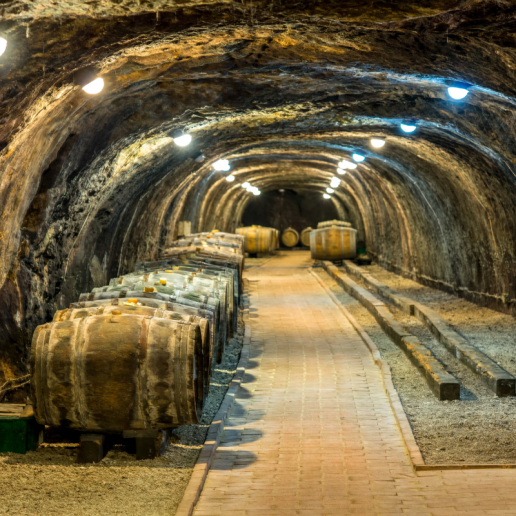
The wine is not the sticky thing people brace for: apricot, orange peel and honey, with a line of acidity straight through the middle that keeps it fresh for decades. Tokaj was protected by royal decree long before Bordeaux or Burgundy drew their boundaries, and the cellars are cut into volcanic rock and furred with black mould.
Book Royal Tokaji, Oremus, and Disznókő well in advance. Stay at the Andrássy Kúria in Tarcal, which has a bath in a cave. Budapest is three hours by train.
For collectors: buy this one to drink. There is barely a resale market, which is precisely why it is so underpriced for the quality.
Kakheti, Georgia
Rtveli, the Georgian harvest, is not a festival with a date. Nobody publishes a schedule, because it depends on the rain, the altitude and the grape. In Kakheti it happens somewhere between early September and mid-October, so book the vineyard rather than the day.
The shape of it never changes. Cutting in the morning while it is still cool, grapes carried down to the cellar, crushing, then a supra: the great Georgian feast, run by a tamada whose job is to propose toasts of steadily increasing length and emotional seriousness, going on well into the night.
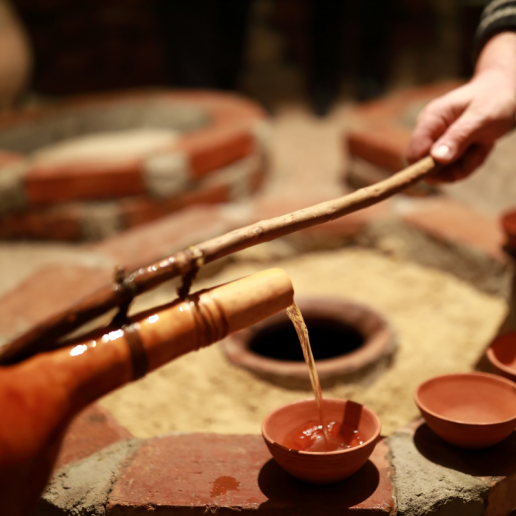
You are not shown any of this from behind a rope. You are handed a bucket in the morning and a glass by lunchtime.
At the centre of it is the qvevri, a clay egg lined with beeswax and buried to its neck in the cellar floor. Wine has been made this way here for eight thousand years. Whites fermented in them spend months on their skins and come out amber and savoury, tasting of dried fruit and walnut. Stay in Telavi rather than day-tripping from Tbilisi, ideally at Schuchmann, a working winery with rooms.
For collectors: nothing, and that is fine. Bring home a case of Saperavi because you liked drinking it in a Georgian cellar, which is the best reason to buy any wine.
The Willamette Valley, Oregon
Oregon's autumn is short and getting shorter, so timing matters more here than anywhere. In a warm year, the whole valley brings its crop in within a fortnight. Turn up in the middle of that, and every winemaker you hoped to meet is standing at a sorting table at five in the morning.
Come the last week of October instead. The ferments are done, the Dundee Hills have turned red and gold, and everyone will happily sit down and open something. This is Pinot Noir country, lighter and more savoury than California, closer in spirit to Burgundy.
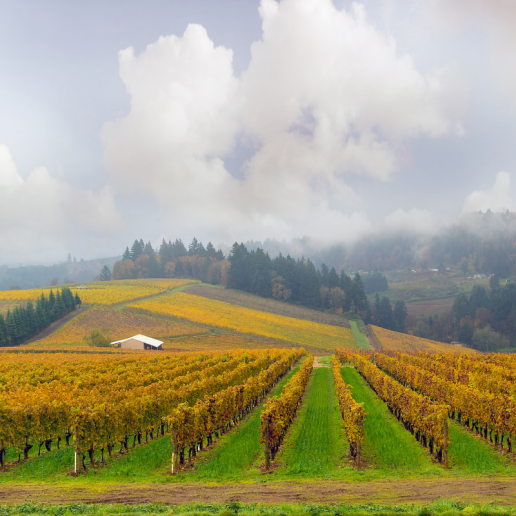
Not a coincidence: several well-known Burgundian families quietly bought land here decades ago.
The set piece is Wine Country Thanksgiving, when most of the valley opens its doors together across the weekends either side of the fourth Thursday in November. It is also mushroom season, and chanterelles turn up on every menu worth eating from. Stay at The Allison Inn in Newberg, or the Tributary Hotel in McMinnville, eight rooms above one of the best restaurants in the Pacific Northwest. Portland is under an hour away.
For collectors: Oregon Pinot competes with serious Burgundy at a fraction of the price. The market is thin, so plan to drink most of what you buy.
The Barossa Valley, South Australia
Turn the world over. September to November here is spring, the valley greening as the vines wake, and it is deliberately the quiet window. The region's own big festival falls in April, so nobody is charging a premium and the cellar doors have time for you.
What makes this place unlike anywhere else is that it's underground.
The Barossa never got phylloxera, the root louse that killed and forced the replanting of almost every vineyard on earth, so the vines still grow on their own roots, and some are extraordinarily old.
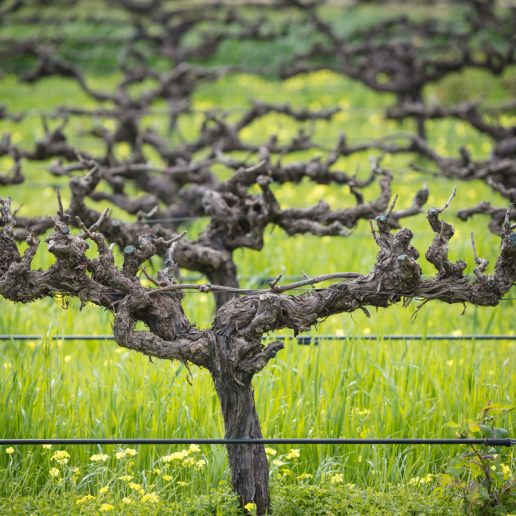
There are vines here planted in 1843, still cropping: gnarled, black and knee-high. Ask at any cellar door which of their blocks qualify, then go and stand in front of one. It is a strangely moving thing to see.
The wine is Shiraz, and not the jammy caricature: dark, spiced and fresher than you expect. Eat at Fino Seppeltsfield, in an underground cellar on an estate that has laid down a barrel of fortified wine every year since 1878 and will pour you a glass from the year you were born. Stay at The Louise, and eat there too. Adelaide is an hour's drive.
For collectors: Penfolds Grange is the one Australian wine with a genuine international following, released once a year to a waiting list.
Central Otago, New Zealand
The last entry offers something nowhere else can. For a few weeks in September and October, you can ski in the morning and taste Pinot Noir in the afternoon, in the same valley, because the fields above Queenstown run into October while the vineyards below are only just coming into bud.
This is about as far south as wine is made, and the landscape shows it: bare schist hills, wild thyme on the slopes, snow on the tops into spring, and light so clear it flattens your sense of distance.
The Pinot is darker and more brooding than New Zealand's sunny reputation suggests, with a herbal note straight off the hillsides.
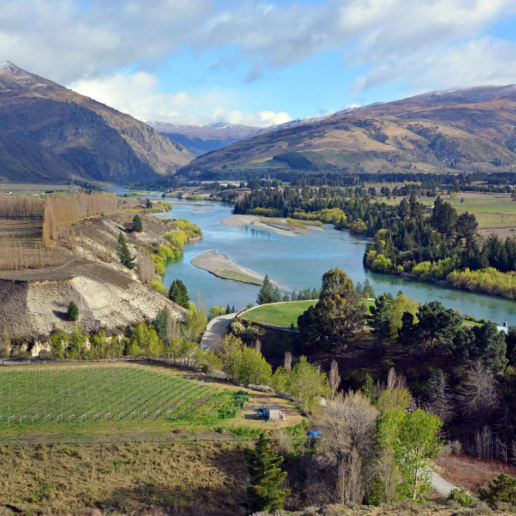
The best thing in the calendar is At The World's Edge, a chamber music festival that plays through early October in a winery shed in Cromwell and an old hall in Bannockburn: string quartets in the middle of the vines, to a couple of hundred people.
Eat at Amisfield on Lake Hayes, where you hand the kitchen the decision, and they feed you until you ask them to stop. Queenstown Airport is an hour from the vineyards.
For collectors: a small market where buyers follow good vintages rather than famous names. Buy the wine you actually liked in the tasting room.
Planning your autumn
Three of these reward booking months ahead: the Hospices de Beaune weekend on the third Sunday of November, San Mateo in the week around mid-September, and the Alba truffle market, open every weekend from early October. Three others, the Mosel, Tokaj, and Kakheti, reward the exact opposite instinct. Pick a fortnight, ask the grower when they expect to pick, and let the vineyard decide.
Whichever you choose, go while the picking is still happening somewhere. The regions that still bring their fruit in during October are becoming the rarer experience rather than the standard one.