Etna Nears DOCG: What Changes for Collectors

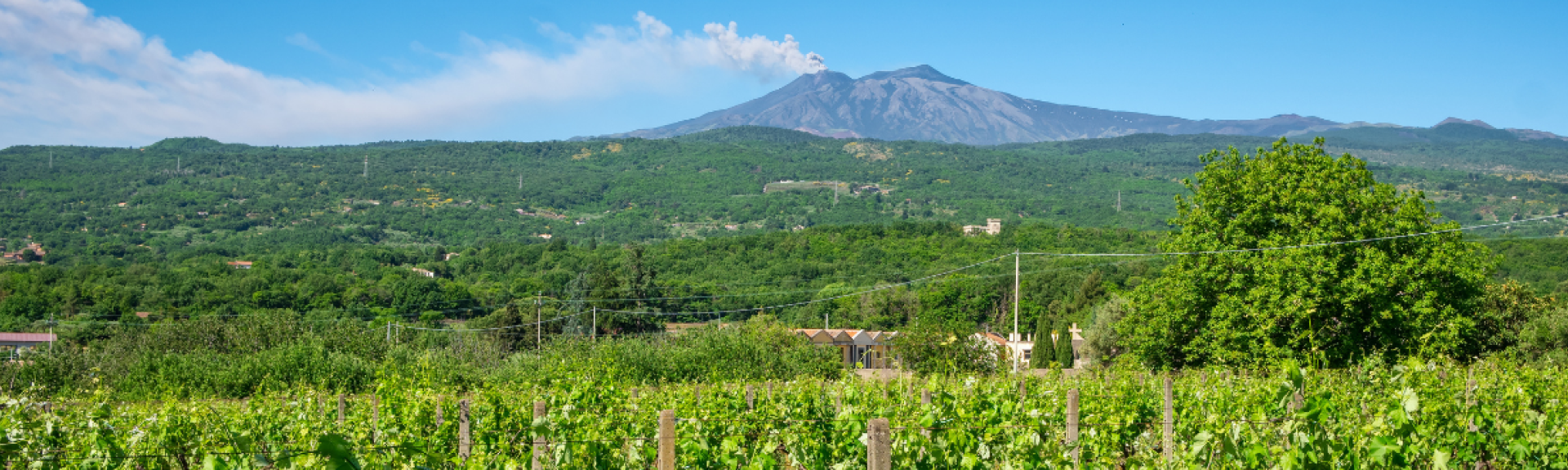
Mount Etna is on the threshold of Italy's highest wine classification. Approval of the region's move from DOC to DOCG is not yet final, but Italy's Ministry of Agriculture is widely reported to be close to signing it off, with the new status expected to apply from the 2026 or 2027 vintage releases. Alongside it come commune names on labels, a cap on new planting and a new framework for sparkling wine. Together they amount to a substantial overhaul of how Etna is made, labelled and sold, and each has direct consequences for collectors.
Etna became Sicily's first DOC in 1968, and its modern revival dates from the early 2000s, when a small group of producers began bottling wines from individual contrade, the named districts that now number 142.
The New Rules
The DOCG regulations tighten production at every level:
- Lower yields. Etna Rosso will be capped at 8.0 tonnes per hectare, and contrada-labelled wines at 6.5 to 7.0 tonnes per hectare.
- Minimum vine age. Vines must be at least five to seven years old before their fruit can carry a contrada name.
- Longer ageing. Wines will require two years of mandatory cellar ageing.
- No safety net. A wine that fails the DOCG standard will not fall back to Etna DOC. It will be declassified directly to IGT Terre Siciliane or generic Vino d'Italia.
The last point matters most. With no intermediate category to absorb weaker wines, producers have a strong incentive to meet the standard in full.
One thing will not change: the appellation's boundaries. Vineyards above roughly 800 metres on the north slope, which produce some of Etna's most compelling wines, remain outside the zone. Leading producers, among them Frank Cornelissen and Passopisciaro, will therefore continue to release several of their top bottlings as IGT Terre Siciliane. On Etna, the humbler label is not always the lesser wine.
Commune Names on the Label
From the 2026 vintage, Etna wines may name their municipality on the front label. The producers' consortium now recognises ten municipal and township names, alongside formal recognition of its additional geographical mentions. A bottle can therefore identify its commune, such as Castiglione di Sicilia, Randazzo or Milo, as well as the specific contrada or vineyard within it.
The change addresses a long-standing weakness. Many contrade are broad and contain very different soils and elevations, so a district name alone has not always told the buyer much. Producers are already adapting: Passopisciaro, which long identified its single-contrada wines by letters such as "R" for Rampante, has begun revising its labels to the new framework. For collectors, the result should be a clearer hierarchy and easier comparison between sites.
Supply: Rationed Land and Difficult Vintages
The consortium has capped new vineyard planting at 50 hectares a year across the entire region. Recent expansion has favoured lower, more accessible sites with less complex soils. The cap redirects growth towards restoring older, often overgrown terraces, which should support quality but limits how quickly supply can grow.
Recent harvests have tightened supply further. In 2023, around 400mm of spring rain triggered a severe outbreak of downy mildew, cutting red wine production on the north slope by an average of 70%.
Losses varied sharply by estate:
| Producer | 2023 red wine production loss |
|---|---|
| Tenuta Boccarossa | 100% |
| I Custodi | 80% |
| Girolamo Russo | 70% |
| Frank Cornelissen | 50% |
| Benanti | 42% |
Source: Vinous
2024 brought the opposite problem: a severe drought, with harvest starting about two weeks earlier than average. The eastern slope fared better in both years, which favoured the whites. For collectors, the practical consequence is that 2023 Etna Rosso is scarce and uneven, and producer selection matters more than usual.
The Rise of the Whites, and a New Sparkling Category
Etna built its reputation on red wine, but its whites are gaining fast. Etna Bianco Superiore, which may come only from the commune of Milo and must contain at least 80% Carricante, saw bottles produced rise by 120% between 2022 and the first half of 2023. Standard Etna Bianco grew by 19% over the same period.
The sparkling rules are changing too. Until now, a white Etna Spumante could only be a blanc de noirs made from Nerello Mascalese, and any traditional-method sparkling wine made from Carricante had to be bottled as IGT. Under the revised regulations:
- Carricante will be permitted for white traditional-method Etna Spumante, and Nerello Mascalese for rosé.
- Zero-dosage (Pas Dosé) wines will be allowed, where previously only Brut and Extra Brut were.
- Every wine must spend at least 18 months on its lees before disgorgement.
- All Etna Spumante must be vintage-dated.
Benanti, which has made sparkling wine since 2002, is among the producers best placed to benefit.
Where Prices Stand
Despite strong critical scores, Etna's benchmark wines remain moderately priced. The clearest reference point is Tenuta delle Terre Nere, whose single-contrada wines set the regional benchmark.
| Wine | Price per bottle | Critic scores |
|---|---|---|
| Terre Nere Calderara Sottana 2024 | est. £48 | Wine Advocate 97, Vinous 95, James Suckling 97 |
| Terre Nere Prephylloxera 2024 | est. £127 | Wine Advocate 97+, Vinous 96, James Suckling 99 |
| Terre Nere Prephylloxera 2023 | est. £143 | Vinous 97 |
Prephylloxera is the estate's rarest wine. It comes from La Vigna di Don Peppino, a plot of about 0.8 hectares in Calderara Sottana, planted around 1880 with ungrafted Nerello Mascalese that yields only four to five tonnes per hectare. Retail allocation limits and a sold-out UK listing suggest demand already exceeds supply at current prices.
Three Producers to Watch
Frank Cornelissen. One of the pioneers who arrived on Etna in the early 2000s, Cornelissen farms high-altitude vineyards on the north slope. Because several of them sit above the appellation boundary, a number of his most sought-after wines are bottled as IGT Terre Siciliane and will remain so under the DOCG. He was not spared in 2023, losing half of his red wine production.
Benanti. The family estate whose modernisation helped begin Etna's revival remains a reference for Etna Bianco Superiore from Milo. With sparkling wine production dating back to 2002, Benanti is well positioned for the new Carricante-based Spumante category. Its red wine production fell by 42% in 2023.
IDDA. A partnership between Barbaresco's Angelo Gaja and Etna grower Alberto Graci, an early-2000s pioneer. Gaja's involvement makes IDDA one of the clearest signals that Italy's wine establishment regards Etna as a serious fine wine region.
What It Means for Collectors
Once approved, the DOCG should raise the region's quality floor through lower yields, older vines for contrada wines, and longer ageing. Commune names will make Etna's sites easier to understand and compare. Supply, meanwhile, is constrained on several fronts: a fixed planting cap, small and volatile harvests, and allocation limits on the most sought-after bottlings.
Three practical points follow. First, watch for the first releases labelled DOCG and with commune names, which will mark the start of the new hierarchy. Second, be selective with 2023 reds, which are scarce and uneven, and look to the eastern slope for that vintage's stronger whites. Third, do not overlook the IGT bottlings from vineyards above the boundary, which include some of the mountain's finest wines and will remain outside the new classification.

Related Articles
70 Years of Unico: What Tasting Vega Sicilia Across 7 Decades Tells You
By Aarash Ghatineh

Wine of Kings, Reinvented: The Dry Furmint Revival of Tokaj
By Alexa Atkinson