English Sparkling Wine: Rising from the Chalk
The quiet revolution turning England’s vineyards into one of the world’s most exciting sparkling wine stories.
Featuring Luke Spalding, Vineyard Manager at Everflyth Estate
Picture the scene: a bar in New York, a row of unmarked glasses, and a crowd of Americans with no idea what they’re about to taste. Two sparkling wines, poured blind. No labels, no hints. When the reveal comes, sixty-seven per cent of the room have chosen the English sparkling wine over the Champagne. Not a one-off novelty, just the latest data point in a story that has been building quietly beneath the rolling chalk hills of Kent, Sussex, and Hampshire for the better part of two decades.
English sparkling wine is having a moment. But those closest to it will tell you this isn’t a moment at all. It’s the result of decades of painstaking work by growers, winemakers, and a handful of passionate families who bet everything on a belief in England’s terroir. Its cool climate, its maritime winds, its deep chalk seams that mirror the very soils of Champagne, could produce something world-class.
The evidence is now in, and the world is starting to pay attention!
The Market: A Category Coming of Age
Critic Recognition: Winning the Rooms That Matter
The Producers: The Names Shaping the Conversation
French Investment: When Champagne Comes to England
The Challenges: An Honest Reckoning
Everflyht Estate Spotlight: East Sussex, UK
Podcast: The Sparkling Wine Underdog - Episode 10 Listen Now!
The Market: A Category Coming of Age
The numbers tell a compelling story. According to WineGB’s latest industry report, England and Wales now have over 1,100 registered vineyards and 238 wineries, with 4,841 hectares under vine, a growth rate of 510% since 2005.
Sparkling wine sales alone have risen by 187% since 2018, from 2.2 million bottles to over 6 million. And while Champagne shipments to the UK fell by more than 12% in 2024, English sparkling held its ground, with domestic sales growing 3% in the same period.
The geography of English wine is concentrated in the south. Kent remains the most planted county, followed by West Sussex, East Sussex, and Hampshire.
These aren’t arbitrary choices. The chalk and greensand soils of the South Downs, the gentle south-facing slopes, and the long, cool growing seasons create conditions that produce the high acidity and delicate fruit character that make great sparkling wine. Conditions, in other words, that are extraordinarily similar to those 200 miles to the south-east, in the Champagne region.

1,104
Registered vineyards in England & Wales (2025)

4,841
Hectares under vine, up 510% since 2005

+187%
Sparkling wine sales growth since 2018

69%
Of English wine production is sparkling
Critic Recognition: Winning the Rooms That Matter
For years, English sparkling wine won enthusiastic coverage in the domestic press and polite recognition on the international stage. That has changed.
At the 2024 International Wine & Spirit Competition, English sparkling performed brilliantly. More than 100 medals awarded, including six golds, with judges singling out English rosé and Blanc de Blancs for particular excitement. Gusbourne’s Boot Hill Vineyard Blanc de Blancs and Wyfold Vineyard’s Rosé Brut both scored 96 points in blind judging alongside some of the world’s finest fizz.
The Decanter World Wine Awards 2025 produced a landmark moment: for the first time, a magnum of English sparkling wine was awarded Best in Show, Sugrue South Downs’ The Trouble With Dreams 2009 from Sussex, poured blind against the full force of global competition. Two English wines also took Platinum medals.
Meanwhile, at the Champagne & Sparkling Wine World Championships, the most focused, specialist competition in the world for this style, English producers continue to collect medals in a field where Champagne itself is judged.
“Stories of English fizz beating Champagne in blind tastings are no longer uncommon. The best English sparkling wines are very much their equal.”
– Club Oenologique
Chapel Down took its case directly to Champagne’s biggest export market.
At a blind tasting hosted on a New York rooftop, 67% of American tasters chose the English wine over a leading Champagne brand. None of them knew what they were drinking. The English wine was described as crisp, refreshing, and more delicate. Qualities that sound increasingly like a category finding its own confident identity, rather than trying to be something it is not.
The Producers: The Names Shaping the Conversation
A handful of estates have led the charge and helped define what English sparkling can be.
Nyetimber
WEST SUSSEX
The category pioneer. Planted in 1988, Nyetimber released England's first commercially produced Chardonnay-dominant sparkling wine and set the benchmark for the category. Its Classic Cuvée remains a reference point internationally.
Ridgeview
EAST SUSSEX
Ridgeview is a family-founded estate dating back to 1995 that has been instrumental in establishing English sparkling wine's international reputation, winning trophies at the Champagne & Sparkling Wine World Championships and supplying royal banquets.
Gusbourne
KENT
Planted in 2004 on a Kent apple farm, Gusbourne has become one of England's most decorated producers. Its Blanc de Blancs is a standout, consistently winning gold medals in international blind tastings.
Hambledon
HAMPSHIRE
England's oldest commercial vineyard was revived in the 1990s and replanted on chalk soils. Now, Hambledon is a major force in the category and a winemaking partner to several smaller estates, including Everflyht.
Chapel Down
KENT
The largest English wine producer, with international distribution across the US, UAE, and Europe. A vocal ambassador for the category on the world stage.
Wiston Estate
WEST SUSSEX
A relative newcomer producing wines of striking precision from chalk soils on the South Downs. Wiston Estate's Blanc de Blancs has been described as a genuine rival to top-tier Champagne.
French Investment: When Champagne Comes to England
If you want to know whether the world’s sparkling wine establishment takes English fizz seriously, look at where the Champagne houses are putting their money. Two of France’s most storied houses have now committed significant capital to English soil, and their reasons are telling.
Pommery, Hampshire’s Pioneer
Vranken-Pommery Monopole, home of the Brut style that defined modern Champagne, was the first major Champagne house to enter the English market.
They began sourcing grapes in Hampshire in 2014 in partnership with Hattingley Valley, releasing the first commercial English sparkling wine from a Champagne house under the Louis Pommery England label.
In 2017, they planted their own 40-acre Pinglestone Estate near Alresford, Hampshire, on chalk soils they describe as sharing the same dominant mineral character as their home vineyards in Reims.
The move was more than strategic positioning. It was, as one observer put it, the smart money validating the category, just as Drouhin validated Oregon Pinot Noir. When a house synonymous with sparkling wine excellence decides to plant roots in another country, the wider wine world takes note.
Taittinger, the £17 Million Statement
In 2015, Champagne Taittinger made history by becoming the first major house to invest in an English vineyard from scratch. Working with UK importer Hatch Mansfield. They acquired a 69-hectare former apple farm near Chilham in Kent, south-facing, chalk-rich, and below 80 metres above sea level, chosen after 2.5 years of searching for the right site. The project, named Domaine Evremond, has since expanded to over 60 hectares under vine and attracted more than £17 million in investment.
A purpose-built gravity-fed winery, two-thirds underground in the chalk hillside, was officially opened by HRH The Duchess of Edinburgh in September 2024.
The first release, Domaine Evremond Classic Cuvée Edition 1, reached shelves in early 2025. Scored 93 points by Vinous and praised for its elegance and sense of place, it drew an important distinction: this is not English wine trying to be Champagne.
As chef de cave Alexandre Ponnavoy put it: “If you try to make a copy, you make a mistake.” Domaine Evremond aims to produce 300,000 bottles annually at full production.
Together, these investments do more than add prestigious names to English wine’s growing roster. They signal that the geological and climatic case for the South of England as a world-class sparkling wine region is no longer debatable, at least not among the people who have spent centuries mastering the art.
The Challenges: An Honest Reckoning
English sparkling wine is not without its headwinds. For all the critical recognition and Champagne house investment, producers face a set of genuine and persistent challenges that the category must navigate if its momentum is to be sustained.
Climate volatility and late frosts
England’s marginal growing climate is both its greatest asset and its most unforgiving constraint. Late spring frosts can devastate harvests. At Everflyht in 2020, the team lit 700 individual bougies among the vines to protect the crop. The 2024 vintage saw some of the lowest yields since 2016. Vintage variation here is not a romantic footnote. It is a business reality.
Pricing perception
Premium English sparkling typically retails at £30–£60 a bottle — broadly competitive with mid-range Champagne, but the consumer case is still being made. Buyers used to decades of Champagne’s cultural shorthand need convincing that a bottle from Sussex is worth the same as one from Épernay.
Scale and distribution
Most English producers are small. Beautiful, passionate, and often making exceptional wine, but working with limited volumes that make national and international distribution complex. Building reserve wine stocks takes decades. Consistent supply is difficult to guarantee at scale.
The vine-to-bottle timeline
From planting to the first commercial release is typically a minimum of six to eight years for quality sparkling wine. Capital investment made today yields wine in the early 2030s. This is a patient industry in a world that prefers speed.
Regulatory and duty headwinds
Post-Brexit export complexity and recent changes to the UK duty system have added cost and administrative burden for producers. WineGB has called on the government to introduce Wine Tourism Relief and improve support for education, R&D, and marketing.
Everflyht Estate Spotlight: East Sussex
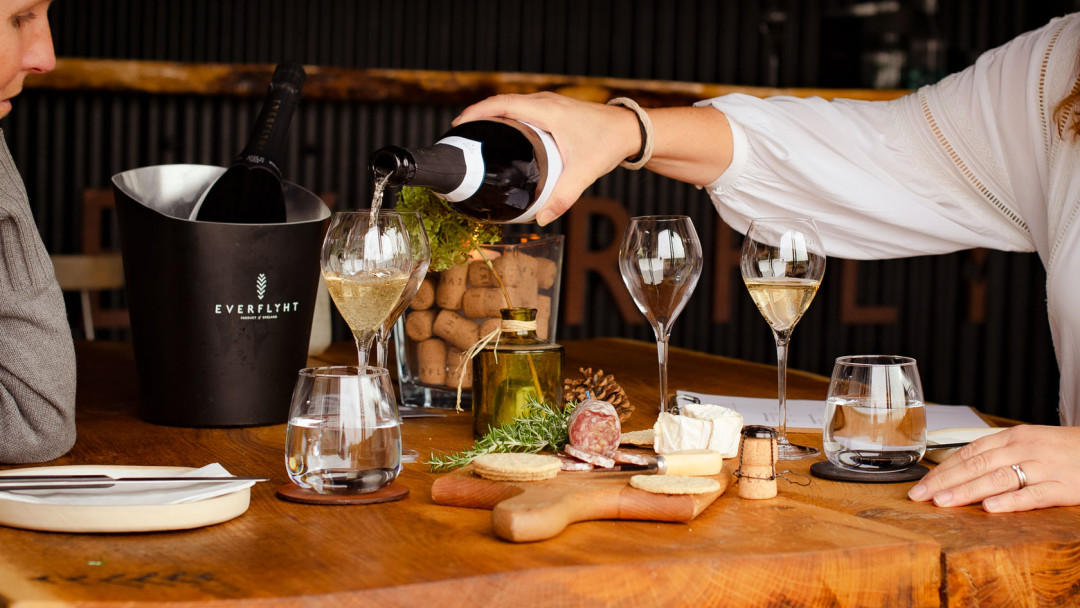
At the foot of Ditchling Beacon, on the chalk slopes of the South Downs National Park, sits one of the most compelling stories in English wine. Everflyht, the name drawn from the six Martlets of the Sussex crest, said to be forever in flight, never settling, is exactly what its name suggests: restless, forward-looking, and deeply rooted in its place.
The estate was founded by husband and wife Ben and Sam Ellis, inspired by a visit to the Napa Valley and a passion for bubbly wines.
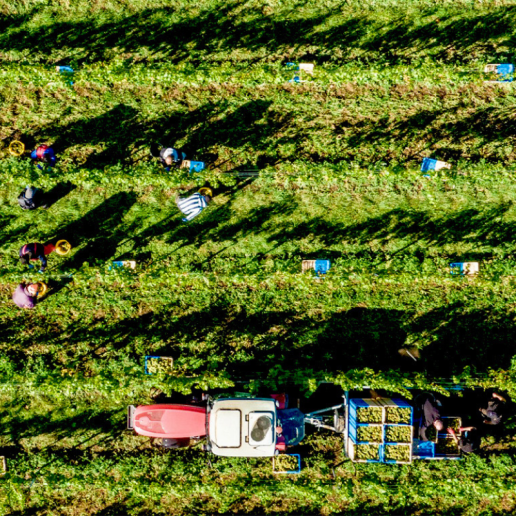
They found their land in 2015, planted the first 6.8 hectares of Chardonnay, Pinot Noir, and Pinot Meunier in 2016, and set aside a further 3.5 hectares not for vines but for biodiversity, over 400 trees, 800 metres of hedgerow, wildflower meadows, and rewilded pockets of the South Downs woven through the vineyard landscape.
The man at the centre of Everflyht’s viticulture is Luke Spalding.
Luke came to the estate in 2019 from Ridgeview, one of England’s most celebrated houses, and brought with him not only technical mastery but also an evolving, deeply committed philosophy: regenerative viticulture. Since arriving, he has progressively moved the estate away from conventional farming, phasing out synthetic fertilisers and insecticides, and eventually towards a near-fully organic spray programme.
“The focus is on the fruit.
We are not about making cellar-style wine.”
– Luke Spalding, Vineyard Manager, Everflyht
The wines are made in collaboration with Hambledon Vineyard in Hampshire. Though Luke is emphatic that these are Everlyht wines, made in Everlyht’s own vessels: puncheons, 500-litre clay vessels, with 100% malolactic fermentation.
The result is wines of marked character and texture, with the fruit quality that comes from healthy soils and unhurried farming. The estate currently produces around 17,000 bottles a year, with plans to double to 40–50,000 as newer plantings mature.
Everflyht released its first wines in 2022, a six-year journey from vine to bottle. The debut NV Brut, a Chardonnay-dominant blend with perpetual reserves stretching back to 2018, drew praise for its elegance and complexity. The Rosé de Saignée, deep in colour and fruit-forward in character, has quickly become a signature expression. Every detail is considered. Every decision earned.
Luke’s story, from a conventional start at Ridgeview to a pioneering regenerative practice at Everflyht, is, in miniature, the story of English sparkling wine itself: beginning with borrowed knowledge, finding its own path, and arriving at something distinctive and entirely its own.
- LOCATION: Ditchling Beacon, East Sussex
- PLANTED: 2016
- VINEYARD: 6.8ha vines
- BIODIVERSITY: 3.5ha set aside
- FIRST RELEASE: 2022
- PRODUCTION: ~17,000 btls/yr
- APPROACH: Regenerative
- MADE AT: Hambledon, Hampshire
The story of English sparkling wine is not one of sudden arrival. It is the story of chalk and patience, of families who planted vines and waited, of winemakers who refined their craft through cool, damp seasons and the occasional devastating frost. It is the story of Champagne houses crossing the Channel with open eyes and open cheque books. And it is the story of places like Everflyht, small, serious, and quietly extraordinary, that remind you why this matters.
The glass you raise at a celebration in 2026 may well be English. And if you hand it to someone who doesn’t know what it is, there is a reasonable chance they will think it came from France.
There is no higher compliment. And increasingly, it is also beside the point.
Podcast Episode 10:
The Sparkling Wine Underdog
We sat down with Luke Spalding, General Manager and Viticulturalist at Everflyht, to go deeper on regenerative viticulture, the Everflyht story, and what he really thinks about English sparkling wine’s future.