Uncorked: Episode 13 - Wine’s Culture Problem
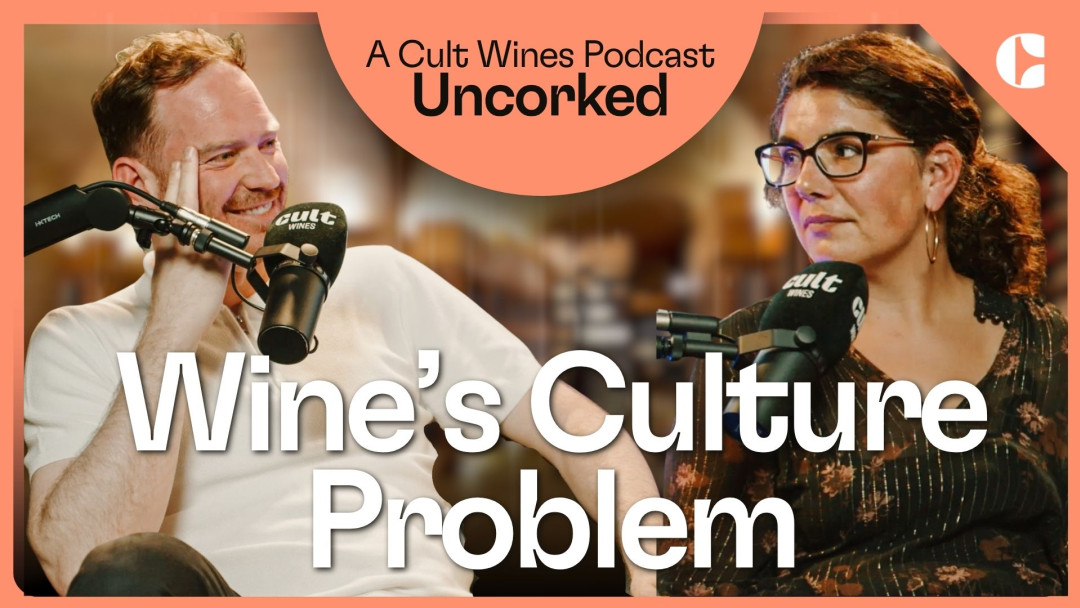
Welcome to Episode 13 of Uncorked, the Cult podcast. Season 2 begins with Tom Gearing, our Co-founder and CEO, joined by Jonathan Stevenson, EVP of Cult Wines North America, and special guest Pauline Vicard, co-founder and Executive Director of Areni Global.
This episode asks some of the biggest questions facing fine wine today. Is wine still culturally relevant? What makes someone become a collector? Why does community matter as much as access or education? And if fine wine is going to thrive with a new generation, does the trade need to rethink not just what it sells, but how it brings people together?
It is a wide-ranging conversation about wine, culture, collecting, business, and the future of the fine wine market. There is plenty to think about, a few challenges to comfortable assumptions, and, as ever, room for a bit of fun between the bigger questions.
Watch/Listen Now
What topics were covered?
Meet Pauline Vicard
Tom introduces Pauline as one of the guests he has been most excited to welcome onto Uncorked, and it is easy to see why. Pauline is co-founder and Executive Director of Areni Global, the London think tank dedicated to the future of fine wine. She grew Areni out of the Fine Minds 4 Fine Wines forum in 2018, and it has since become one of the sector’s most influential voices on research and strategy, including the landmark study The New Fine Wine Consumers.
The episode begins with Pauline reflecting on her recent appointment as Chevalier de l’Ordre du Mérite Agricole by the French government, an honour made even more meaningful by her background as the daughter of a Burgundy vigneron and her family’s long connection to farming. It also gives Tom the opportunity to test his French pronunciation, with suitably mixed levels of confidence.
That opening exchange sets up one of the central ideas of the episode, that the future of wine is not only shaped in vineyards, cellars and trading rooms, but also through research, strategy and a better understanding of how people connect with wine.
Wine, culture and legitimacy
One of the biggest questions in the episode is whether wine can rely on culture as a given. Pauline explains that the wine world has often treated cultural relevance as something inseparable from wine itself, especially in debates around alcohol, health and why wine should be considered differently from other drinks.
The discussion opens up into a much wider conversation about whether that assumption still holds. Wine may have deep cultural roots, but Pauline challenges the idea that those roots automatically protect it forever. Tom and Jonathan explore the role wine plays at the table, in family life, in celebration and in memorable experiences, while Pauline pushes the conversation towards a more nuanced question: if wine wants to remain culturally relevant, the industry needs to understand how culture is created today.
Fine wine is not one single journey
A major theme of the episode is the danger of seeing wine as a simple ladder, with cheaper wine at the bottom and fine wine at the top. Pauline offers a different way to think about it, not as a pyramid, but more like a tree, with different branches, different drinkers and different ways of finding meaning in wine.
That leads to a fascinating exchange about quality, access, price, and whether people really move in a straight line from entry-level bottles to fine wine collecting. The group also discusses why there may be no such thing as a ‘general consumer’ in wine, because different segments, occasions and motivations shape what people want from a bottle.
The New Fine Wine Consumer
Pauline shares insights from Areni Global’s research into how under-40s find their way into fine wine. Rather than simply asking whether younger people are drinking more or less, the study looks at how people become engaged with the category in the first place, especially at higher price points.
The conversation draws a clear distinction between buyers and collectors. Some people buy expensive wine for occasions, dinners or personal enjoyment. Collectors behave differently. For them, the chase, the research, the rarity and the eventual acquisition are all part of the reward. That difference matters, because it helps explain why access, allocation, education and community all shape whether someone becomes deeply engaged in fine wine.
Why collectors need community
One of the strongest ideas in the episode is that collectors do not just need bottles, they need people to open them with. Pauline talks about the difference between ‘normal friends’ and ‘wine friends’, and why the second group matters so much when someone has spent time, energy and money chasing a special bottle.
This leads to a lively discussion about community, events and how the wine trade can do more than simply sell stock. Pauline suggests that the industry needs to think harder about how it creates the right environments for people to share wine, whether that means better curation of events, more thoughtful hosting, or helping collectors connect with people who drink at the same level and for similar reasons.
Rethinking wine events
The conversation then turns to how wine events are often structured, and whether the traditional format always gives people the best possible experience. Pauline argues that great hospitality is about more than good wine and good food. It also means knowing who is in the room, making thoughtful introductions, and creating a setting where people can talk to each other, not just listen.
Tom and Jonathan reflect on the challenge of hosting events for different types of collectors, from those who want technical detail to those who want a more relaxed social experience. Pauline’s point is simple but powerful: if wine is supposed to bring people together, the industry should be more deliberate about the moments it creates around the bottle.
Selling wine is harder now
Pauline also makes the case that fine wine cannot rely on the conditions that helped it grow over the past 15 to 20 years. Selling wine is more difficult now, shaped by economics, demographic change, health conversations, cultural shifts and changing consumer expectations.
Rather than seeing this only as a problem, the group frames it as a moment to ask better questions. If wine is about sharing, pleasure, discovery and connection, then the trade needs business models and experiences that reflect those values. The episode does not pretend there is an easy answer, but it does make a strong case for thinking beyond simple transactions.
Hype or Hold
Jonathan brings in a game called Hype or Hold, asking Pauline and Tom whether different trends shaping the future of fine wine are lasting shifts or passing noise.
The prompts cover younger consumers drinking less but spending more, sustainability credentials, wine education, China’s role in fine wine’s future, experience versus ownership, and fine wine as an investable asset class. The answers are thoughtful rather than throwaway, especially when the conversation turns to wine investment, the secondary market, and how collectors think about value, pleasure and justification.
The wine in the glass
The episode closes with a brief look at the wine being shared in the studio, a 2018 Domaine Pierre Boisson, Meursault, Les Grands Charrons. Tom and Jonathan describe it as showing well, with expressive aromatics, ripeness and plenty of appeal, while Pauline carefully avoids naming a favourite wine, comparing it to choosing a favourite child.
It is a fitting end to an episode about the future of fine wine, because even after all the big questions, the conversation still comes back to the simple pleasure of opening a good bottle.
Get comfortable, this is a big-picture reset for anyone who cares about where fine wine goes next. Follow the podcast, send us your questions, and tell us what you want us to dig into in future episodes.
👉 Subscribe for more Uncorked episodes and fine wine insights every month.
Areni Global
Areni Global is an independent think tank dedicated to the future of fine wine. Based in London, it brings together the world's leading minds to study, debate and anticipate the forces reshaping the industry - from shifting consumer behaviour and market economics to cultural relevance and long-term trade dynamics. Its work spans in-depth research, publications, podcasts and invitation-only global events.
Their latest report, The New Fine Wine Consumer: How under 40 find their way into fine wine, draws on the conclusions of a multi-city research programme spanning London, Paris, New York, Hong Kong, Singapore and Shanghai, combining expert interviews, consumer surveys, focus groups and behavioural observation to map how under-40s discover, engage with and commit to fine wine - and what that means for the businesses trying to reach them. An essential reading for anyone willing to engage with the next generation.
The report is available exclusively to Areni Insiders. As a Cult Wines listener, you can join at a preferential rate with code CULT15 at checkout for 15% off membership. (Valid until 20 July 2026)
To follow Areni Global's ongoing research, subscribe to their newsletter or drop them a line.