Day 2 - Bordeaux EP 2025: Pessac-Léognan, Margaux & Saint-Julien

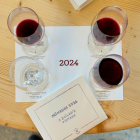
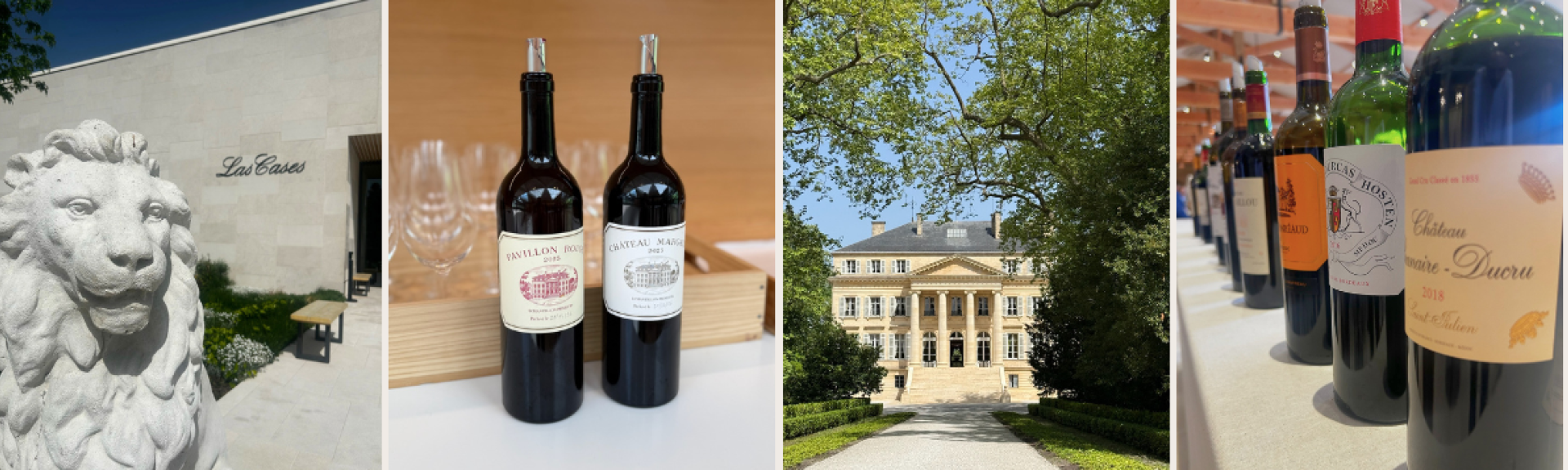
Day Two took us briefly south to Pessac, back up to Margaux, then into Saint-Julien. Eight châteaux, a wide range of styles, and by the time we finished at Léoville-Las Cases, the picture of 2025 was becoming clearer. This is a vintage of real, consistent quality at every level of the classification.
Haut-Brion and La Mission
We started at La Mission Haut-Brion, working through the full range alongside the three whites. These Pessac wines offered a slightly different story to the Médoc. The estate received notably less rain in that late-August window, around 33mm versus 60 to 70mm some estates saw further north. With a high proportion of Merlot and gravelly soils, the wines here carry a little more heat-driven weight and concentration.
La Mission Haut-Brion was the biggest, most powerful wine we had tasted at that point in the trip. At 13.6%, it sits at the higher end of what we had seen so far on alcohol, but it carries it well, with a perfumed nose, well-integrated oak, and a dense palate that is simultaneously expressive and open.
Haut-Brion itself showed more elegance, with pure fruit, beautifully balanced acidity, and huge but rounded tannins. Both share an immense tannic structure but express themselves very differently.
The whites, harvested from the 14th of August, showed characteristically well across the range, with La Mission Blanc the pick of the three.
Palmer
Up the long road to Margaux, Château Palmer was to become one of the day's most rewarding stops. Tasted in the barrel cellar, both Alter Ego 2025 and the Grand Vin were on exceptional form.
Palmer itself showed incredible finesse with a beautifully perfumed nose. The palate gave dense fruit, rich, meaty tannins and a juicy, evolving character, with lovely acidity holding it all together. Yields were down to 20hl/ha, and the concentration shows without ever tipping into heaviness.
The team were clear about what would have happened without the late-August rain, telling us the wine would have been very similar to their 2022 had the weather not broken. Their lighter, sandier soils and biodynamic approach cope better with heat and drought conditions than many of their neighbours.
Alter Ego was beautifully soft, with pronounced pencil shaving on the nose, ripe but juicy red and black fruit, and a long evolving finish.
Château Margaux
If there is one wine from the day that will stay with us, it had to be Château Margaux 2025. The estate made a deliberate decision to wait to harvest: while others were already well underway with their picking, Margaux pushed into late September to allow tannins in the skins and seeds to ripen... beautifully!
The nose alone is worth the visit: Layered and rich with dark, ripe fruit, chocolate, and coffee, giving way to real perfume. The palate is full-bodied and structured, with real freshness from the acidity, rich but elegant tannins and an intensity that never tips into aggression.
Young vines that suffered in August were excluded from the Grand Vin this year, so production dropped relative to Pavillon Rouge. Yields were 22hl/ha, alcohol 13.8%, and the wine carries it absolutely.
Pavillon Rouge delivered above expectations, with aromatic, floral-violet character, dense black fruit, and a ripe, silky palate. Pavillon Blanc, 100% Sauvignon Blanc from tiny production, showed peach, pear, grapefruit peel, good acidity and a bright sharpness on the finish.
The UGCB tasting at Léoville-Barton
Lunch was hosted by Léoville and Langoa Barton, the latter celebrating its two-hundredth year of family ownership, making it the longest single-family-held estate in the 1855 classification. The UGCB tasting prior to lunch confirmed what we had been feeling so far: 2025 is consistent across the classification.
Nearly every wine met or outperformed our already-high expectations for the vintage, which bodes well for buyers looking across all levels of the classification.
Into Saint-Julien
The afternoon through Saint-Julien underlined how well the appellation has handled 2025. Beychevelle was expressive and dark, with ripe tannins, fresh acidity, and a step up in polish over recent vintages. Yields were 31hl/ha, above the appellation average of 26, and the wine shows a generous, rounded character.
Ducru-Beaucaillou was the standout of Saint-Julien and one of the wines of the trip so far. A deep colour, dark blackberry and ripe cherries on the nose, a huge dense attack on the palate, and then a really approachable core of soft fruit and juicy acidity that keeps you coming back. The team told us this was their earliest harvest since 1945, with picking starting on the 2nd of September. La Croix de Beaucaillou 2025, the second label, was arguably among the best second wines we have tasted on the trip so far.
Léoville-Poyferré was polished and bright, with floral blackcurrant leaf, dense tannin, real minerality and a ripe, elegant palate. Yields were under 21hl/ha here, well below the Saint-Julien average, and the wine comes in at 13.5%.
Léoville-Las Cases
We finished at Léoville-Las Cases. The estate has completed a new winery building that is one of the most striking pieces of architecture we have seen in Bordeaux, with a winding stone staircase climbing through six floors, each level revealing a different dimension of the operation. For an estate that already commands a devoted following in the Médoc, it is a clear statement of intent.
The wine did not disappoint. The Grand Vin was subtle and not as fruit-forward as some we had tasted, with supple but enormous tannin structure and a very long finish. Alcohol at 13.65%, and this was the estate's earliest harvest since 1989. Clos du Marquis 2025 was an overperformer, with classic Cabernet character, dusty pencil shavings and rich sky-high tannins. Le Petit Lion 2025 showed expressive blue fruit and rich tannins and looked like genuine value.
Our Early Take
After two days, it is clear that 2025 is a vintage of genuine quality across the Left Bank. Producers have responded to a unique growing season with precision and confidence, and the wines reflect it. Yields are down, which will keep volumes tight, but alcohols sit comfortably at moderate levels between 13.3 and 13.8% across most reds. Tannins are consistently very polished, rather than aggressive. The second wines from today continued the strong run we saw on Day One. With volumes tight, the 2025 campaign looks set to be one of the more interesting years in recent memory.
Day Three takes us to Saint-Émilion on Bordeaux’s Right Bank. Stay tuned for more Cult Wine's coverage of Bordeaux En Primeur 2025 vintage and follow us on social media for daily video recaps.
Instagram: @cultwines
Fine Wine Investment Guide
Download your guide to fine wine investing and discover how this unique, tangible, and tax-efficient asset can enhance portfolio diversification. Gain valuable knowledge and insights with this indispensable document for investors.
Related 2025 En Primeur Content
Day 4 - Bordeaux EP 2025: Pomerol & Pessac-Léognan
By Hermione Egerton-Smith
Day 3 - Bordeaux EP 2025: Saint-Émilion
By Sean Wright
Day 1 - Bordeaux EP 2025: Pauillac & Saint-Estèphe
By Sean Wright
Bordeaux 2025: Quality Returns. The Price Has Yet to Follow.
By Aarash Ghatineh
Related Articles
Day 4 - Bordeaux EP 2025: Pomerol & Pessac-Léognan
By Hermione Egerton-Smith
Day 3 - Bordeaux EP 2025: Saint-Émilion
By Sean Wright
Day 1 - Bordeaux EP 2025: Pauillac & Saint-Estèphe
By Sean Wright
Bordeaux 2025: Quality Returns. The Price Has Yet to Follow.
By Aarash Ghatineh
Bordeaux 2024 En Primeur Roundup: A Vintage with Something to Prove
By Aarash Ghatineh