The Future of Fine Wine Starts in the Vineyard

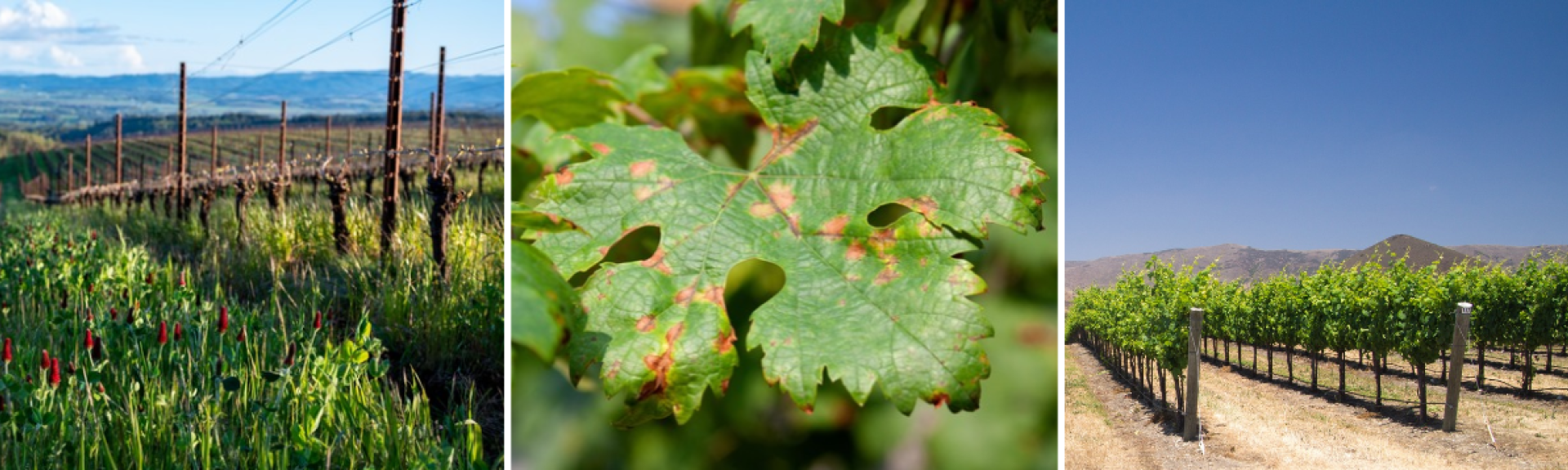
From Saint-Émilion to Chassagne-Montrachet and beyond, leading estates are rethinking how they farm in response to disease, extreme weather and pressure to reduce chemical use. Some are accepting smaller harvests to pursue healthier, more resilient vineyards.
Château Cheval Blanc has pulled up more than 3,000 vines to make room for trees. Around 1,500 fruit and woodland trees now grow across 30% of its vineyards. Pierre-Olivier Clouet, then technical director and now managing director, has questioned whether its soils would still produce such brilliant wines with two or three more degrees of heat.
Cheval Blanc calls its approach agroecology, and the labels around it are often used interchangeably, though they mean different things. Organic certification prohibits most synthetic pesticides and fertilisers, while permitting a restricted range of approved treatments. Biodynamic farming builds on organic practices with herbal and mineral preparations and a farming calendar. Regenerative farming, a term popularised by the Rodale Institute in the 1980s, focuses on improving soil health. Sustainable is the broadest term, and schemes such as France’s HVE still permit synthetic treatments. Most share the aim of a vineyard that copes with disease and difficult seasons using fewer bought-in inputs.
The motivations behind this shift vary from estate to estate. At Château Palmer, technical director Sabrina Pernet places the move to biodynamics against a wider controversy at the time over pesticide residues in wine. Since converting, she says, nutrient deficiencies once seen in some plots have gone. Climate plays a part as well. A 664-year record from Beaune shows grapes have been picked 13 days earlier on average since 1988 than in the six centuries before.
Rebuilding vineyard ecosystems
Cover crops, compost and mulch build organic matter and soil life. Mycorrhizal fungi, which cover crops help encourage, extend the reach of vine roots and improve their uptake of water and nutrients such as phosphorus. At Domaine Armand Heitz, which we visited this month, nitrogen-fixing legumes fill the inter-rows and sheep’s wool lies between the vines to hold in moisture.
Several estates have brought livestock back. Palmer’s Bordelaise cows supply manure for its compost, and up to 200 sheep graze the cover crops each winter. Pontet-Canet, the first Médoc-classed growth-certified biodynamic estate, has worked its vines with draught horses since 2008. Heitz runs Charolais and Salers cattle fed only from its own pastures. Their manure goes back on the vines, and the beef is sold to Michelin-starred restaurants and to the estate’s own restaurant, Chez Armand.
Beyond the certification label
Organic and biodynamic farming have more established certification frameworks. Organic standards are written into law in the EU and the US, and Demeter’s biodynamic certification is recognised internationally. Regenerative farming has no legal definition, and multiple competing certification schemes exist. Regenerative Organic Certified (ROC) requires organic status first. At the same time, the Regenerative Viticulture Alliance, launched in 2023 by the Regenerative Viticulture Association, which Familia Torres co-founded, and the Regenerative Viticulture Foundation, is a separate standard. Telmont’s ROC award, announced in January 2026, was at Bronze, the entry level.
It is also hard to show that a certificate sells more wine. The clearer benefit tends to go to the producer, which has to scrutinise its own farming to earn one. In fine wine, where producer, terroir and vintage largely drive purchasing decisions, certification may carry less weight than the reputation of the estate itself. Some top estates choose not to certify. In 2021, Nicolas de Bailliencourt, then running Château Gazin in Pomerol, said he valued the freedom to respond to difficult vintages without organic or biodynamic certification: “I cannot imagine not having that flexibility.”
Rethinking grape varieties
Armand Heitz argues that Burgundy’s reliance on a small number of Pinot Noir and Chardonnay clones leaves its vineyards exposed to disease and climate shocks. He is diversifying his plantings: Gamay, Aligoté, Pinot Blanc, Pinot Gris and Melon de Bourgogne, all with long histories in the region. He has also planted around a hectare of Sauvignon Blanc on a frost-prone site in Chassagne-Montrachet, because it buds later than Chardonnay, a useful hedge in a region where the April 2021 frosts cost around half the crop. Because Sauvignon falls outside the appellation rules, the wine is bottled as Vin de France under the name Parcelle Interdite.
Cheval Blanc is applying the same thinking to its existing varieties, preserving old clones to widen its genetic base. Appellation regulations, however, are evolving more slowly. Champagne has approved Voltis, a mildew-resistant grape intended to cut spraying, with the first cuvées due around 2027 or 2028. Bordeaux’s six new varieties, approved in 2021, apply to Bordeaux AOC and Bordeaux Supérieur, though Margaux and several Médoc appellations have also applied to run their own trials.
The cost of change
The climatic conditions of Bordeaux and Burgundy make these farming approaches particularly challenging. Bordeaux’s maritime climate and Burgundy’s frequent spring rain bring heavy mildew pressure, so farming without synthetic sprays means accepting that some vintages will cost part of the crop. Many of Burgundy’s most admired domaines accept that trade-off and have been biodynamic for years. In 2018, severe downy mildew hit Bordeaux. Palmer harvested 11 hectolitres per hectare, around a third of its usual yield, and made no second wine. Pontet-Canet also lost a significant share of its crop.
The 2024 season tested far more estates, and Cheval Blanc’s Pierre-Olivier Clouet described it as a “war”. Mildew arrived unusually early in both Bordeaux and Burgundy. Château Lafleur in Pomerol began spraying on 20 March, and some organic estates in Bordeaux needed as many as 31 treatments because rain washes off the copper and sulphur sprays that organic farming relies on. Bordeaux’s harvest was its smallest since 1991, and yields across large parts of the Côte d’Or fell by 50% to 80%.
Several estates stepped back from organic farming to save what they could. Domaine de Chevalier in Pessac-Léognan set aside organic practice for the year, and some Burgundy domaines gave up their certification mid-season. Some growers argued that a few synthetic sprays put less copper into the soil than repeated organic treatments.
Cheval Blanc said in 2024 that understanding the impact of its trees on soil life could take another five years. In the meantime, estates such as Cheval Blanc, Palmer and Heitz are making long-term decisions on incomplete evidence, accepting lower yields today in the belief that their vineyards will be better equipped to withstand tomorrow's challenges.
Related Articles
Etna Nears DOCG: What Changes for Collectors
By Jonathan Stevenson
70 Years of Unico: What Tasting Vega Sicilia Across 7 Decades Tells You
By Aarash Ghatineh

Wine of Kings, Reinvented: The Dry Furmint Revival of Tokaj
By Alexa Atkinson