Why Austria's Whites Get All the Applause & the Reds Deserve Better

A few weeks ago, the Singapore Cricket Club's Wine Circle Section teamed up with the Austrian Embassy to debut a Wine Fair dedicated solely to Austrian wine.
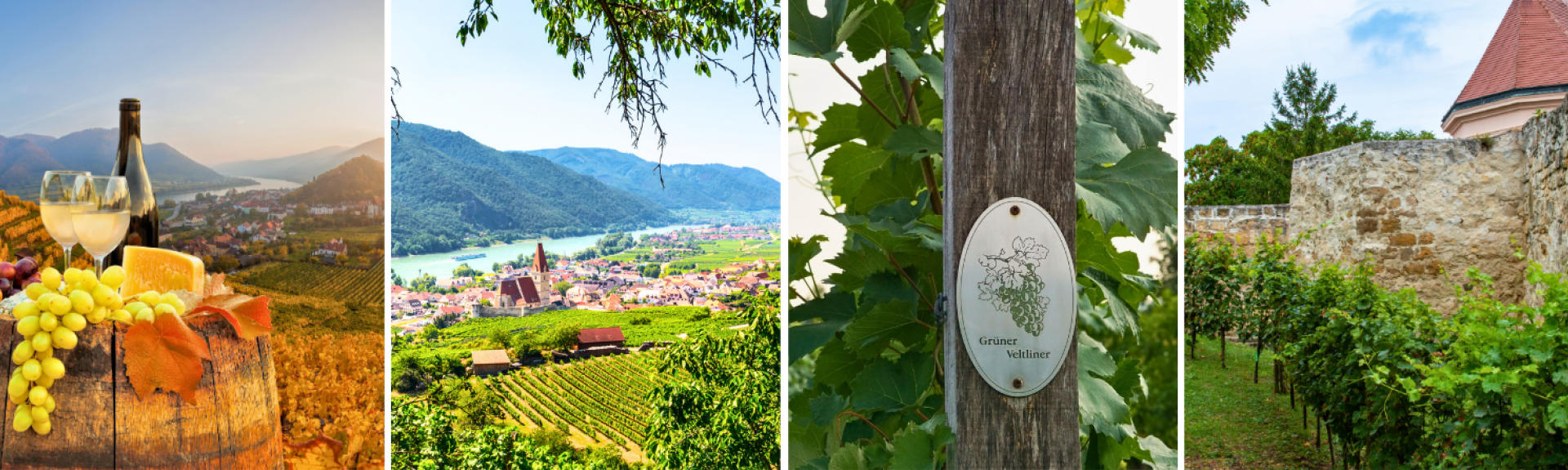
Live food stations moved alongside the tastings, and guests worked the room at their own pace. Grüner Veltliner was the usual destination - glass after glass of it, from steep terraced vineyards along the Danube, and each one seemed to show something slightly different: white pepper and lemon pith in one, honeyed orchard fruit and wet stone in the next.
The question of red vs white in Austria is an interesting one... let's dive in a bit more.
The whites earned their reputation the hard way
Austria's rise as a serious white wine country is a genuine comeback story, and it's worth knowing the background because it helps explain why whites, and specifically Grüner Veltliner, became the face of Austrian wine.
In 1985, it emerged that a small number of producers had illegally sweetened cheap export wines with diethylene glycol, a compound also used in antifreeze, to fake the richness of a good vintage. The resulting scandal collapsed the industry's export market almost overnight: annual export volumes fell from around 45 million litres to roughly 4.4 million litres within a year, and it took until 2001 for exports to return to their pre-scandal level.
Rather than trying to rebuild the old bulk-wine trade, Austria's growers and lawmakers used the crisis as a reset. They tightened wine law considerably, moved away from cheap, sweetened bulk wine altogether, and repositioned the country around dry, terroir-driven quality wine - with Grüner Veltliner leading the way.
For anyone who's done WSET Level 2, it helps to think of this in the same terms we use to judge a wine's quality: balance, length, complexity, typicity.
Austria's whites had all four working in their favour by the 1990s and 2000s. Grüner Veltliner in particular turned out to be a genuinely versatile, food-friendly grape with real ageing potential at the top end, a rare combination. It's typically high in acidity, medium-to-full in body, and shows that distinctive white pepper spice alongside citrus and orchard fruit, sometimes with a honeyed richness in warmer vintages.
Under Austria's DAC system (Districtus Austriae Controllatus, their version of an appellation system, similar in spirit to France's AOC), producers can label wines by a rising scale of ripeness and concentration - from lighter, earlier-drinking styles up to single-vineyard "Ried" wines that are built to age for a decade or more.
Riesling plays a much smaller role in Austria than it does just across the border in Germany, but the little that's grown, again mostly around the Wachau and Kamptal, is consistently held up as some of the country's finest white wine: bone dry, high in acid, and often more overtly mineral than its German counterparts, which tend to carry more residual sugar.
It's this combination - a good redemption story, a distinctive and food-friendly flagship grape, and a formal quality classification system to signal seriousness to buyers. That got the international wine press on side. The English critic Jancis Robinson has written about a blind tasting in which top white Burgundies (i.e., high-quality Chardonnay from France) were pitted against Austria's best whites, and the Austrian wines took seven of the top ten places, with most of the Burgundies clustered near the bottom.
That's the kind of result that changes how a country's wines get talked about internationally, and it lines up with what I tasted at the fair: this isn't just a pleasant, easy-drinking style; it's a grape capable of real complexity and structure when it's made with intent.
The reds, still waiting for their moment
Wine critics have started to make the case for these grapes more loudly over the last few years. Wine Enthusiast has run features essentially arguing that Austrian reds are "ready for prime time," and there's a steady stream of similar advocacy from writers keen to point out that a third of the country's vineyard area shouldn't be treated as an afterthought. But the reputational gap with whites remains real, and, importantly, it doesn't seem to be about quality. It's more about timing and exposure. Austria's post-1985 rebuilding effort was centred on dry white wine as the redemption story, so that's the wine international critics and buyers came to associate with the country's turnaround.
The reds never had their own equivalent breakthrough moment, and because they're made in smaller volumes for a domestic market that already drinks most of what's produced, they've had far less exposure to export markets and to the critics who really shape international reputation. There's also a simple stylistic mismatch to consider: Austrian reds tend to express themselves through freshness, spice and silky texture rather than the weight, extraction and heavy tannin that critics trained on Bordeaux or the Rhône often look for first, so a young Zweigelt or Blaufränkisch can read as "light" or "simple" to a palate calibrated on bigger, more structured reds, when in fact that lighter frame is the point, not a shortcoming.
What it means for a glass in hand
None of this is an argument against Grüner Veltliner - quite the opposite. The fair reminded me exactly why it's earned the attention it gets, and it's a genuinely rare thing for a country to build an entire international reputation around a single grape variety, as Argentina has with Malbec and New Zealand with Sauvignon Blanc. But it's also a useful reminder, for anyone building their palate the way WSET encourages you to, that critical acclaim and quality don't always move at the same speed, and that a wine region's reputation is often shaped as much by history and market exposure as by what's actually in the glass.

Related Articles
70 Years of Unico: What Tasting Vega Sicilia Across 7 Decades Tells You
By Aarash Ghatineh
Porto and the Changing Face of Port
By Sean Wright


Cult Wines H1 2026 Market Report
By Tom Gearing